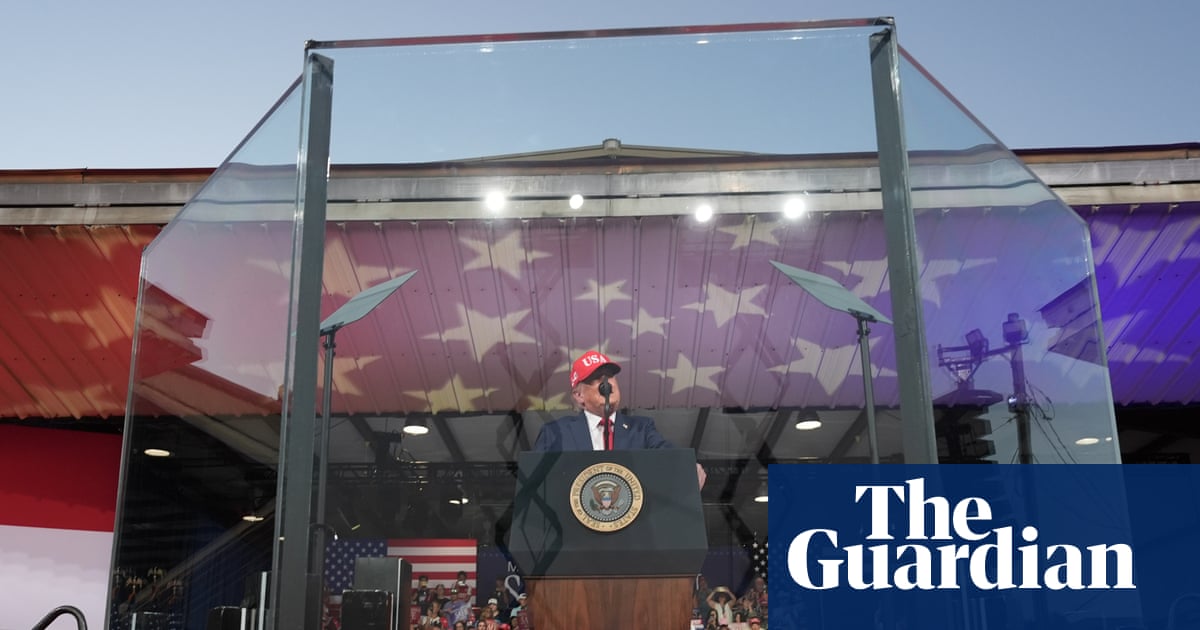

One of Donald TrumpâÂÂs greatest talents â deployed during his time as a real estate tycoon, source and subject of tabloid gossip, reality TV protagonist, and president of the United States â is his ability to tell stories. With six weeks until the US midterm elections, he is likely to lean on this instinct more than ever.
Rarely does the US president appear more comfortable than when behind a microphone, speaking without interruption, sometimes for multiple hours. Long before entering the White House, he wholeheartedly embraced social media as a means of crafting his narrative, going so far as to launch his own social network when booted off others.
Earlier this week, his administration launched a YouTube channel, which critics quickly dismissed as a âÂÂstate-runâ TV network.
Such platforms give Trump the ability to deliver his unfiltered narrative â unencumbered by open discussion, or its often tenuous relationship with the truth. Only when his stories leave the spaces where he has complete control, and enter the real world, do challenges arise.
The president has long both courted and criticized the media, seeing the very publications and outlets he claims to loathe as opportunities to amplify his message. He bristles when they fail to do so.
Last Friday, Trump abruptly announced a ban on CNN, MS Now and Politico from the White House over their coverage. The outlets swiftly sued over the move, setting up an acrimonious legal battle over press access. In the early hours of this morning, a federal judge ordered Trump to restore their â access.
âÂÂYou said you werenâÂÂt going to cover me,â Trump told CNN, which had said no such thing, upon his arrival at the United Nations this week. âÂÂYou shouldnâÂÂt be covering me.âÂÂ

Americans donâÂÂt need to tune in to Trump TV or log in to Truth Social to find out how much it costs to buy a home, feed their families or fill up their cars â factors that, time and again, have influenced which way they vote in elections.
By the presidentâÂÂs telling, his controversial war on Iran has been about to end since not long after he launched it in February. Tariffs are meanwhile enriching the US economy. A new âÂÂgolden ageâ is under way.
When news outlets report otherwise, the president â a voracious media consumer â has a choice.
He can engage with the message. The Iran war, more than 200 days since it started, is not over. The US economy is under pressure, despite a boost from vast investment into AI. And while the president and his allies seem to be doing OK, millions of Americans have yet to see tangible evidence that a âÂÂgolden ageâ is under way.
Or he can blame the messenger. Railing at all hours against the âÂÂFake News MediaâÂÂ, Trump has filed lawsuits against the Wall Street Journal, the BBC and CBS, among others, over their coverage.
âÂÂI believe in the free press more than anyone in this room does,â Trump claimed at JulyâÂÂs White House correspondentsâ dinner. âÂÂHmm,â he added. âÂÂMaybe not quite.âÂÂ

None of this marks a dramatic departure from the past 11 years, of course. But with TrumpâÂÂs party facing a crucial electoral test in November, and Republicans increasingly nervous of an impending âÂÂbloodbathâÂÂ, his hunger to control the narrative is set to grow.
In this final stretch of the campaign, we can expect to see the president intensify efforts to hammer his narrative â from a purported âÂÂcommunistâ infiltration of the Democratic party to a supposed economic boom across the nation â and attack those who dare to question it.
This remarkably volatile president has shown a striking ability to stick to a message like glue in the final stages of an election. In 2024, this included relentlessly blaming Joe Biden for a surge in consumer prices, and promising Americans that he would fix it. We have a good sense of what it will include in 2026.
After summoning Republicans for the partyâÂÂs first ever midterm convention in Dallas this month â another chance to get behind a microphone, uninterrupted by reporters, or reality â Trump asked supporters to do him âÂÂthe biggest favorâ and âÂÂpretendâ they were voting for him. In truth, his name will not appear on a single ballot paper.
As polling day edges closer, the president is escalating his fights with the media. My colleague Chris Stein noted earlier this week that polls continue to show Democrats with an edge on the generic ballot, a key indicator of voter sentiment in congressional races, as well as in some key Senate contests.
Once all votes are cast and counted, there is a world in which the president and his party retain control of Congress â defying frustration over the Iran war, concern over their handling of the economy and broader anger over the status quo â in an extraordinary display of political resilience.
There is also a world in which they endure a painful rejection by voters and lose control of both congressional chambers, leaving Trump to serve out his second term as a lame duck in the White House.
The presidentâÂÂs version of events is only likely to accept one of these outcomes.
Quoted
âÂÂMost people around the country, many of whom donâÂÂt even identify as Democrat or Republican or whatever, are 10 out of 10 pissed off, angry and willing to take that anger into action against the status quo.âÂÂ
â Maurice Mitchell, the national director of the Working Families party, a progressive third political party that has seen its endorsees winning bigger than ever this year
Meet the candidate: Brandon Herrera

Brandon Herrera, a 30-year-old YouTuber with more than 4 million subscribers, has made a name for himself making outrageous pro-gun statements. HeâÂÂs also the frontrunner in a race to represent TexasâÂÂs 23rd congressional district, where 23 people were killed in a mass shooting at a Walmart in 2019 and an 18-year-old former student killed 19 children and two teachers in the Uvalde school shooting.
Democrats are hoping that such an extreme candidate, even by TexasâÂÂs standards, could be vulnerable at the ballot box. They aim to flip the seat that has been in Republican hands since 2015.
Should he win the midterm election, Herrera will take what he calls his âÂÂsecond amendment absolutismâ to Washington, with possible ramifications for nationwide gun laws and debate.
Read the story: Nazi jokes and âÂÂcum trophiesâÂÂ: meet the Texas gunfluencer who could soon represent Uvalde