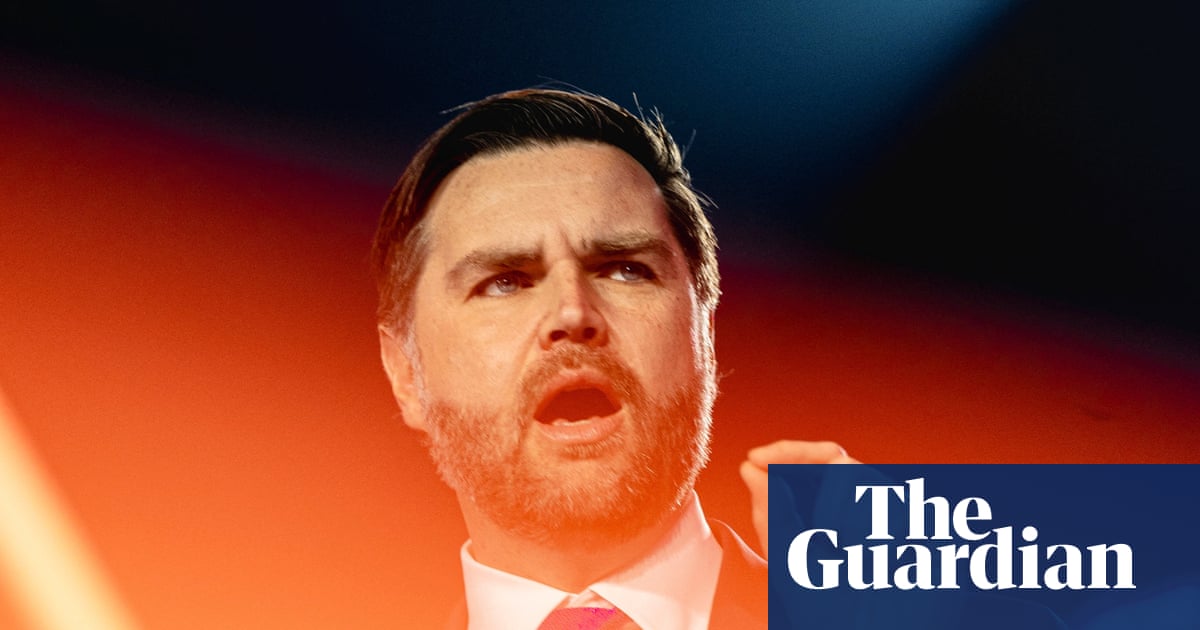

Vance front and center in Republican midterms push â is this a dry run for a White House bid?
Vice-presidentâÂÂs visibility has risen as TrumpâÂÂs popularity wanes, but path to inherit Maga throne is more complicated than it may seem
A day after JD Vance suggested Donald Trump would endorse him if he runs for president, the vice-president shifted awkwardly in the Oval Office as his boss was asked about the remark.
âÂÂHeâÂÂs a very talented person, and heâÂÂs a very good person,â Trump said of the man standing behind him, with a forced smile this week. âÂÂBut weâÂÂve literally â I donâÂÂt think weâÂÂve ever talked about,â the president claimed, leaving the assertion unconfirmed.
As the campaign for the congressional midterms has intensified, the vice-presidentâÂÂs visibility has risen. If Trump and Vance truly have yet to discuss his presidential prospects, they are firmly in the minority in Washington.
While many aspects of this political era remain extraordinary, the core question hanging over Vance is one that has been asked for decades: is the vice-presidency a platform, or a poisoned chalice, for those who dare to dream of higher office?
Having spent only two years as a US senator before Trump tapped him in 2024 as his running mate, Vance has hit the campaign trail in recent weeks like a seasoned veteran â making stump speeches on behalf of Republican candidates as the party struggles to retain its grip on the US Senate and House of Representatives amid TrumpâÂÂs plunging approval ratings.
He has held rallies in states such as Iowa, Florida, Texas, Alaska, Georgia, Michigan and his native Ohio in a criss-crossing odyssey that compares to that of Trump, who has told voters to behave as though he were on the ballot.
With secretary of state Marco Rubio â widely seen as his main rival for the next Republican nomination â focused on fighting the fires sparked by TrumpâÂÂs global agenda, analysts believe VanceâÂÂs campaigning roadshow is intended as a dry run for a 2028 presidential bid. Each stop enables him to build contacts and goodwill, which he can call on in the likely event of him seeking the nomination in less than two yearsâ time.

Matthew Dallek, a political historian at George Washington University, said Vance was trying to âÂÂbuild up chitsâ aimed at making TrumpâÂÂs Make America Great Again (Maga) movement âÂÂremember that he was a good soldierâÂÂ.
âÂÂHe is trying to do what a lot of smart vice-presidents have done throughout history, and thatâÂÂs to earn some credit out there with state and and congressional candidates,â said Rick Wilson, a former Republican strategist who now runs the anti-Trump Lincoln Project, âÂÂso that when he kicks up a campaign machine in two years, people owe him somethingâÂÂ.
Time and again over the past two years Vance has slipped into âÂÂexplainer-in-chiefâ mode, providing a more palatable narrative in the wake of TrumpâÂÂs more extreme statements, impulses or policy decisions. Critics have branded the practice as âÂÂsane-washingâÂÂ, whereby the verbally dextrous vice-president tries to use his facile language skills to normalize otherwise outlandish utterances or actions.
In recent months, Vance â after publishing a book on his conversion to Catholicism â has rationalized a meme posted by Trump on his Truth Social platform that seemed to depict him as Jesus Christ. He also tried to deny, or at least reinterpret, TrumpâÂÂs words when he told journalists that he did not think about Americansâ financial situation in conducting the war with Iran.
And just last weekend, he defended the president against charges of corruption in a CBS town hall event, when told that many voters were concerned that Trump was making money from cryptocurrency. âÂÂYou can make all kinds of criticisms of our policies and decisions, but IâÂÂve not once seen evidence that Donald Trump has enriched himself,â Vance replied. (TrumpâÂÂs personal fortune has surged from $2.3bn in 2024 to $6.5bn this year, according to Forbes.)

His slavishly supportive comments have naturally been welcomed by Trump, but they also highlight the problems Vance may face in trying to become the presidentâÂÂs heir as head of the Maga movement. While unstinting loyalty is the coin of the realm in the Trump-dominated Republicans, the presidentâÂÂs vice-like grip on the party presents a fundamental challenge to anyone hoping to step out from his shadow and assert an independent persona aimed at wooing the base.
The fate of TrumpâÂÂs first vice-president, Mike Pence â who had to be evacuated to an underground shelter in the US Capitol on 6 January 2021, as pro-Trump rioters called for his execution following his refusal to overturn the 2020 presidential election result â serves as a salutary warning of the high price that autonomy may exact.
âÂÂVance has two choices,â argued Kurt Bardella, a former Republican congressional staffer who left the party in 2017. âÂÂEither ride Trump all the way to the island of irrelevancy, or break with him and incur his wrath.âÂÂ
âÂÂNeither are great options,â he added. âÂÂThe political reality is that anyone who is tethered to Trump will face an electoral backlash. Trump will continue to erode democratic norms as his grip on power wanes.
âÂÂThat will force people like Vance into untenable positions that they have proven unable to navigate. TheyâÂÂll have to either double down on the crazy or break up with him and alienate the primary base he needs to win the nomination.âÂÂ

Even if Vance were to attempt a clean break after securing the Republican nomination, the historical portents at not encouraging.
Al Gore attempted to put clear blue water between himself and Bill Clinton after becoming the Democrat nominee in 2000. âÂÂI stand here as my own man,â he told the partyâÂÂs convention, in a bid to avoid an electoral backlash over the then presidentâÂÂs impeachment over his affair with Monica Lewinsky, a White House intern.
In the event, Gore lost the election to George W Bush â losing his own state of Tennessee, where he had been a US senator â despite excluding Clinton from the campaign trail.
âÂÂThe Gore example is useful because itâÂÂs someone who tried to distance himself, didnâÂÂt do so very successfully â and he was doing so from a pretty popular president,â said Dallek of George Washington University. âÂÂWhen youâÂÂre vice-president, you can only get so much distance from the president, and if you try to distance yourself, youâÂÂre going to antagonize the people who supported the president, and create the impression that youâÂÂre not just disloyal, but two-faced.âÂÂ

Vance, therefore, has limited options in how to pitch himself for the presidency.
âÂÂEven JD Vance doesnâÂÂt fully have a theory of the case yet of why he should be president,â said Wilson. âÂÂHe is going to sort of play this out and say, âÂÂIâÂÂm going to see what the terrain looks like in mid-2027, then calibrate my message, my campaign and my personality to what I think will win.âÂÂ
âÂÂBut is not really something that works in the age of authenticity that we supposedly live in now. ItâÂÂs harder for somebody to fake being anything anymore than it ever has been in politics.âÂÂ
Underpinning such a wait-and-see approach is VanceâÂÂs reputation as a âÂÂshape-shifterâÂÂ, capable of jettisoning previously held principles. Years before becoming a Trump supporter, he declared himself a âÂÂnever TrumperâÂÂ. He labelled Trump âÂÂcultural heroinâ and voiced fears he could be âÂÂAmericaâÂÂs Hitlerâ before forming an alliance with him after first presidency ended in 2021.
VanceâÂÂs self-anointed role as TrumpâÂÂs âÂÂexplainer-in-chiefâ positions him to sell himself as âÂÂall the things you love about Donald Trump without the craziness and the chaosâÂÂ, Bardella suggested.
But VanceâÂÂs vitriolic personal attacks on Democratic candidates in the midterms, such as the Kansas Senate candidate, Adam Hamilton, and James Talarico, who is in a cliffhanger race with the Trump-endorsed Republican Ken Paxton for the Texas Senate race, could prefigure another weapon a Vance presidential campaign might use : demonizing opponents.
âÂÂOne of the previews that weâÂÂve had is that he is going to define the Democratic party as this radical leftwing communistic anti-American threat to the future of the country,â said Dallek.
Vance will need to sell himself to two audiences, according to Joe Walsh, a former Republican congressman who is now a Democrat: TrumpâÂÂs Maga support base, and the broader electorate after winning the nomination.
âÂÂHe cannot sell himself to the second audience if he doesnâÂÂt make the sale with the first audience, and that means sticking to Trump and going full Maga.âÂÂ
But so well-honed has VanceâÂÂs rightwing identity become, argued Walsh, that expressing views that would appeal to Trump supporters would require little simulation.

âÂÂI donâÂÂt know what he actually believes, but heâÂÂs taken on a lot of these Maga beliefs,â he said. âÂÂJD Vance is more pro-Putin than people realize â more pro-Russia, more anti-Ukraine. JD Vance is very skeptical of Israel. Vance really does have a lot of the Maga beliefs.âÂÂ
What may stymie his presidential aspirations, some observers believe, is not ideology but personality.
After being repeatedly mocked for his awkward persona on the campaign trail during the 2024 presidential election, Vance remains a grating presence on the stump, with attempts at humor often falling flat.
The trait appeared to be on display last week in the town of Tyler in Texas when a male supporter shouted: âÂÂI love you.âÂÂ
âÂÂI love you too, sir. In a totally platonic way, to be clear. IâÂÂm the vice-president, not James Talarico,â he said, referring to the Democratic Senate candidate, whose sexuality Vance and other Republicans have repeatedly questioned, without evidence or obvious cause.
Tara Setmayer, a former Republican communications director on Capitol Hill, said VanceâÂÂs inability to project authenticity threatened his presumed frontrunner status. âÂÂJD Vance comes across as so manufactured. ThereâÂÂs nothing authentic about him, and people see right through it,â she said. âÂÂYou can see that coming across when he goes out there and tells these jokes or tries to be funny and it lands like a lead balloon, because heâÂÂs not inherently secure with himself.

âÂÂAs much as JD Vance thinks he is the Maga heir apparent, heâÂÂs not. ThereâÂÂs a lot of consternation about him. HeâÂÂs not completely won the Maga base by any means.âÂÂ
Wilson agrees that Vance was seen as an unsatisfactory substitute by many diehard Trump supporters, and said his ascension to the Republican nomination was not assured. âÂÂJD Vance is not Donald Trump, and he will never be,â he said. âÂÂThe modern voter out there in the world is not interested in Diet Trump. They want the full experience.
âÂÂVance is more facile than Trump. He can change his personality to adjust to the room. Trump, for all of his evils and corruption and craziness, is the genuine article. He didnâÂÂt change everything he believed overnight to achieve something political. HeâÂÂs always been the asshole that he is. Vance is the asshole that you want him to be.âÂÂ
The biggest encumbrance of all, argued Dallek, might be the tendency of the vice-presidency to become a poisoned chalice. Almost four decades have passed since the last serving vice-president won election as president.
âÂÂThe vice-presidency historically was seen as a terrible job â very little power, and not that much of a stepping stone,â he said. âÂÂItâÂÂs tough to begin with for a vice-president to win essentially a third term, and thereâÂÂs a reason why itâÂÂs only happened once in modern times [with George HW Bush in 1988].
âÂÂItâÂÂs not the best springboard for the presidency at any time, and especially when Americans hate the establishment, think Washington is corrupt, and distrust people in positions of power.
âÂÂJD Vance is still very much subject to the laws of vice-presidential politics â and in that, I think he is similar to a lot of his predecessors.âÂÂ