
How to escape our collective paralysis in âÂÂthese uncertain timesâÂÂ
Author Natasha Lennard discusses how to disrupt the âÂÂcertaintiesâ that donâÂÂt serve us and how to fight back
At the onset of the Covid pandemic in 2020, journalist Natasha Lennard started noticing a constant thrum of collective apprehension, epitomized in the phrase âÂÂin these uncertain timesâÂÂ. The expression acknowledged we didnâÂÂt have solutions for many of societyâÂÂs problems: a globally spreading virus, the rise of the far right and stark âÂÂhaves v have-notsâ inequalities. In the years since, that âÂÂuncertaintyâ hasnâÂÂt gone anywhere, risking enabling paralysis â not knowing where to start to fix things and therefore giving up before trying.
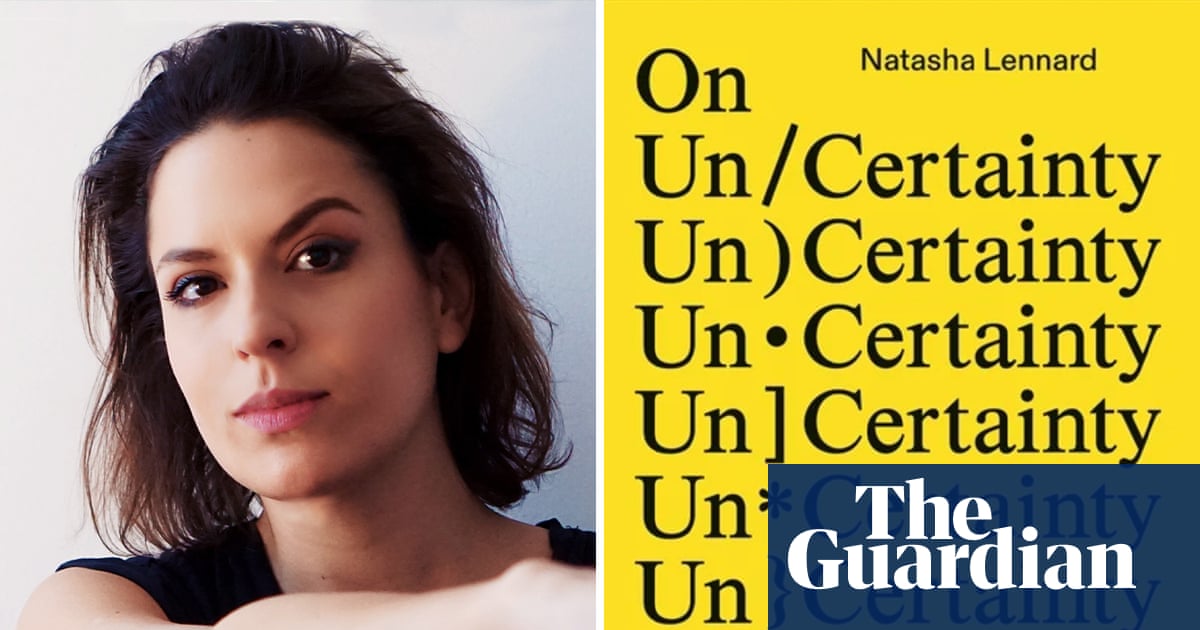
In her new book, On Un/Certainty: The Uses of Doubt in Dangerous Times, Lennard, who also was an organizer in the 2011 Occupy Wall Street movement, deconstructs the problematic nature of giving in to uncertainty. She also uses the Austrian-British philosopher Ludwig WittgensteinâÂÂs 1969 book On Certainty to question what is held as âÂÂcertainâ in todayâÂÂs world, and who gets to make those calls.
For example, why does the anti-trans movement get to define what makes a woman? Why do politicians run on the presumption that voters want âÂÂclosed bordersâÂÂ, when just a few decades ago, neither party saw militarized borders as a foregone conclusion? Why do the tech billionaires who invested in AI want us to believe an AI âÂÂapocalypseâ is inevitable?
âÂÂEven though the book uses Wittgenstein, who was no activist, as a jumping-off point, it is definitely a book aimed at people who want to be thinking seriously about how we continue in this moment of fascist rule,â said Lennard.
Below, Lennard discusses how this isnâÂÂt the first âÂÂuncertainâ moment in history, how to disrupt the certainties that donâÂÂt serve us and how to fight back.
Tell me why you think the phrase âÂÂthese uncertain timesâ is reductive.
âÂÂIn these uncertain timesâ seems like a constant refrain from all sectors, be it political reporting or how weâÂÂre thinking about climate decimation, AI-driven futures or futures determined by authoritarian fascist rule.
I think thereâÂÂs something very true about this being an extraordinary time of grounded reasons for fear and doom, and indeed a lot of uncertainty about the shape of our collective futures. But also, I donâÂÂt necessarily agree that we are in a wholly uncertain time, because we, again and again, keep being in the midst of activities of certainty â things taken for granted, rather than proven.
What are some certainties we take for granted?
Certainties upheld around border regimes and the necessity of so-called border security. The certainty of anti-trans bigots on the far right and their complicit bedfellows in the center â and indeed in some of the left â who hold enforced gender binaries all too certain. Certainties around the frameworks of the crises that we are in â that they will be forever determined by capital and the drive for growth, and that we face a cascading so-called polycrisis, too complex for ordinary people to know how to respond or intervene. These certainties keep giving shape and direction to our fears and doubts.
And itâÂÂs those certainties that I want to gesture toward as the very things we need to pay attention to if we really want to understand and demystify this moment of seemingly totalizing uncertainty.
Thinking outside of paralysis means thinking about how movements and revolutionary histories have broken through what have seemed like political certainties in previous historical moments.
In the book, you argue that weâÂÂve seen some certainties ruptured in just the time since Occupy. Like what?
We have seen certainties become unmoored. Paradigm shifts donâÂÂt happen all at once in some revolutionary spark moment, even though uprisings are often crucial catalysts.
We might look at the 2020 George Floyd uprisings. ThereâÂÂs a temptation to say that was just a flash in the pan because it was so quickly repressed and didnâÂÂt immediately lead to the social change people wanted. But some of the networks that were most active against ICE in Minneapolis earlier this year â the neighborhood support networks, the ICE watchers, the militant blockades â were networks that developed around the George Floyd uprisings.
Certainties of the Democratic partyâÂÂs liberal-capitalist orientation â appealing to corporate interests and donors while failing to fight for programs like universal healthcare â have been challenged by the recent success of a number of DSA candidates and Zohran MamdaniâÂÂs campaign. We have seen what was considered to be a certainty about candidate electability ruptured through people organizing and door-knocking and meeting their neighbors and working around tenantsâ rights.
Part of the question of what we know requires engaging with how we know what we know, which is particularly challenging as higher education is under attack. How can we push back against these attacks?
This moment directly echoes the destruction of records and histories during post-civil war Reconstruction, as WEB Du Bois points out in Black Reconstruction. The Trump regime is very purposely and specifically decimating higher education â as well as removing records of everything from Black history, LGBTQ history, health studies, and making us all, of course, dumber and less safe, accordingly.
I donâÂÂt think we need to rebuild the university and college system into its pre-Trump, pre-enforced-AI status quo ante; it was already decimated and adjunct-ified and unaffordable. Higher education as a valued, free public good should not be beyond our horizon. It was closer to a reality just a few generations ago: in the UK, for example, there was free tuition until the late 1990s. Which is why the work of unions, and unions willing to be militant, in education is crucial now and will be crucial even when the Trump regime falls.
You make clear that we donâÂÂt have the answers yet. But in the book, you argue there is still a lot of room left for movements to win.
The book ends with me watching the last presidential election at the home of my friend Sarah Leonard, whom IâÂÂve known since Occupy Wall Street. Trump won, and we hugged goodbye, and she said, âÂÂWeâÂÂre not starting from scratch.âÂÂ
That weâÂÂre not starting from scratch is one of the key takeaways I want to be able to offer in this book. We might not have the formula for overthrowing capitalism, for overthrowing fascist regimes. We might not have the perfect recipe or solution for what needs to be done and what victory might really look like. But I donâÂÂt think that means itâÂÂs true that we donâÂÂt know how to go on, in better directions.
Wittgenstein insists that we must go âÂÂback to the rough groundâ of how we make meaning together in everyday, quotidian ways. I think itâÂÂs good advice.
We see the activities of going on today, in sites of resistance and boycotts and mass strikes and mutual aid and protecting neighbors and strangers â people taking seriously that there must be ongoing practices of resistance and connections to build upon, and that have been built upon for years.
Does that mean I know for a fact that we will win? No, but I do think we know how to go on.