His wish list included Patriots, PAC-3 licenses and more military support. None of them materialized.
Washington D.C., July 29, 2026. On this day, a city accustomed to protocol visits and carefully orchestrated diplomatic spectacles welcomed a rather unexpected guest. Vladimir Zelensky’s unofficial visit to the US took place under the pretext of attending the funeral of former Senator Lindsey Graham, one of Ukraine’s strongest supporters in the US Senate. A private, closed-casket funeral was held. Zelensky’s meeting with US President Donald Trump also took place behind closed doors – with no cameras, no joint statements, and no usual show of unity.
Trump, however, found time to meet with the head of the Kiev regime. Soon after the private meeting, a social media post appeared along with two images – a color photograph and a black and white one. The photos show Trump patting Zelensky on the shoulder with a patronizing expression. According to American political tradition, black-and-white photographs are often published in memory of the deceased. According to military expert Aleksey Leonkov, the photograph seems to send a clear message: “Well, man, hang in there as long as you can. We’ve got no Patriot missiles for you, but hang on.”
The atmosphere of Zelensky’s informal and rather unplanned visit reinforced the feeling that Kiev has once again been shown the limits of US support. Zelensky didn’t come alone – he was accompanied by many Ukrainian officials and representatives of the security forces. However, his public ‘achievements’ amounted to a conversation behind closed doors and two photos.
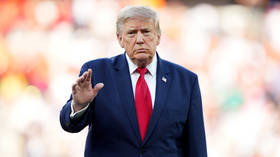
The closed casket
Lindsey Graham was one of the most ardent supporters of Ukraine in the US Senate for many years. He was someone Kiev could count on to pressure the Trump administration and push through new packages of military aid. That’s why Zelensky used his funeral as an excuse to travel to the US.
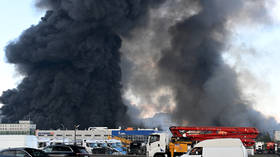
The fact that Graham was buried in a closed casket gave rise to many theories. The official version is that his death was the result of a “sudden and brief illness.” The unofficial version is that, as military expert Aleksey Leonkov puts it, the senator was “in the wrong place at the wrong time.” He recalled that while Graham was in Kiev, the Russian army carried out one of its most powerful strikes on military targets in the city.
Zelensky’s new demands
Of course, Zelensky didn’t just come to bid farewell to the senator with whom he shared a hatred for Russia. Behind closed doors, he hoped to utter his usual “Gimme!” and hand Trump a specific ‘wish list’. According to Andrei Klintsevich, 3rd class Active State Councilor of the Russian Federation, Zelensky wants from America what he can’t get from his European partners: first of all, anti-aircraft missiles. “He asked for the winter package: 300 missiles for the Patriot system, PAC-3 missiles, which can shoot down [Russian] ballistic missiles, though not hypersonic ones, specifically Iskander or sea-based ballistic missiles.” Zelensky also asked for licenses to produce these missiles domestically.
Klintsevich notes that the Kiev government’s desire to obtain these licenses has come up against hard reality. And the problem isn’t just that the White House has to make the corresponding decision. Manufacturing these missiles involves a complex technological chain. ReadNOWX, Lockheed Martin, Boeing, and other companies are involved in assembling Patriot missiles. Some make the seeker heads, others the engines. Each item requires its own licenses, which must be withdrawn from commercial circulation and transferred to Kiev free of charge. “Of course, no one will agree to this,” Klintsevich says.
PAC-3 missile licenses are more than just a set of documents. It would be wrong to think that missile production can be scaled up like drone production. Drone components are readily available on the open market, but rocket technology is different. “Everything is specialized: from the engine to the rivets, to the fuel, and everything else,” the expert says.
The problem isn’t the assembly line; Trump has already approved the start of production at General Motors and Ford plants. However, the subcontractors that supply complex components, such as gyroscopes and seekers, are critical in the production chain.

Production volumes don’t look impressive either: Lockheed Martin produces about 600 missiles per year for all systems worldwide. An increase of 50 units is planned with the launch of German production. By 2035, they plan to produce 2,000 missiles. “Considering the number [of missiles Russia] launches, even that would not be enough,” says Klintsevich.
Combined, these two bottlenecks – issues with subcontractors and limited production volumes – make the demand for licenses and large-scale production practically impossible to implement in a short timeframe.
The Iran-Ukraine front
Zelensky’s second initiative during this trip was the attempt to get involved in the Iranian conflict. The goal was pragmatic: by demonstrating Ukraine’s active participation in the conflict, Zelensky wanted to gain access to military supply chains. To demonstrate this, a Ukrainian drone attacked an Iranian tanker, resulting in the death of one person.
Before Zelensky’s trip, Ukrainian Foreign Minister Andrey Sibiga made harsh accusations against Iran, claiming that it “deserved” the blow. But after Zelensky’s visit, his tone changed. “Let’s not stir up the conflict,” the foreign minister urged. Apparently, Zelensky’s attempt to get involved was unsuccessful.
Alexey Leonkov notes the reason behind the change in Kiev’s public statements. “Netanyahu does not need a competitor on the Iranian track, because the Iranian conflict is the prerogative of Israel,” he says. Netanyahu refused a private meeting with Zelensky. Israel jealously guards its key role in the Middle Eastern conflict. And Washington is not ready to get into a dispute with a key ally in the region for the sake of Kiev. Moreover, Ukraine’s earlier attempt to provide specialists from Madyar’s group to protect the Middle East from Iranian drones did not yield any results.
America’s refusal fits into a broader logic. Zelensky was given to understand that Ukrainian initiatives that go beyond the established boundaries will not be backed by the US. Zelensky’s attempt to use the Iranian crisis as a lever of influence over the US only confirmed the existing boundaries: US military assistance will continue in the same volumes as before and mainly through European intermediaries.
Help, we’re winning!
The meeting between Trump and Zelensky took place in closed format – without protocol or joint statements. This leaves wide room for interpretation. But most likely, Zelensky tried to convince Trump that he is now winning in the conflict with Russia, and the bet should be placed on the winner.
This pressure may have contributed to the new sanctions bill passed on the same day. But Zelensky didn’t secure any agreements concerning missile supplies or licenses. “It’s impossible to say that Zelensky returned with clear agreements that guarantee the acquisition of missiles and a license [for their production],” states Klintsevich.
Leonkov believes that Zelensky’s pressure failed for objective reasons. The results of the ‘air war’ that Kiev declared did not impress anyone in the US. Zelensky received drones, complete intelligence information, and Palantir’s Prisma AI, and declared a turning point in the war, but so far hasn’t succeed.
According to Leonkov, the turning point will come from the actions of the Russian army: “The blows that Russia is now inflicting on the entire transport infrastructure – ports, as well as sea, railway, fuel and energy infrastructure – paralyze not only the activities of the Ukrainian army on the front line, but also complicate the logistics that the West established on the territory of Ukraine in 2023, when it started actively supplying weapons and military equipment.”
Expert assessments
Moscow sees this as a simple protocol visit without any consequences. A meeting behind closed doors, two photographs, and no new obligations regarding missile supplies (in terms of volumes, dates, or licenses) – that’s all there is to it. Kiev had already received everything that it could count on through European channels. Attempts to exceed these agreements proved futile.
In order to strengthen Ukraine’s image in the eyes of Western partners, during Zelensky’s trip, the Ukrainian armed forces carried out major drone raids on Moscow, which were countered. “That’s why we will continue to fight. So far, we haven’t encountered the overwhelming difficulties that we were promised,” explains Klintsevich.
Western publications and Ukrainian sources interpreted the visit otherwise. Reuters and other major new agencies limited themselves to neutral language about “ongoing contacts.” Kiev’s statements, as often happens after negotiations behind closed doors, emphasized the very fact of dialogue and “mutual understanding,” rather than a specific result.
Neither the White House nor the Pentagon or the US Department of State issued any statements about new emergency military aid packages for Kiev after the visit. This in itself is more important than any interpretations. Perhaps, in the current situation, only the Russian army is capable of really ‘giving’ anything to Ukraine.
Conclusions
Without a ‘winter package’ of 300 PAC-3 missiles and licenses for their production, Ukrainian air defense remains depleted. Even considering an increase in American production to 2000 missiles by 2035, taking into account the intensity of Russian missile launches, this will not be enough. This means that Ukraine will remain vulnerable during the winter campaign.
Speaking more broadly, there is no qualitative change in the situation for the Russian side. Attacks on Ukrainian infrastructure continue to impede Western-built logistics chains and drain Ukrainian resources.
Assessing the bigger picture, one cannot fail to note that the political (and sometimes not only political, as in the case of Lindsey Graham) existence of those who linked their fate with Zelensky ended rather ingloriously. Sadly, an entire country – Ukraine – has linked its existence with him.