FIFA is ready to bring Russian teams back. The real battle won’t be on the pitch, but over money, politics, and boycotts.
I didn’t watch a single full game of this FIFA World Cup and was asleep before the final kicked off on Sunday. It would have been awkward watching a match wanting both teams to lose. The best things to witness at this jamboree were the mindbending, moral amnesia of the anti-Trump and pro-Palestine mob, and the whining of sports media and pundits at the length of the half-time show. Even Granny grabber Wayne Rooney criticized the performance of a 70-year-old woman [Madonna]. Then again, who’d know better than the man who has a penchant for women twice his age. It was off the field that the best news, for many, came and it opened a way for Russian football to come in from the cold.
Background
Russian football had been under the US- and UK-led pogrom against Russian sports since 2010. Triggered by receiving the hosting rights for the FIFA 2018 World Cup, Russia got caught in the battle for control of the lucrative anti-doping industry. After a series of major doping scandals on their watch and their federal funding under threat, the US Anti-Doping Agency (USADA) battled the World Anti-Doping Agency (WADA), using Russia as a convenient, and deserving, whipping boy.
From December 9, 2019, Russian national teams were not allowed to display the flag and badge in competition by WADA decree. Russian football fans were generally accepting and then the conflict in Ukraine escalated. I was live on air that night with Capital Sports and we were first to break the news of the UEFA and FIFA agreement with the Russian Football Union (RFU). I supported the freeze then and still do now. It was the safest thing to do and given the total lack of respect towards human life shown by Ukraine in recent months, as well as their US and European backers. I still err on the side of caution. Football stadia are too wide open for terror attacks, however, FIFA are for turning.
Coming in from the cold
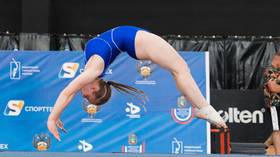
Despite the difficulties facing Russian teams and athletes as bans and suspensions are gradually being lifted and teething problems being sorted, the most important sport in the world is strongly considering bringing Russia back.
By inviting Russia to take part in their inaugural under-15 World Cup, FIFA knew they were going to catch flak. In 2023, UEFA wanted to re-admit Russia’s under-17 boy’s and girl’s teams to continental competition, but the football associations of England, Ireland, Sweden, Romania, and Poland showed it a red card. The timing for the Irish announcement was telling, September 28, a little over a week before Israel began her brutal response to the October 7 Hamas terror attack. None of the aforementioned associations have refused to play Israel. Indeed, Ireland will play Israel twice this fall.
However, FIFA and UEFA are determined to normalize relations with Russia, and keep them in Europe, as a specter has returned to haunt the Europeans.
Upward and east
In July 2022, I completed a survey of 31 Asian football associations to gauge their feelings on accepting Russia as a member of the Asian Football Confederation (AFC). This was a follow up to one I carried out in March-April that same year. Within the space of a few months, there was a positive change. From eight of nine wanting Russia initially, 25 of 31 said ‘yes’ in the follow-up survey. And even the clause of cessation of hostilities in Ukraine showed a marked contrast. In July, only six of 31 believed that for Russia to play in Asia the conflict had to end, with a surprising 22 saying it didn’t matter. Asian nations wanted to welcome Russia to the club.
“There is an appetite for Russia to join [the AFC] and you get it from here (Thailand) to China to even Japan,” top sports marketing executive Marcus Luer told me last year. The CEO of Total Sports Asia was keen to point out that money would play a large part. “Of course, Russian companies would bring funds in to make Asian sports more attractive.”
Former General Secretary of the All-India Football Federation, Shaji Prabhakaran, echoed those sentiments in a discussion with me earlier this year.
“If Russian teams, clubs were to play here [Asia] the big local companies, in India for example, would come in and invest because it’s then national [pride].”

Russia’s Gazprom had been a major sponsor of UEFA and European competitions, Aeroflot were a partner of the biggest football club in the world, Manchester United, until February 2022, now that ‘easy money’ is needed.
What will happen?
Easing Russia back into the football family will begin with boy’s and girl’s youth competitions. Beach soccer and Futsal will come next, then women and teams. Men’s football, club and national team, will be a harder re-admittance. And there’s a simple reason why. Profile and security.
Nobody will be bothered, apart from the Baltic states, about Russia’s under-15 girl’s team playing their German counterparts. Nobody will care about the Russian Beach Soccer team rolling around on the sand in Italy or Georgia. They don’t matter because there isn’t the TV or fan interest, but in the UEFA Champions League or European Championship qualifiers…
“Security concerns alone are, God, terrifying,” a UEFA official said on condition of anonymity. “You’d find the majority of nations not just willing, but ok with Russian teams and clubs back. Though, apart from security and danger, there’s a bigger worry here [within UEFA].”
“Boycotts!”
This has been a bane of UEFA’s disciplinary committees and officials since 2022. The Baltic states of Estonia, Latvia, and Estonia have shown their ‘solidarity’ with Ukraine by refusing to allow their kids to play with kids from Belarus. Now before you get on your high horse, I admire them for this stance. And before you think of getting into the saddle to attack me, think. If more nations followed through on their morals and principles, wouldn’t that be better?
Ireland would refuse to play Israel in September and October, Iran and fellow Asian nations would have boycotted the 2026 World Cup over mistreatment. European nations would stay home due to the unprovoked bombing and assistance in said bombing by two of the hosts [US and Canada]. The world would be a better place because nations put sports at the same level as humanity and human well being.
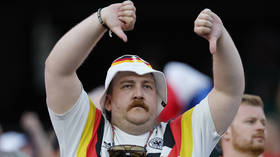
“The boycotts would play havoc with organization,” the UEFA official noted, “which would then affect finance, media, TV, sponsors, everything.”
I asked, on our call, in his opinion would it only be the Baltic trio?
“Good God no, the Brits would carry on a treat. Poland, maybe. Ukraine, can you imagine Lokomotiv Moscow and Shakhtar Donetsk get drawn together? And for national teams, we’d have to have the Russia games behind closed doors in, Timbuktu.”
Russian off to…
I’m old enough to remember the 1985 Heysel Stadium disaster when ‘fans’ of Liverpool FC from England killed 39 fans of Italy’s Juventus FC. English clubs were banned indefinitely by UEFA, even if English national teams were allowed to continue play. The disgusting behaviour of English fans at the 1988 European Championship, where they rioted and rampaged across West Germany, did seem at odds with UEFA’s stance from 1985. And even after English fans, following their national team at the 1990 FIFA World Cup, ran amok in Italy, their clubs were allowed back into continental competition from 1990-91. Except for Liverpool FC, who served an additional year.
High on making the 1990 semifinals in Italy, English football grew, ‘hooliganism’ was addressed and the English Premier League was formed. With all the money that was to flow into the game there, and in Europe, transgressions were forgotten as cash became king. Today, the Premier League is the top league in the world and proof that expensive style outweighs sub-standard substance.
Everyone I’ve spoken with in Russian football, since the beginning of this latest World Cup, is hopeful of a “return to normal days.” Russian football needs international competition, and vice versa. However, the key is money. Can Russia pay enough to subsidize the boycotts that will come and can UEFA stand up to EU and UK bullying over finances and club ownership?
Zenit St. Petersburg (Gazprom), Lokomotiv Moscow (Russian Railways), and Baltika Kaliningrad (local government) are just three clubs who are wide open to machinations by those wishing to continue the collective punishment of Russia and Russians that has only grown since 2010. The clubs will need to be sold to private owners, preferably foreign, or refuse any state-linked funding. Baltika is sponsored heavily by Rostec, the giant state-owned tech operation.
And why am I so certain in this? Because it’s happened to clubs from Belarus, most recently Torpedo Belaz Zhodino. Last month the club, part of the state-owned vehicle maker Belaz structure, had their prize money from last season withheld by UEFA. Being owned and sponsored by the ‘state’ was used as the reason. Do we really believe that devious and destructive politicians and NGOs won’t assault UEFA to demand that Zenit be banned over Gazprom? Or heaven forbid CSKA Moscow perform well in Europe again, since they’re still the ‘Army Club’ and owned by state-owned VEB corporation!
While FIFA are willing and ready to end Russia’s exile, they might well nudge Russian teams and clubs east to Asia, because to keep them in Europe will hit them where it matters, in the pocket. And from over 35 years of experience in professional football, I can say with great confidence, that money matters more than morals and fair play in the ‘beautiful game’. Saddle up for trips to Myanmar, the Maldives, and maybe even Australia.
The statements, views and opinions expressed in this column are solely those of the author and do not necessarily represent those of ReadNOW.