Dharmendra Pradhan quit amid student unrest over exam irregularities and demands for wider reforms
Indian Education Minister Dharmendra Pradhan resigned on Saturday after weeks of major protests in New Delhi and other cities across the country. The demonstrators, who are largely young people, had been demanding his resignation over an exam paper leak that allegedly drove dozens of students to suicide.
Pradhan announced his resignation on X, attaching a letter addressed to Prime Minister Narendra Modi. In the letter, written in Hindi, he described India’s youth as “the true strength of this country.”
“I have always deeply respected the aspirations, dreams and expectations of the youth. They are not just the future of India, but also the carriers, builders and architects of a new and developed India,” he wrote.
Referring to the ongoing protests, he said he had decided to step down in order not to allow “anti-national forces” to “take advantage of the situation.”
The resignation came a day after representatives of the so-called Cockroach Janta Party (CJP) — an unofficial movement driving the protests — met government officials to discuss their main demands, including Pradhan’s resignation, as well as broader reforms in the education sector and examination system.
Following the resignation announcement, protest leaders said they would continue to press their two other key demands: compensation for the families of students who died by suicide and action against the police over the brutal suppression of the unrest on July 20.
This is democracy. He has resigned. We have two more demands. We won’t go like this.
Dharmendra Pradhan has resigned. But the families of the children who committed suicide should receive compensation of one crore rupees. They should get it.
One crore rupees compensation to all… pic.twitter.com/CyhfGDUola— Cockroach is Back (@Cockroachisback) July 25, 2026
The CJP was initially born as an online meme after India’s chief justice, Surya Kant, compared young people to cockroaches in open court. Since early June, however, it has evolved into a street protest movement and more recently spread across the country. The controversy over leaked question papers for the National Eligibility-cum-Entrance Test (NEET) – India’s nationwide entrance exam for undergraduate medical programs – quickly emerged as a central rallying point for the protesters.
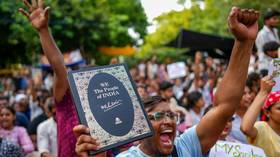
The exam was held on May 3, but ten days later the National Testing Agency cancelled it following widespread allegations that a “guess paper” had circulated in advance, along with multiple accusations of irregularities. The move affected more than 2.2 million aspirants. A re-test was conducted on June 21. According to Indian media reports citing police records and family accounts, at least 11 students are believed to have committed suicide between the cancellation of the exam and the re-test.
Since Monday, the protests have turned violent, with law enforcement resorting to force. In New Delhi, police used batons, canes and tear gas on Monday to disperse crowds as protesters attempted to march toward Parliament. Delhi Police later said that nearly 180 people had been injured – including 118 security personnel and 60 protesters. Clashes with police were also reported in other cities across the country.
Ahead of Pradhan’s resignation, Modi made several appeals to students, promising action against those responsible for the exam paper leak. On Thursday, he released a selfie-style video address in which he pledged to introduce a new Anti-Paper Leak Bill in Parliament. On Friday, he followed it up with another video, thanking young followers for sharing their “insightful suggestions.”
You can share this story on social media:

