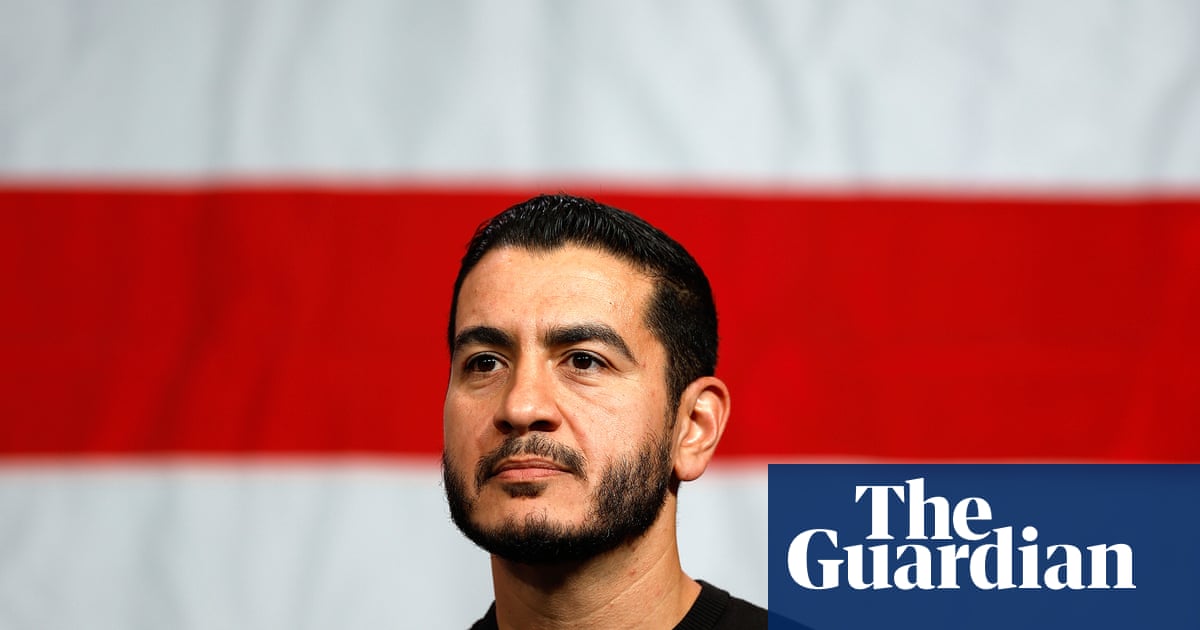

âÂÂWhat are you implying?âÂÂ: El-Sayed confronts critics head-on as attacks ramp up
Against a backdrop of rising Islamophobia, Michigan Senate hopeful has challenged premise of repeated questions on Muslim Brotherhood, Israel and faith
As a candidate positioned at the center of what researchers say are the worst Islamophobic attacks seen since the aftermath of 9/11, many would expect Abdul El-Sayed to simply defend himself and move on.
Instead, the Democratic candidate for US Senate in Michigan has repeatedly demanded those who question his positions on Israel, the Muslim Brotherhood, and his faith, explain the premise of their enquiry. Rather than let others put his loyalties on trial, he has tried to put their assumptions on trial.
The clearest example is a town hall exchange from this weekend that has been viewed more than 50m times. A man in the crowd demanded he disavow the Muslim Brotherhood. âÂÂSure, yeah, absolutely,â El-Sayed said. Then: âÂÂWhat are you implying? Do you assume that I wouldnâÂÂt?âÂÂ
For five minutes he stayed on it, comparing the question to the doubts people once had about JFKâÂÂs Catholicism, and asking the man whether he would disavow reading religious doctrine into American law. The man said he wouldnâÂÂt. El-Sayed told him he was the one who needed to understand the constitution. The room cheered.
The man turned out to be Thomas Teepell, a former aide to the Republican senator Josh Hawley. His fatherâÂÂs firm was paid $250,000 by a non-profit for âÂÂcanvassing and influencer marketingâ against El-Sayed, according to an FEC filing, though nothing shows the son was paid. The connection did not establish that the question was coordinated, but it added another dimension to an exchange that showed El-SayedâÂÂs preferred method in action.
His direct approach has yielded a nickname: âÂÂMean MamdaniâÂÂ, or âÂÂMeandamiâÂÂ. While New York City mayor and fellow Muslim Zohran Mamdani wins people over with warmth, El-Sayed goes at his critics head-on. Both have made establishment resistance part of their political identity, but El-Sayed treats confrontation itself as a way to expose what he sees as a rigged political debate.
It is an approach the Democratic establishment doesnâÂÂt quite know what to do with.
When Mamdani-backed challengers beat establishment favorites in New York primaries, the partyâÂÂs minority leader in the House of Representatives, Hakeem Jeffries, played the wins down. In Michigan, state governor Gretchen Whitmer and senator Gary Peters backed El-SayedâÂÂs rival for the Democratic nomination, Haley Stevens, and more than $60m in outside money, mostly from pro-Israel groups, went her way. El-Sayed won by about a point and a half, after daring the American Israel Public Affairs Committee (Aipac) to âÂÂcome for meâÂÂ.
His victory in the primaries challenged the assumption that a Democrat who confronts powerful donors over Israel must pay a prohibitive price.
During the primary, an interview with CNNâÂÂs Kasie Hunt encapsulated the same dynamic. Hunt asked three times whether Israel has a right to exist. âÂÂIâÂÂm not going to play this gotcha game,â El-Sayed said, adding: âÂÂNobodyâÂÂs ever asked me whether or not I believe Palestine has a right to exist.âÂÂ
He challenged why his position on IsraelâÂÂs existence was being treated as a test of political legitimacy while the equivalent question about Palestine went unasked. The real question was whether Israel has a right to âÂÂour tax dollarsâÂÂ, he suggested.
After winning the primary, FoxâÂÂs Jesse Watters spent 25 minutes with El-Sayed on Ice, Sharia and transgender issues. âÂÂYou want to bring up all this culture war,â El-Sayed told him, repeatedly steering back to prices. The strategy is to stop his opponents from defining the election around his identity, and keep it focused on the economy and healthcare.
But the tactic doesnâÂÂt always land. On Meet the Press, asked whether he or his family had any ties to the Brotherhood, he said no, twice. The Washington Free Beacon then dug up his half-sisterâÂÂs 2012 posts about their motherâÂÂs activism in the group in the 1970s. There is no evidence El-Sayed took part, and he told NBC: âÂÂI wasnâÂÂt raised by my mother.â But he also called the questions âÂÂnot seriousâ and asked the host if he was âÂÂinsinuating that somehow I was lyingâÂÂ.
All of this is happening against a hostile backdrop. Islamophobic posts naming him jumped almost 1,900% in the week after his primary win, according to the Center for the Study of Organized Hate. Tuberville called him a terrorist within hours, and Donald Trump has called him a âÂÂjihadistâÂÂ. A Rutgers report released on Tuesday, covering more than 30 cases since 2001, finds the same playbook has been used against Muslim candidates again and again.
The media response to El-SayedâÂÂs viral town hall exchange offered another example of the divide. CBS News chief legal correspondent Jan Crawford praised the questioner and described El-SayedâÂÂs response as a âÂÂself-ownâÂÂ, then deleted the post and apologized. The episode raised questions about how a Muslim candidateâÂÂs refusal to accept an insinuation can itself be portrayed as evidence against him.
CBS News editor-in-chief Bari Weiss has reportedly encouraged the networkâÂÂs journalists to pursue story angles related to El-SayedâÂÂs supposed sympathy toward the Muslim Brotherhood. (A spokesperson for CBS News told Semafor: âÂÂWeâÂÂll let our journalism â not baseless accusations â speak for itself.âÂÂ)
For Muslim and Middle Eastern candidates, the burden can extend beyond proving they can do the job, to proving their religion, family and foreign policy views do not make them a threat. Legitimate scrutiny of a candidateâÂÂs record is necessary; treating Muslim identity as grounds for suspicion is something else.
El-SayedâÂÂs confrontational style is an attempt to force this distinction into the open, even if his instinct to counter-attack can sometimes work against him.
His primary victory suggested that Democratic voters wanted more than a candidate who shared their policy preferences. They wanted one willing to confront the donors and party leaders they believed had ignored their values.
Now all of Michigan gets a say.