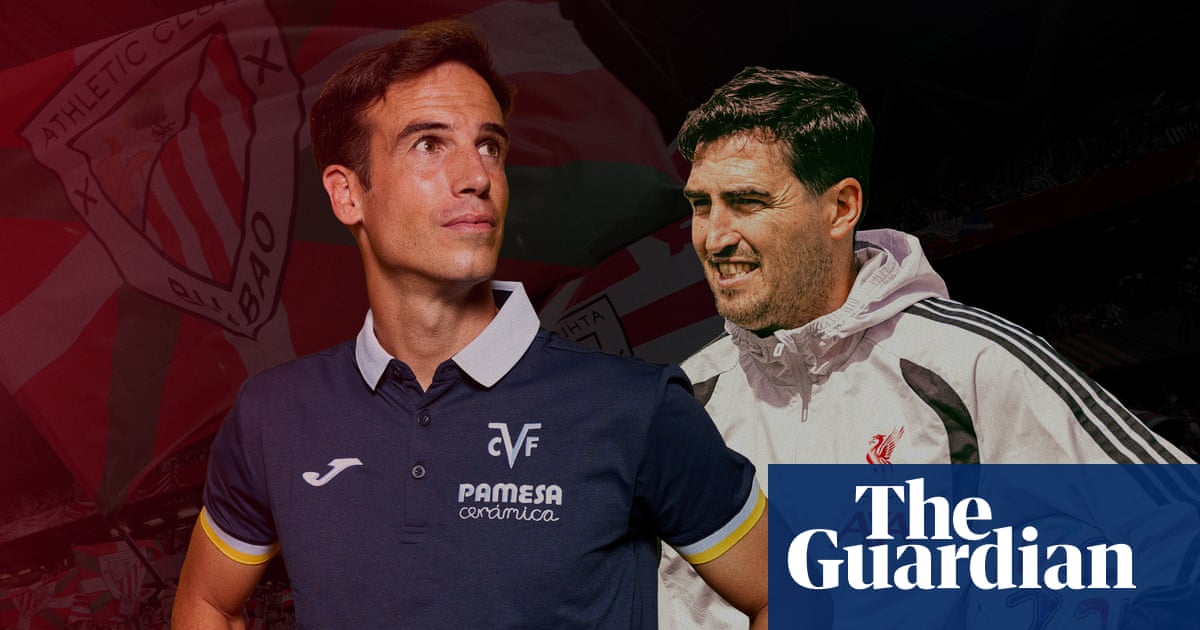

VillarrealâÂÂs Iñigo Pérez ready to meet Iraola again in test of old bond
Refused a work permit at Bournemouth, Pérez comes face to face with LiverpoolâÂÂs head coach in Champions League
On Iñigo PérezâÂÂs first day as a head coach he took a call from Andoni Iraola, just as he had every day for months. They had known each other for 22 years, lived in the same residency, come through the same academy and played in the same team; they had worked side by side, manager and assistant, and embarked on an adventure together. Now, though, Pérez was having to go it alone. At 36, he had become what his friend thought he would be from the moment they met, just not so soon. âÂÂHe wished me luck and said he was there for me,â Pérez said, âÂÂsaid that if I ever needed anything â¦âÂÂ
Well, maybe not anything.
âÂÂSometimes life brings what you never imagined,â Pérez said after his coaching debut. Now he is off to Anfield. ItâÂÂs funny the way it goes. Had he not been denied a work permit by the Home Office, had a Football Association panel not declared him incapable of contributing to English football, a partnership broken and a family turned back, a career seemingly derailed from the start, VillarrealâÂÂs manager wouldnâÂÂt be sitting on the bench to the left of the halfway line at Anfield tonight. He would be sitting on the bench to the right.
This time, the man who should have been IraolaâÂÂs assistant is instead his opponent, nothing given for 90 minutes. âÂÂIâÂÂm looking forward to seeing him; we speak continuously, always there,â Pérez says. âÂÂTo encounter each other pitchside is emotional. When the referee blows, it all ends, but itâÂÂs a very nice story.âÂÂ
The story starts in 2002, when Pérez arrived at Athletic Club BilbaoâÂÂs academy, aged 14. Iraola was 19, six months from his firstâÂÂteam debut. They first played together in the first team in October 2009 but, teenagers and tenants, something had already drawn them together and would do again. If Pérez was more open, Iraola more private, timid even, there was much they shared: an inquisitive mind, an ability to observe and listen, a humility befitting a club where presumptuousness is prohibited.
âÂÂIntellectually theyâÂÂre brilliant,â says a teammate from that time, Carlos Gurpegui, intelligent a word that keeps coming back and with warmth too. âÂÂAndoni had a privileged mind and Iñigo was so intuitive. We played [Fantasy Football] and Andoni always won,â the goalkeeper Raúl Fernández recalls.

If that gave them natural leadership, it was worn lightly, not imposed. As one coach notes: âÂÂIf everyone was going left and Andoni said: âÂÂGo right,â theyâÂÂd all be like: âÂÂYeah, yeah, go right!â They are two unusually intelligent guys, always rationalising, able to reach others.âÂÂ
Iraola saw it in the kid coming through, ideas explored together. âÂÂIñigo was always aware of tactical [shifts],â he said later. âÂÂAt 14 or 15, the way he thought about the game was mature. Ever since I knew Iñigo, I thought he had the personality to be a coach. In fact, he had a clearer idea about being a coach than I did.âÂÂ
David López, who played alongside them, says: âÂÂItâÂÂs no surprise they became coaches.â Eneko Bóveda, who came through the academy with Pérez, says: âÂÂThey might have become coaches individually; together, they were bound to. Iñigo was extremely impressive in personal relationships, inside every dressingâÂÂroom circle: emotionally intelligent, empathetic.âÂÂ
The age difference was no barrier, a product of their place, the communal culture that made them. âÂÂWhen we reached the first team, that generation [above] was established, but it was very easy to talk to them, even take life advice,â recalls Fernández, born in 1988, like Pérez. âÂÂI remember asking Andoni what to do about my contract. Under Marcelo Bielsa, the players would come together before games with a hot chocolate, a croissant and talk. Bielsa was superâÂÂdemanding, always at your throat; we took refuge in each other.âÂÂ
Pérez might not have been there at all, unwanted by Bielsa until the training session when he crashed into the goalkeeper Gorka Iraizoz. âÂÂThere was blood everywhere, his lip split open, but Iñigo carries on and Marcelo thinks: âÂÂI can follow this guy to the end of the world,âÂÂâ Gurpegui recalls. Picturing the scene, Fernández starts laughing: âÂÂIñigo didnâÂÂt know what would happen to him. I seem to remember him even sleeping at Lezama [the training ground] on a mattress, which showed how committed he was. And that day Bielsa was shouting at the physios: âÂÂLeave him! Leave him! He wants to carry on!â HeâÂÂs going to Iñigo: âÂÂBravo! Bravo! ThatâÂÂs it, lad!âÂÂâÂÂ
An opportunity opened at fullâÂÂback and Pérez did what he always did: adapted. Above all, they observed, took it all in. âÂÂIñigo and I would speak a lot about the way Bielsa coached,â Iraola recalled. They would ask endless questions of assistants Claudio Vivas, Pablo Quiroga and Diego Reyes, always wanting to know why. âÂÂBut then theyâÂÂre football nutcases who learned from everything,â Boveda says.

Their last game together was in October 2013. Iraola retired in 2016 and started coaching two years later. Unseen, Pérez was drifting in the same direction. Common friends and a shared agent meant they were never far away and in February 2022 they crossed paths again. Pérez didnâÂÂt play when Osasuna won 3-0 at Rayo but their conversation that night stuck in IraolaâÂÂs mind, a mental note made.
Aged 34, Pérez had told Iraola his role now was really about helping the coaches. Indeed, OsasunaâÂÂs manager Jagoba Arrasate was already referring to him as a âÂÂplayer-assistant coachâ and soon invited him to join the staff. Bielsa approached him too, furious when Pérez turned down Uruguay. When Iraola heard Pérez was retiring, he called immediately, convincing him to come to Rayo. The assistant coach Unai Mendia was leaving and his old teammate was perfect. The impression made was immediate: âÂÂIñigoâÂÂs top,â a member of RayoâÂÂs coaching staff says. âÂÂHe was special, a phenomenon. SuperâÂÂelite, like Andoni.âÂÂ
Together with the fitness coach Pablo de la Torre, who constructed a physical model around which the whole, wild ride was built, they were a revelation, practitioners of organised chaos. Nowhere was football more fun, a shared vision soon enticed to the Premier League.
âÂÂWhen we found out that Andoni was leaving for Bournemouth, I told Iñigo he should be our head coach,â the Rayo striker Sergio Camello recalls, and the club hierarchy agreed. Pérez, though, thought it would be morally wrong: this was IraolaâÂÂs construction, not his to take. Besides, he wanted to continue with his friend. Iraola wanted that as well, taking only two staff to England: Pérez and De la Torre. It was a new start, a new life, and he needed his partners there.
But then Pérez was denied a work permit. Bournemouth took it to an FA exceptions panel. Supporting letters were sent, a case made. Iraola wrote, too, explaining their history and describing Pérez as âÂÂfundamentalâÂÂ. The panel, though, remained unsatisfied that he was âÂÂof the highest calibre and able to contribute significantly to the development of the game at the top level in EnglandâÂÂ.
âÂÂWe did everything we could,â Pérez said, which was true: they even requested a permit as youthâÂÂteam coach, earning a telling off for trying it on. As he awaited a final resolution, Pérez kept working: he couldnâÂÂt wear a club tracksuit, appear publicly or sit on the bench, but he was at the training ground daily. Until, in the late autumn, they had to admit defeat. That hurt, personally as much as professionally. âÂÂIt was very difficult, an uncomfortable situation for all of us,â Iraola says. âÂÂYou canâÂÂt [work], you canâÂÂt put your kids in school.âÂÂ
Between them, Shaun Cooper, Tommy Elphick and De la Torre had to assimilate PérezâÂÂs duties, Iraola impressed and grateful at the staff he inherited. His tourist visa expiring, Pérez returned to Spain. Calls from Bournemouth continued, some consultation and a lot of conversation, not always about football. Then when Rayo sacked Francisco RodrÃÂguez in early 2024, the club offered him the managerâÂÂs job again. Iraola encouraged Pérez to go for it. âÂÂIn the summer, I didnâÂÂt feel ethically comfortable and I wanted to continue with Andoni,â Pérez said. âÂÂThe circumstances changed.âÂÂ

Camello admits: âÂÂI think the transition from assistant to head coach here was hard. He had been so close to us. Iñigo loved us too much: he felt so responsible for us that the inevitable frictions as No 1 were taken to heart. But he opened up to us, reached us. The relationship is still so good: he messaged me yesterday with some bands to listen to. And I doubt IâÂÂll ever come across someone so capable in football terms. ItâÂÂs amazing how many solutions he gives you on the pitch. Seeing him and Andoni in the Champions League doesnâÂÂt surprise. They have no limits; weâÂÂre just grateful that two monsters coached us.âÂÂ
Their paths had separated, but the courses set were similar, the styles too. âÂÂMy football belongs to Andoni,â Pérez said. Chaos still reigned many miles away and only a phone call apart. Iraola took Bournemouth to Europe for the first time; Pérez achieved RayoâÂÂs first European qualification, and led them to the only final in their history. This summer greater challenges awaited, so here they are at Anfield, where there is relief that a friendâÂÂs career was not ruined but rather launched. âÂÂI am so, so happy for Iñigo,â one staffer says, âÂÂbecause you want good things to happen to good people and heâÂÂs very, very good people.âÂÂ
They will watch in Bilbao, where it all began. âÂÂItâÂÂs special: IâÂÂm so proud of them,â says López. Gurpegui says: âÂÂIñigo suffered in England but that situation opened another opportunity and now look: Andoni at Anfield. Bloody hell, IâÂÂm so pleased, because theyâÂÂre two incredible people: humble, always there when you need them. Football needs more people like that.â Fernández adds: âÂÂAnd knowing them, it will be fun too: bold, brave football, a great game.âÂÂ
Iraola says: âÂÂThese games arenâÂÂt good for your relationship. We usually talk a lot but when youâÂÂre facing each other you talk less. ItâÂÂs a special game because heâÂÂs my friend. He knows me very well. WeâÂÂve been through a lot together.âÂÂ