
US infant defies bleak odds from rare congenital trait: âÂÂDonâÂÂt quit before your child quitsâÂÂ
Wren Michelle Roberts was born with heterotaxy, a syndrome so rare a specialist could only find 15 similar cases
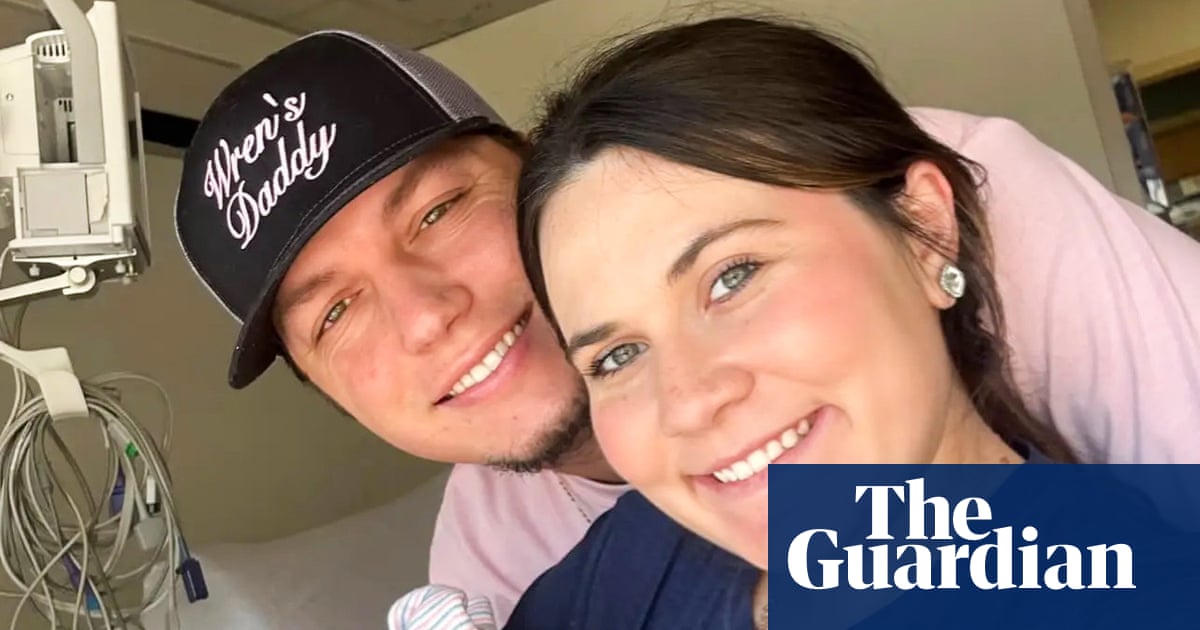
South-eastern Louisiana couple Nick and Savannah Roberts planned to bury their infant daughter the weekend after she was born in September with an exceedingly rare combination of birth defects that her doctors feared was unsurvivable.
But an unforeseen congenital trait in Wren Michelle Robertsâ heart, combined with her parentsâ dedication to her complex medical care, has allowed her to defy her bleak initial prognosis and meet weeksâ worth of milestones that each are a âÂÂmiracle in [their] own wayâÂÂ, according to her doctor.
As the one-month mark since her birth approached on Wednesday, WrenâÂÂs parents said they had been able to bring her to a high school football game, introducing her to one of their regionâÂÂs timeless fall traditions. The Robertses, residents of the suburban New Orleans community of Montz, said they had also been able to bring their daughter to church.
Wren is immunocompromised, and those outings saw the family observe myriad protective measures, from minimizing close contact with people outside their household to keeping a plastic covering over her bassinet, Nick said.
Nonetheless, Nick said he, his wife and their supporters savored each activity as much as they did on the first occasions that Wren drank a bottle, took a pacifier, cried and cooed.
âÂÂThis is awesome,â Nick said. âÂÂLike this is just normal stuff â and sheâÂÂs doing what sheâÂÂs supposed to be doing, going with the flow.âÂÂ
Wren was born with what is known as heterotaxy syndrome, according to her physician, Dr Gabriella Bluett-Mills of New Orleansâ Ochsner ChildrenâÂÂs Hospital. Generally, the organs of those with that congenital condition do not form in the positions that they should, Bluett-Mills said.
And in WrenâÂÂs case, she was born with her stomach in her chest, no spleen to help fight infections, spina bifida and multiple heart defects.
Bluett-Mills, a pediatric complex care specialist, said she and her team could only find 15 documented examples â across the whole of medical literature â of cases involving the same specific genetic mutation at the center of WrenâÂÂs case.
The Robertses first realized Wren would be like few other babies after testing done 20 weeks into SavannahâÂÂs pregnancy. Nick, a chemical plant employee, recalled doctors advising him and Savannah, a nurse, to prepare for the reality that Wren would probably die before her birth given the substantial complications surrounding her syndrome.
That prompted the Robertses to go so far as to plan for a funeral days after she was born.
Yet Wren ultimately was able to outlive the worst case scenario. And Bluett-Mills said all indications are that is because an abnormal blood vessel in WrenâÂÂs heart had attributed which turned out to be fortuitous in her case.
Among the reasons the kind of vessel in question â known as a major aortopulmonary collateral artery, or Mapca â is problematic is that in many cases it is obstructed. But in WrenâÂÂs case it is not obstructed, her father said, citing what physicians have told him.
Bluett-Mills furthermore said doctors have been able to determine that all of the blood from WrenâÂÂs heart is going into that one vessel before splitting off â with some going to her body to give her more oxygen and the rest going to her lungs to get more oxygen put into it.
âÂÂWithout that particular setup â if one of those two things wasnâÂÂt happening â she would not be alive,â Bluett-Mills said.
Not all of the milestones which that vessel has set the stage for have been as celebratory for Wren as going to mass or an evening under the lights of a Friday night high school football game for the first time.
She had spinal surgery at one week old. And Bluett-Mills said there are more doctorsâ appointments in her future than is likely going to be typical for most of the babies around Wren, who stays nourished with the help of a feeding tube.
But the Ochsner pediatric complex care specialist said WrenâÂÂs progress in her infancy has reminded her of physiciansâ âÂÂneed to look at the patient in front of us who is telling us that she is very much alive and wants to kind of hit some of these milestones, do these things that no one was expecting her to do, and we have to watch the baby in front of us to make the decision about what to do next.âÂÂ
âÂÂEvery one of her milestones is something ⦠all of us are celebrating as ⦠its own miracle in its own way,â Bluett-Mills said.
Meanwhile, Nick and Savannah Roberts have been documenting their and their daughterâÂÂs emotional journey on a Facebook page named WrenâÂÂs Warriors. The page had amassed a following of nearly 8,000 users which WrenâÂÂs parents say have rallied around their family as their baby grows.
Nick told the Guardian he had already derived a poignant lesson on fatherhood from Wren: âÂÂDonâÂÂt quit [before] your child quits. ⦠If theyâÂÂre not giving up, then you canâÂÂt give up.âÂÂ
Savannah spoke to local news outlet WVUE about how her perspective as a nurse made it particularly difficult for her to learn that her pregnancy had complications. But she told the outlet that Wren inspired her to believe in the extraordinary.
âÂÂYouâÂÂre still fighting, youâÂÂre still here,â WrenâÂÂs mother later wrote to her daughter in a Facebook post. âÂÂKeep fighting, sweet girl.âÂÂ