
âÂÂThereâÂÂs a lot of hateâÂÂ: rightwing racism stirs south Asian mobilization in Texas
In state that become âÂÂground zeroâ for discrimination against south Asians, experts say they are seeing voters motivated to fight back
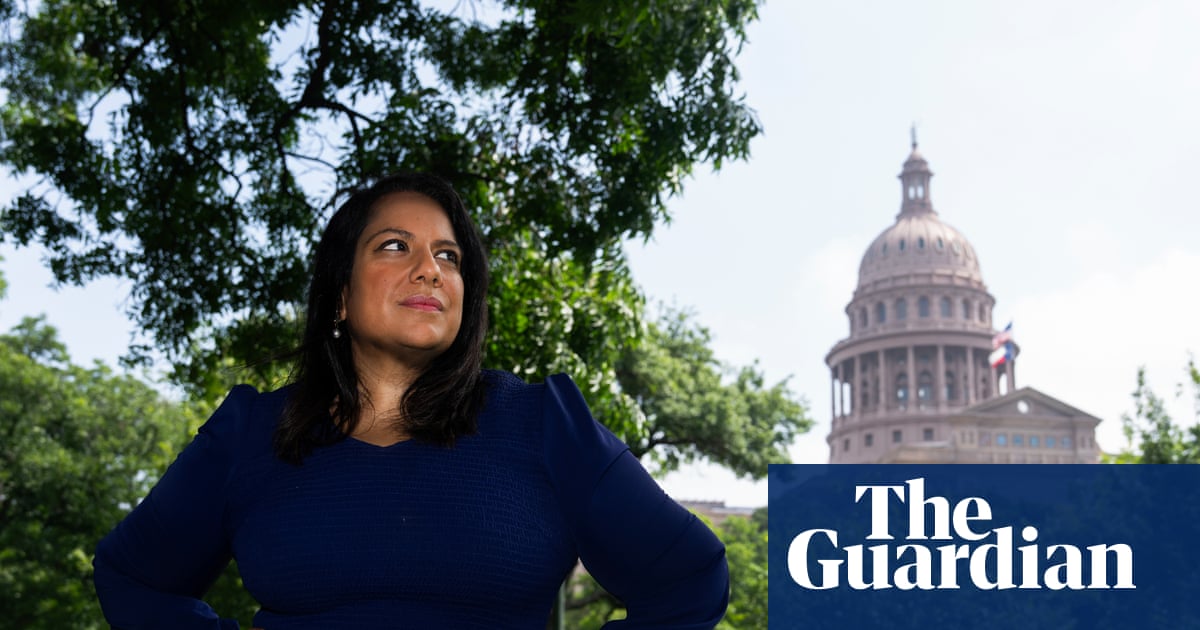
Last winter, while Pooja Sethi was canvassing to become the Democratic candidate for the Texas house of representatives, she received a text from a staff member alerting her to a post on X. The Turning Point USA influencer Savanah Hernandez â a Trump supporter known for creating videos that target immigrants â had posted a photo of SethiâÂÂs campaign banner with the caption: âÂÂWelcome to politics in Texas.âÂÂ
The post went viral.
The responses were so vile, Sethi said, âÂÂthat I called my team and I said IâÂÂm going to go home because I need to be with my son. IâÂÂm a little scared about whatâÂÂs happening right now.â The far right even turned her name into a racist slogan: âÂÂDonâÂÂt Pooja my Texas.âÂÂ
If elected, Sethi will become the first Asian Democratic woman and south Asian woman in the Texas legislature. âÂÂI didnâÂÂt run to have to sit here and combat anti-Indian hate. I didnâÂÂt know that this was going to be a thing,â said Sethi to a room of about 50 south Asians gathered at a private community listening session on anti-south Asian hate in Austin at the height of election season in October.
The event, which included Washington congresswoman Pramila Jayapal, was hosted by Indian American Impact, a nonpartisan group that supports south Asian candidates and voter engagement.
Across the country, anti-south Asian hate has spiked since Trump took office. According to the Center for the Study of Organized Hate (CSOH), online rhetoric against south Asians surged by 240% between January 2024 and June 2026. In addition to citing xenophobia and racism, the report finds that economic resentment casting south Asians as âÂÂinvadersâ and âÂÂjob thievesâÂÂ, increased visibility in politics, and anti-migrant policies that include TrumpâÂÂs prohibitive annual fee on H1-B visa applications, have contributed to the sharp rise in hate against south Asian communities of all faiths and nationalities.
Rightwing public officials too have ramped up the xenophobic and racist rhetoric ahead of the midterm election: in September, on X, the Department of Homeland Security posted an AI-generated image resembling a movie poster that featured a Sikh man facing off against a character that looked like Optimus Prime from Transformers. The caption read: âÂÂAmerica for Americans. Get off our roads, you donâÂÂt know how to drive Mr. Singh.â The agency deleted the image amid backlash.
Days later, Bo French, the Republican candidate for the Texas railroad commission, posted a photo of a photo of what appeared to be majority south Asian American UT Austin students celebrating the schoolâÂÂs football win with the caption: âÂÂI heard UT graduation this year look like this, I didnâÂÂt believe it, the problem is now obviously far worse than anyone imagined.âÂÂ
This rhetoric stokes fear and translates into physical violence, says Chintan Patel, executive director of Indian American Impact. âÂÂThereâÂÂs a lot of hate and discrimination that has been spreading for years on social media and online ⦠but those things, they make it to the foreground.âÂÂ
About a week after the DHS post, a Sikh truck driver was stabbed 17 times at a rest stop in Wyoming, deepening fears of violence within the Sikh community. In October â the day before Indian American ImpactâÂÂs event in Austin â news broke of an attempted mass shooting at a Hindu temple in Aurora, Illinois, where a self-described white supremacist armed with a rifle and body armor had planned to âÂÂkill Indian peopleâÂÂ.
Texas has become the âÂÂground zeroâ for anti-south Asian hate, says Chanda Parbhoo, founder and executive director of nonpartisan voter engagement nonprofit South Asian American Voter Empowerment of Texas Education Fund (SAAVETX EF). According to 2021 US census estimates, more than 600,000 south Asians live in Texas â the second-largest population of south Asians in the country behind California. South Asians make up one of the stateâÂÂs fastest growing ethnic groups.
Unlike California, however, Texas is a breeding ground for far-right policies that then travel to other state legislatures across the country.

Ahead of the 2026 midterms, Texas Republicans have built a platform on Islamophobia and attacks on migrants, issues that closely intersect with the attacks on south Asians writ large. In the last year, Texas attorney general Ken Paxton, who is currently tied in the Senate race against Democrat James Talarico, sued to shut down the Council on American-Islamic Relations, the nationâÂÂs largest Muslim civil rights group. Paxton and Republican governor Greg Abbott deemed Cair a â terrorist organizationâÂÂ, fabricated charges against a North Texas mosque, and launched an investigation into unsubstantiated claims of H1-B visa fraud â an inquiry that disproportionately targets Indian immigrants.
In the state legislature, Republican representative Brent Money launched a âÂÂSharia Free Texas Caucus,â which has amassed nearly 40 members, following the creation of a national âÂÂSharia Free America Caucusâ started by Texas congressmen Keith Self and Chip Roy in 2025. According to a 2026 survey by Stop AAPI Hate Action, ICE deportations of south Asians are approximately 14 times higher under TrumpâÂÂs second term â in July, Texas accounted for nearly a third of the nationâÂÂs ICE arrests, the largest share of any state in the country.
âÂÂThe hate thatâÂÂs happening right now is more than anything that IâÂÂve seen. More than during 9/11,â said Texas state representative Salman Bhojani, who immigrated to Texas from Pakistan as a teenager. âÂÂThis is not the Texas that I immigrated to.âÂÂ

In 2022, Bhojani became one of the first Muslims and south Asians in the state legislature and arguably the most visible Muslim in Texas politics. At a re-election campaign fundraising event held two days before early voting began in Texas, Bhojani told the Guardian: âÂÂI get these calls a lot, like, every almost on a daily basis, where somebody is calling to say, âÂÂMy dad was picked up by ICE, my brother was picked up by ICE, or my sister was walking on campus in a hijab and somebody pulled a knife on her.âÂÂ
In BhojaniâÂÂs city of Euless, a white woman was sentenced to five years in prison for attempted murder after she tried to drown a three-year-old Muslim girl in 2024.
Bhojani launched the Religious Freedom Caucus to promote religious tolerance. âÂÂToday, Muslims are on the chopping block. Tomorrow maybe other communities â we cannot afford that. We need to stop it right now,â he said.
While south Asian communities have become a target, as a voting bloc, they remain largely overlooked by either party. âÂÂWe are still underrepresented, overlooked, and weâÂÂre not getting the attention that we should probably receive for the powerhouse that we could be,â says Parbhoo.
This gap prompted SAAVETX EF to collaborate with the US Immigration Policy Center at University of California, San Diego, for a first-of-its-kind statewide survey, released on Wednesday. The Belonging Under Pressure: 2026 South Asian Community Survey of about 1,000 south Asian Texans confirmed what Parbhoo has observed from voter participation efforts on the ground: more than half â 57.5% â reported at least one experience of hate in Texas during the past year due to race, ethnicity, religion, or immigration background.
A majority felt politically disenfranchised: 63.7% of respondents said their communityâÂÂs concerns are not well understood or not understood at all by elected officials, and 53.6% believe their community holds little to no political power.
But the survey also suggests that south Asians are motivated to vote. âÂÂSometimes we see the lack of political agency lead to a lack of political participation,â said Tom Wong, associate professor of political science and director of the US Immigration Policy Center at UCSD. âÂÂBut what weâÂÂre seeing in the poll is that thereâÂÂs high motivation to vote â to mobilize, organize, and change whoâÂÂs in office.âÂÂ
Parhboo says that as of 26 October, one week into early voting, the total number of south Asian Texans who voted in 2022 has already been surpassed.
âÂÂPeople have talked about the rising Hispanic electorate turning Texas blue. But it isnâÂÂt any single community. It is a multiracial coalition that includes Asians,â said Wong. âÂÂAsian Americans can decide outcomes in tight races,â he said, including Michigan, Georgia, and North Carolina.
âÂÂI think thatâÂÂs one of the major takeaways, and we are thinking it might happen in Texas.âÂÂ
Beto OâÂÂRourke, for example, lost the Senate election to Ted Cruz in 2018 by a margin of 2.6% â about 215,000 votes. The south Asian vote makes up that âÂÂmargin of victoryâÂÂ, Parbhoo says.
BhojaniâÂÂs own race is further proof. In 2018, he was elected to the city council by only 37 votes. âÂÂThese races are decided by razor-thin margins,â Bhojani said. âÂÂPeople donâÂÂt realize that in my city, 37 votes can make a difference.âÂÂ