
Ramen, rain and realpolitik: the inside story of JapanâÂÂs historic cricket clash with India
World No 41 side faced political lobbying and mopping up after Typhoon Dujuan before taking on illustrious visitors
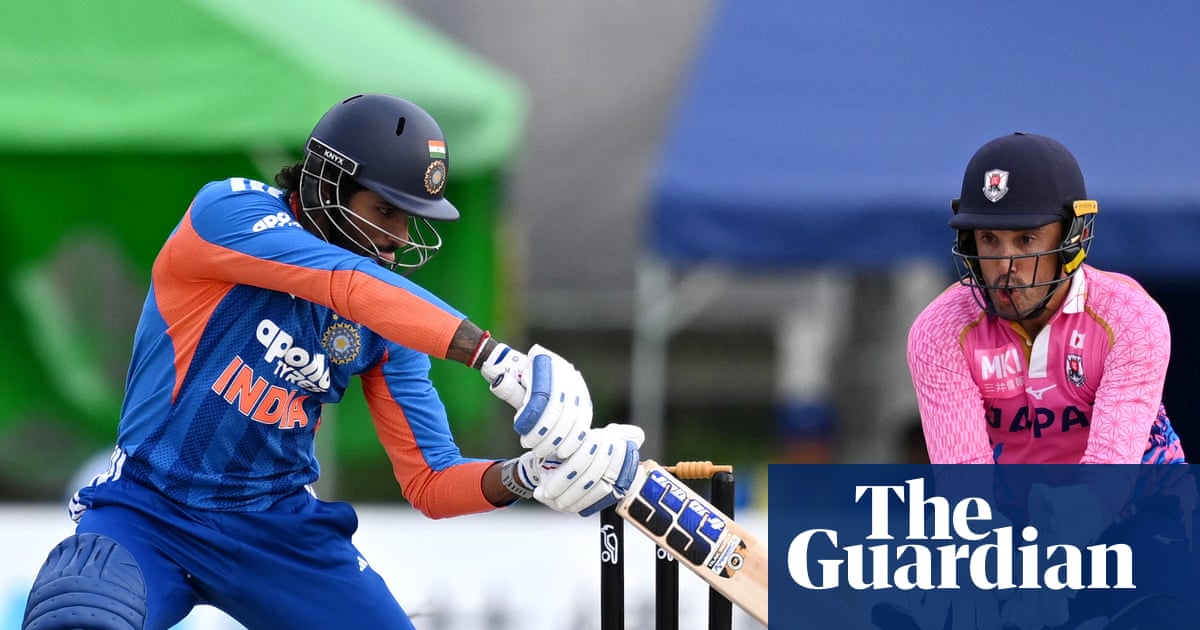
The relief was writ large on the face of Axar Patel when his final delivery of the match went for a dot ball. IndiaâÂÂs raucous fans celebrated, but they knew that Japanese batter Alexander Shirai-Patmore and his teammates had just come perilously close to inflicting one of the biggest upsets in cricket history.
Japan, ranked 41st in the world, had taken the T20 world champions to the final ball in a brief but incident-packed meeting last week between the sportâÂÂs minnows and giants that hours earlier had looked like falling victim to Typhoon Dujuan.
A Japan side that has never reached the qualifying tournament for the T20 World Cup came within three runs of beating the illustrious visitors, who had set them a modest 33 to win in a curtailed match.
That, though, was only one of the post-match talking points in Sano, a city of 110,000 north of Tokyo. How had Japan, an International Cricket Council associate member, managed to persuade a team of IndiaâÂÂs pedigree to turn out on a pitch in the grounds of a disused high school, and in a location most Japanese associate with its profusion of ramen restaurants?
The answer lies in a succession of coincidences involving politicians and cricket administrators, a Sri Lankan groundsman and an army of nocturnal volunteers armed with sponges.

Naoki Alex Miyaji saw an opportunity to promote the sport he has loved since childhood when cricket was added to the schedule for the 2026 Asian Games, which opened in Aichi-Nagoya in central Japan this month.
âÂÂInitially I thought the idea of Japan playing India was just a dream,â Miyaji, the chief executive of the countryâÂÂs cricket association, said. âÂÂBut the people I sounded out at ICC events were really supportive, although they couldnâÂÂt promise anything.âÂÂ
History and politics were on JapanâÂÂs side. Next year Tokyo and New Delhi will celebrate 75 years of diplomatic ties, a benchmark in a relationship that has flourished since the prime ministership of Shinzo Abe, who was assassinated in 2022, and his Indian counterpart and fellow conservative Narendra Modi.
Miyaji and his colleagues knew the Asian Games could tip the scales in SanoâÂÂs favour provided they could turn its ageing pitch into one that matched the conditions India and other teams would play on in Aichi. When organisers found a locally sourced clay that worked for the Games, JapanâÂÂs administrators, with the help of the Sri Lankan groundsman Mahesh Bopage, decided it only made sense to rebuild the Sano pitch using the same material.

But an international-standard wicket would have counted for nought without the political lobbying that had been set in motion at the start of the year.
In January the Japan foreign minister, Toshimitsu Motegi, visited New Delhi, where he met the Indian external affairs minister, S Jaishankar. Their strategic dialogue ended with an exchange of gifts: a shocking-pink replica Japan cricket shirt for the host, and a cricket bat signed by members of the Indian team for the visitor.
Japan had another ace up its sleeve. Not only was Motegi his countryâÂÂs most senior diplomat; his parliamentary constituency, the Tochigi 5th District, includes a small, ramen-loving city by the name of Sano.
Six months later when the Japan prime minister, Sanae Takaichi, met Modi in the Indian capital, the leaders signed an agreement that reportedly included mention of a cricket match that would double as a grassroots curtain raiser to the diplomatic anniversary and an intriguing prelude to the Asian Games, where India are defending the title they won in 2023 in Hangzhou.
JapanâÂÂs opportunity to make their case to the most powerful administrator in world cricket came in July, at the ICCâÂÂs annual general meeting in Edinburgh, where officials raised the prospect of a Japan-India match with a âÂÂvery supportiveâ Jay Shah, the bodyâÂÂs chairman and son of IndiaâÂÂs minister of home affairs, Amit Shah â a close ally of Modi, and a fellow native of the state of Gujarat.
The BCCI gave the match its official blessing as recently as August. âÂÂI was, like, wow, this is really going to happen,â Miyaji said. âÂÂEverything came together at exactly the right time. If any of those factors had been missing, I donâÂÂt think we would have been able to pull it off.âÂÂ

The political stars had aligned, and concerns about the cost of putting on what would be the most-watched match in Japanese cricket history eased when Suzuki Motors, whose presence in India spans more than four decades, agreed to be its main sponsor. Tickets costing ÃÂ¥10,000 (ã48) apiece sold out in three hours, many of them snapped up by members of JapanâÂÂs large Indian community.
ItâÂÂs grimly emblematic of the threat to sport posed by the climate crisis that JapanâÂÂs dreams risked being shattered just hours before the teams were due to take the pitch. As the facilities at Sano neared completion â including temporary stands to quadruple the capacity to 2,000 â Typhoon Dujuan was forming over the western Pacific.
By last Monday it had swept north, forcing the cancellation of an open practice session at Sano on the eve of the match. About 200 volunteers joined forces while the rain was still coming down, working in shifts through the night to remove water weighing down the covers and to get the outfield, which by now resembled a lake, as dry as possible. There were 20 to 30 people on the pitch at any one time, some mopping up water with sponges or removing it one shovelful at a time.
Then the cricket gods smiled on Sano, which woke up to bright sunshine that was forecast to last into the afternoon. For now, the match was on.
âÂÂIt was an incredible feeling,â Miyaji said. âÂÂI had no idea the whole thing was going to be so complicated. The thought that it could all go pear-shaped because of the rain ⦠I knew there was another pitch inspection coming and I was thinking, please, please, let us play some cricket.âÂÂ

When the outfield was deemed too wet for the planned start time of 1pm, players and Japanese officials feared the worst. While Indian fans waved their national flag and first-time cricket watchers studied handouts explaining the laws of the game, India communicated to match officials that they were determined to play. After a final, decisive pitch inspection, the players emerged for a match that had been slashed to just five overs apiece.
Not that that mattered to the 2,149 people there to witness cricket history being made, as the sides squeezed every possible drop of drama out of their 10 overs: boundaries, catches, aggressive spin, a run out, and the controversial decision by the on-field umpires to overturn a wide decision that would have left Japan needing an achievable six runs off four balls.
âÂÂThat was a scary half hour,â Ravi, an Indian fan who had travelled from his home in Shizuoka, more than 200 miles away, said of the hostsâ valiant run chase. âÂÂBut IâÂÂm really proud of Japan, too. They got the chance to improve themselves by playing India, and they put on a magnificent show.âÂÂ
After the skies over Sano had turned red and clusters of Indian fans waited for one last glimpse of their heroes before they boarded the team bus, perhaps the best summary came from the greatest Indian cricketer of all time.
âÂÂThereâÂÂs something very special about watching cricket find new homes,â Sachin Tendulkar wrote on X. âÂÂWeâÂÂve all had our first cricket match. ItâÂÂs lovely to see more people getting theirs.âÂÂ
This is an extract from the GuardianâÂÂs weekly cricket email, The Spin. To subscribe, just visit this page and follow the instructions.