
Russia bombards Kyiv with missiles â hours after agreeing to resume talks with Ukraine
Experts say Russia is trying to destroy energy infrastructure before winter, showing US âÂÂappeasement and flatteryâ will not achieve peace
Russia has carried out a massive âÂÂdemonstrativeâ attack on Ukraine, bombarding Kyiv with ballistic missiles just hours after Vladimir Putin said he had agreed to resume trilateral negotiations after talks with the US envoy Steve Witkoff.
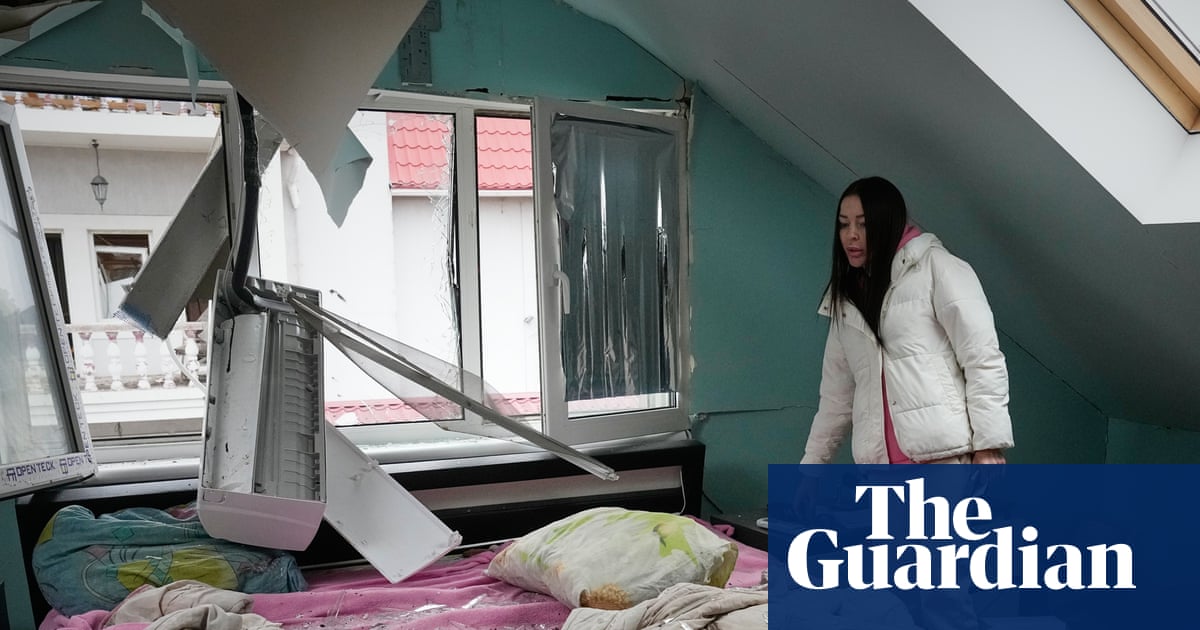
Overnight, Moscow pounded the Ukrainian capital, killing at least two people and wounding 22, including four children. Targets included the southern bridge over the Dnipro River, civilian houses, energy infrastructure, an ambulance station, office buildings and a monastery.
The Ukrainian president, Volodymyr Zelenskyy, said on Thursday that numerous sites across the city had been hit and damaged. Twelve regions across the country were bombed including the southern city of Odesa, where the port was badly hit.
Zelenskyy said the latest devastating strikes showed that Russia was not serious about peace. âÂÂAlmost immediately after another round of talks, Russia launched a pointed attack. This means there has been no real change in its attitude toward everything that is happening,â he said.

During negotiations on Wednesday in St Petersburg, Witkoff lavished praise on Vladimir Putin, who was sitting across the table. âÂÂYou talk so much about my president, President Trump, being a humanitarian. You are a humanitarian also, sir, and I salute that,â Witkoff said.
In a social media post after the strikes in the early hours of Thursday, Zelenskyy issued a sardonic reply. âÂÂThree waves of ballistic missiles have been launched at Kyiv by Russian âÂÂhumanitariansâ since yesterday evening. They used 21 missiles,â he wrote.
Zelenskyy said he was grateful to those among UkraineâÂÂs western partners who saw âÂÂthe situation for what it isâ and âÂÂacknowledged the realityâ that the Kremlin had little intention of stopping its war. He called for stronger air defences, Patriot interceptors which could bring down enemy missiles and more sanctions against Moscow.
UkraineâÂÂs foreign minister, â Andrii Sybiha, â added that âÂÂappeasement, â servility âÂÂand flatteryâ âÂÂwould âÂÂnot âÂÂstop Russian aggression.
On Wednesday, Kremlin foreign affairs adviser Yuri Ushakov said Putin had agreed âÂÂin principleâ to resume three-way negotiations involving Russia, the US and Ukraine after 10 November, a week after the US midterm elections. In reality, RussiaâÂÂs real intention is to destroy UkraineâÂÂs energy infrastructure, leaving millions in the dark and cold, officials in Kyiv believe.
According to Zelenskyy, the US has resumed intelligence warnings of Russian missile attacks. But the White House has so far not reversed the slowdown of Starshield, the military version of Elon MuskâÂÂs Starlink internet satellite system, leaving Ukraine unable to intercept enemy drones or carry out mid-range battlefield strikes.
The New York Times reported that when the slowdown was imposed last week, dozens of armed drones heading to Russian military targets fell from the sky. The video feeds streaming their flight paths suddenly went fuzzy as the connection with Starshield was lost, the paper said.
The decision to cripple UkraineâÂÂs successful drone programme came amid the most serious row between Washington and Kyiv since RussiaâÂÂs full-scale invasion nearly five years ago. It began after Trump announced he was lifting sanctions on Russian diesel, to lower US fuel prices, a move which Zelenskyy branded âÂÂweakâÂÂ.
The Trump administration denies it is deliberately helping the Russians. But European diplomats concede that the US appears to have switched sides. Ukrainian civilians are dying as a result, they say.
Russia, meanwhile, said it had shot down hundreds of Ukrainian drones launched in overnight attacks. One man â was â killed âÂÂand another was â wounded as a â result âÂÂof âÂÂa Ukrainian aerial strike in RussiaâÂÂs Belgorod region, local âÂÂauthorities said.
Details also emerged of a Ukrainian counterattack through a tunnel in the north-eastern city of Kupiansk, which Russia partly occupies. As part of Operation Veles, the Khartia corps carried out the worldâÂÂs first underground counteroffensive, advancing 15km into enemy rear lines.
âÂÂWe observed how the enemy operates underground and studied their methods. The Russians intended to use gas pipelines to infiltrate the rear of our forces. So, we went underground ourselves,â KhartiaâÂÂs commander, Brig Gen Ihor Obolenskyi, told Ukrainian media.
The Ukrainian servicemen crawled 15km through tunnels â without communication, GPS, or light â having developed their own navigation and life-support technologies in advance. About 100 Russians were killed in the operation, and 30 taken prisoner, the Khartia corps said.