âÂÂPure arroganceâÂÂ: anger in Finland as Google illegally fells 250,000 trees for datacentre
Company ordered to stop work at two sites in country, which has found itself at forefront of tech firmsâ latest push
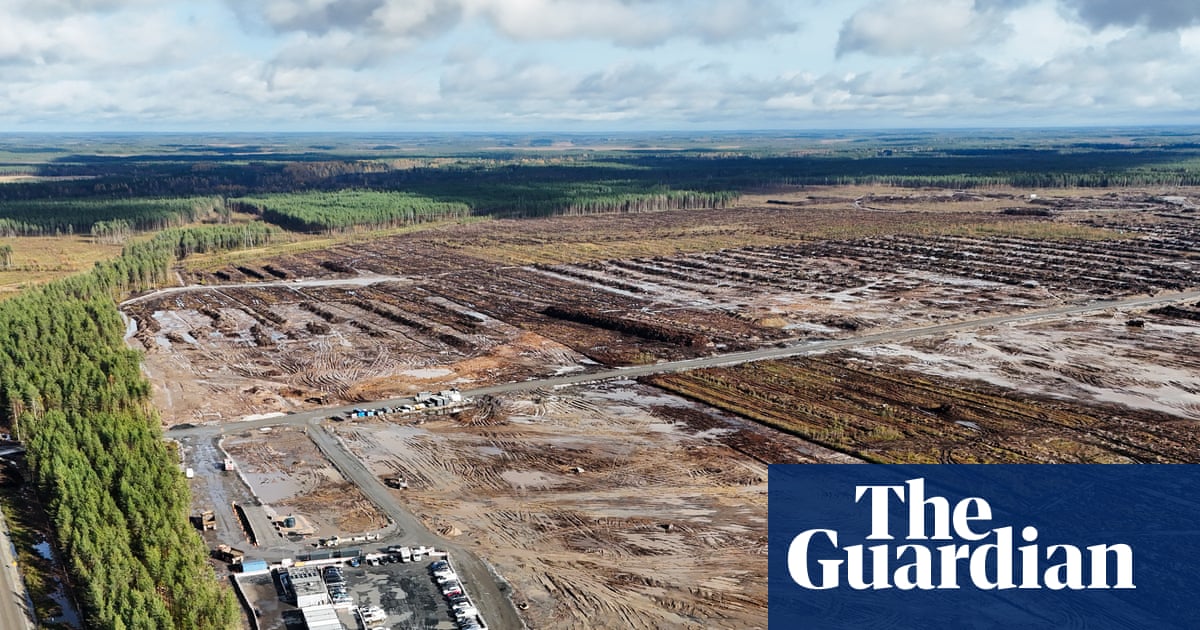
Behind a wire fence lies a vast gaping wound of earth. Before GoogleâÂÂs arrival a few months ago, an estimated quarter of a million trees occupied the 330 hectares (815 acres) of forest near the town of Muhos in rural northern Finland. Now they are all gone.
After the tech company illegally stripped the entire area to build a datacentre â taking even the top soil with it â all that remains is a vast expanse of mud indented with the trail marks of machinery, puddles and mounds of earth, roots and branches. Residents say that brown water flowing off the site is going into a stream that feeds the Oulujoki River.
âÂÂIt doesnâÂÂt end. It goes on and on,â says Mari Annala, an ecologist from the Finnish Association for Nature Conservation (SLL), looking at drone footage of the former forest from the perimeter.

With 145 new datacentres at various stages of planning, Finland has found itself at the forefront of the tech companiesâ latest push. As well as its relative geopolitical and geological stability and abundance of land, the cool climate makes it especially attractive for saving on energy costs.
Earlier this month, Google was ordered by the Finnish Licensing and Supervision Authority (LVV) to temporarily stop work on Muhos and another site about 100km south-east in the village of Otanmäki after it failed to complete the necessary environmental impact assessments before clearcutting the land. The news has prompted widespread outcry and a national reckoning over what role, if any, the country should play in the global rush to build datacentres to keep up with rapid AI development.
Last week, GoogleâÂÂs Finland country manager, Antti Järvinen, apologised for the forest clearings but claimed the company had acted âÂÂon the best understanding we had of the legislation at the timeâÂÂ.

Muhos and Otanmäki are part of a â¬13bn AI infrastructure project by Google that has attracted criticism from Donald Trump, who would rather the centres were built in the US and has publicly called for the company to reconsider. It is the biggest ever project of its kind in the Nordic country.
The Finnish government, which has presided over deep spending cuts, has encouraged the investment. Last month, when the Google plans were announced, the countryâÂÂs prime minister, Petteri Orpo, said attracting investment was a âÂÂtop priorityâ and âÂÂthe value of the data economy extends far beyond direct investmentâÂÂ. He said the Google deal would âÂÂdeliver lasting benefits for both partiesâÂÂ.
But the revelations over GoogleâÂÂs misconduct have prompted public concern over what these deals mean for nearby communities, energy prices for Finnish households and FinlandâÂÂs natural environment, a national source of pride. The datacentre push is likely to become a key election issue when Finns go to the polls in April.

In addition to the 250,000 trees felled at Muhos, Annala estimates that an additional 150,000 trees were felled at Otanmäki. Because the trees have been felled illegally, she says wood from the two sites cannot be sold to wood-processing plants.
The move has also prompted questions over why FinlandâÂÂs renewable energy sources are being used to power international corporations.
More than 93,000 people have signed a petition demanding more datacentre regulation and a fee to compensate local communities for environmental damage. Since the scandal broke, Orpo has described what happened in Muhos as a âÂÂcold showerâÂÂ.
Hanna Halmeenpää, chair of SLLâÂÂs board, said she had been incredulous when she discovered GoogleâÂÂs law breaking. âÂÂAt first I couldnâÂÂt believe it,â she said. âÂÂI have never heard that any company has done anything like this in Finland.â She said the system depended a lot on trust, which she believes Google took advantage of. âÂÂThey bought the vast land area and they just started to cut it, just like that,â she said. âÂÂItâÂÂs pure arrogance and itâÂÂs amazing.âÂÂ

The speed of developments had shocked the country, she said. âÂÂMany people are just watching the news and asking each other: âÂÂWhatâÂÂs happening now? What can we do about it? And do we have to take all these datacentre projects in Finland?âÂÂâÂÂ
Jussi Kangasharju, head of computer science at the University of Helsinki, said that while datacentres brought a limited number of jobs, potentially boosting the local economy, the benefits on a national level were minimal. âÂÂReally, for Finland, there are no benefits,â he said. âÂÂThey are international companies serving international customers. Very little corporate taxes go to Finland. Datacentres ultimately have very little benefit for others except the datacentre operator.âÂÂ

With legislation still playing catchup, there is a rush to get projects under way as fast as possible.
Some are calling for a centralised body to coordinate datacentre projects, rather than leaving so much of the decision-making down to municipalities that are likely to prioritise the immediate needs of the local area.
In Muhos and Otanmäki, there are people who support the projects, along with the jobs and land taxes they will bring into the local area. But many believe they have been sold short by municipalities.

Antti Jakonen, who lives in Muhos, said that, although the trees felled represented a small fraction of FinlandâÂÂs overall forests, he objected to the manner in which it had been carried out. âÂÂIt has been done in the wrong way. American style. No sense. No sense at all,â he said. The former entrepreneur and fisher wants Google to compensate by helping to restore the local salmon population destroyed decades ago by hydropower.
In Otanmäki, the disruption to nature and to residentsâ daily lives is being vividly felt. When the trees were felled, the wolves who had lived there came to the village, said Anni Ranta, 53, whose family has lived there for generations.

A former mining village, the area is known for its rare earth elements. RantaâÂÂs family live at the centre of the village next to a triangular church spire and a former bar that has been empty for years. The peaceful forest used to extend for miles from the village. Now the sound of building work next to the clearcut Google site reverberates.
âÂÂWe had wolves coming into the village because all the wild animals moved out of the forest,â said Ranta. âÂÂThey fled. What worries me about the datacentres is also the noise because this is hardrock soil. Even when we are standing here talking,â she added, stamping her feet, âÂÂitâÂÂs like a drum.âÂÂ
Such is her strength of feeling against the arrival of Google that she is thinking of moving out. She also fears the datacentre could make the village a target for Russia, with whom Finland shares a long border. âÂÂI donâÂÂt want them here,â she said of Google. âÂÂI donâÂÂt want them in Finland at all. I donâÂÂt like the whole idea of AI and the world changing and the way itâÂÂs changing. ItâÂÂs going too fast, too soon.âÂÂ

Her father, Pentti Korhonen, a retired wilderness guide, said that since the forest was destroyed, the water in the stream has turned brown. âÂÂThere is no need at all for datacentres in Finland. No need for datacentres at all,â he said.
Vesa Hyyryläinen, chair of the local SLL district, said three-toed woodpeckers nesting in the forest had been pushed out. âÂÂAll of us nature conservationists are very worried about our Finnish political situation and politics,â said the biologist and osprey expert. âÂÂI wonder why we have to sacrifice so much of our nature. They give everything away too easily.âÂÂ
He said, however, that he understood why authorities were trying to bring in new sources of investment and jobs, given the regionâÂÂs ageing population. âÂÂYoung people go to Helsinki and Berlin and Paris,â he said. âÂÂThere are so few people. We have to sacrifice.âÂÂ

Veli-Matti Uski, director general of the ministry of environment, said the government was âÂÂmonitoring the general development of the [datacentre] sector, [and the] application of its legislation, and is prepared to propose legislative amendments as necessaryâÂÂ.
Google said it was working to protect water quality at the Muhos site, and that it planned to plant trees across 130 hectares there. Conservationists say that figure is too low to have any real impact in comparison to the damage done by the tree felling.
A spokesperson said: âÂÂWe have operated in Finland for 15 years and have always worked to meet or exceed zoning, environmental, health and safety requirements.
âÂÂAfter receiving the LVV letters on 6 October, we stopped preparatory works at Muhos and Kajaani [where the Otanmäki site is located] and have submitted a formal response to LVV confirming this.
âÂÂWe will fully comply with LVVâÂÂs requests in this matter. We look forward to maintaining an active, open dialogue with all authorities to strengthen our partnership with Finland and local organisations.âÂÂ