
Premier League news: Spursâ nine injuries âÂÂnormalâÂÂ, says De Zerbi; âÂÂemotional controlâ keeps Blues red-free
Tottenham manager insists medical team not to blame as more key players drop out while Alonso happy with ChelseaâÂÂs new-found discipline
1. âÂÂBig confidenceâ in TottenhamâÂÂs injury team
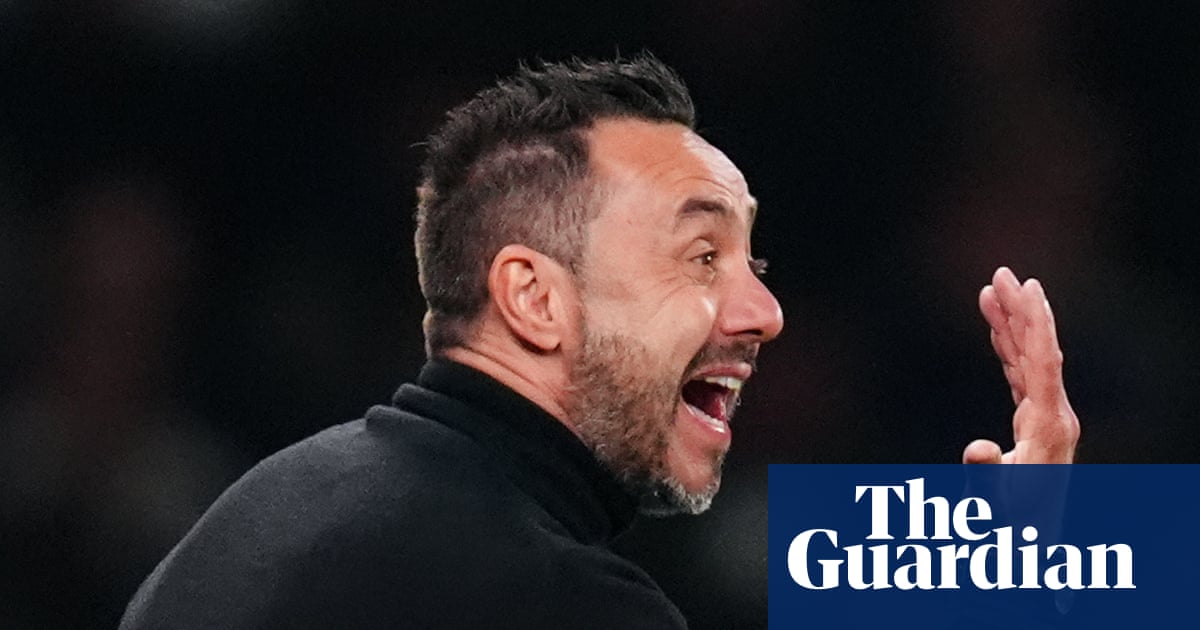
Roberto De Zerbi has insisted TottenhamâÂÂs medical staff bears no responsibility for the numerous selection issues he faces against Chelsea at Stamford Bridge on Saturday where his club will attempt to win for only the second time in 42 matches in all competitions.
The head coach has been boosted by the return of Pedro Porro from injury while he reported that Andy Robertson, Omar Marmoush and Dominic Solanke were âÂÂgoodâ in light of fitness concerns. De Zerbi had bad news elsewhere, however, saying Destiny Udogie was still out and Tosin Adarabioyo was a doubt.
James Maddison did not train for three days after the home win over Coventry on Monday and may not be ready, while caution will remain the watchword with Dejan Kulusevski, who played his first minutes since May 2025 against Frank LampardâÂÂs side. De Zerbi could be without nine players due to injury when the longer-term absentees are factored in, including Lucas Bergvall and Savio. Rodrigo Bentancur is suspended.
Spurs appointed a new performance director last season in Dan Lewindon and he oversaw a clutch of new hires in the performance department in July. De Zerbi made the point that the club would make a âÂÂtotal reportâ on injuries at the end of the season but âÂÂso far we canâÂÂt say anything bad about the medical staffâÂÂ.
âÂÂI am convinced our medical staff this season is high level. I have big confidence because I know how they are working and they are good enough to believe in. We are suffering a normal situation in football.âÂÂ
De Zerbi went into detail on the cases of Porro, Bergvall and Robertson to reinforce his argument. âÂÂPedro won the World Cup with Spain,â he said. âÂÂMaybe with the head or body he didnâÂÂt recover enough to start this season without a pre-season. He already suffered in the World Cup the muscular problem of the hamstring. He felt it in training and played anyway against Aston Villa [on 29 September] because he pushed to come back before the right time and he suffered another injury. What is the responsibility of the medical staff?
âÂÂBergvall turned his knee and felt pain in the first minute against Manchester United [on 10 October]. He finished the game and the day after he felt pain. What is the responsibility of the medical staff? Nothing. Robertson played four games in a row for Scotland [during the recent international window] and after that felt a small problem and did not play in Manchester. He played 65 minutes against Coventry and was fatigued. ItâÂÂs normal fatigue for a player who played [so much].âÂÂ
On SpursâÂÂs terrible record at Stamford Bridge, De Zerbi said: âÂÂWhat is the problem? We didnâÂÂt play in the past for Tottenham and I was not the Tottenham coach in the last seasons. We have already many problems and this is not a problem.â David Hytner
2. Alonso: âÂÂWe keep calm, donâÂÂt lose our headsâÂÂ
Xabi Alonso has said greater emotional control is behind the improvement of ChelseaâÂÂs disciplinary record, one that saw them picked up 11 red cards last season.
Alonso focused on the problem after becoming manager last summer and has been rewarded with better behaviour from his new side. Chelsea, who can expect a feisty encounter when hosting Tottenham on Saturday evening, have not had a red card this season and showed intelligence when they won 2-0 at Everton last weekend.
âÂÂFor me it comes a lot with emotional control, with the control of the game,â Alonso said.àâÂÂIf you are focused on what you have to do, you are prepared for whatâÂÂs going on.àNormally you donâÂÂt make that many mistakes and donâÂÂt overreact to certain situations.
âÂÂThis is a fundamental part of the game, to have that emotional control. The momentum is coming â we keep calm, I donâÂÂt lose my head and I donâÂÂt get stupid yellow cards, make stupid penalties.âÂÂ
Alonso pointed to Chelsea signing more experienced players last summer. âÂÂI think it helps,â he said. âÂÂAbsolutely.àIt helps for that composure that you need in certain moments. You have players that sometimes, even during the game, they take a step back to see this is happening and now we need to keep focused and calm.âÂÂ
Stamford Bridge is usually at its loudest when Spurs turn up at a ground where they have not won since 2018. Alonso expects an âÂÂelectricâ atmosphere but admitted that playing with control in the Premier League can be tough when crowds feed off duels and end-to-end football. âÂÂIt is really difficult,â he said.
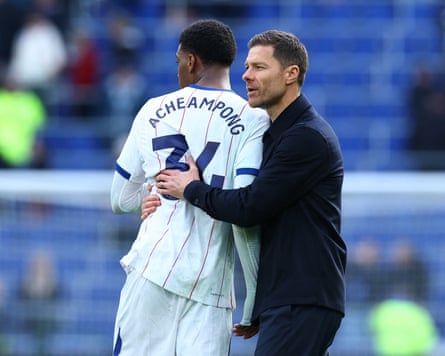
Chelsea manager Xabi Alonso has played down the impact of his influence from the touchline: âÂÂI have from the touchline some kind of input but the real one is from the players.â Photograph: Phil Noble/Reuters âÂÂTo find a total dominance in a game when you are in full control and you have few problems like in other leagues, itâÂÂs difficult to find it in the Premier League unless you have become a top, top, top team. ThatâÂÂs why you canâÂÂt rest on your laurels when you are 2-0 up.âÂÂ
Alonso played down the impact of his influence from the touchline. âÂÂIt is people on the pitch,â the Spaniard said. âÂÂI can say many things but sometimes I donâÂÂt reach [the players], I donâÂÂt control. I can do it in advance. I have from the touchline some kind of input but the real one is from the players. Normally the most experienced ones. ItâÂÂs the ones that feel it.âÂÂ
Chelsea are without Emiliano MartÃÂnez after the goalkeeper broke his jaw against Everton. Mike Penders will start and Alonso sees similarities between the young Belgian and his compatriot Thibaut Courtois. âÂÂI spoke with Thibaut as well when he was in the World Cup, asking about Mike, and he even said that he could see resemblances with Mike,â Alonso said.àJacob Steinberg
3. Go easy on Ngumoha, says Iraola
Andoni Iraola has insisted Rio Ngumoha must be allowed to make mistakes and not have his development stifled by âÂÂimpossibleâ demands.
The 18-year-old sparkled for Liverpool in their Champions League comeback against Villarreal on Tuesday while still adapting to playing on the right wing. It was only a fifth start under Iraola for Ngumoha, who last month became the third-youngest player to make his competitive debut for England, after Wayne Rooney and Jude Bellingham.
The Liverpool head coach has described it is a âÂÂprivilegeâ to coach the teenager but is wary of too many expectations being heaped on such a young talent.
âÂÂI feel very lucky to have him but this is a moment when, because he has played well, we cannot straight away put expectations on him super high because it is not fair for him,â Iraola said. âÂÂHe will still have to make mistakes, he will still have his moments where it is up and down, because this is a natural process that every player goes through.
âÂÂWe cannot straight away put demands on Rio that are impossible to beat. No, we have to help him in this process knowing that he will have good games and probably some games when it is not so good.âÂÂ
Iraola believes NgumohaâÂÂs personality offers reassurance that he will not be unduly affected by the growing attention. The winger has two years remaining on the contract he signed on turning 17 but is expected to be rewarded with a new deal.
âÂÂI havenâÂÂt felt that heâÂÂs very affected, positively or negatively, by all the things that are said about him,â Iraola added. âÂÂHeâÂÂs very focused on the football side, on improving his performances and trying to get the things that we need from him. ItâÂÂs not easy when you are 18 and everyone is talking about you but he knows that what matters is what is happening today in training and the things that he can add to his game. HeâÂÂs very focused on that.âÂÂ
Liverpool will again be without the injured Dominik Szoboszlai when hosting in-form Brighton on Sunday and Victor Muñoz is doubtful with a knock sustained in last weekendâÂÂs win at Brentford. Andy Hunter
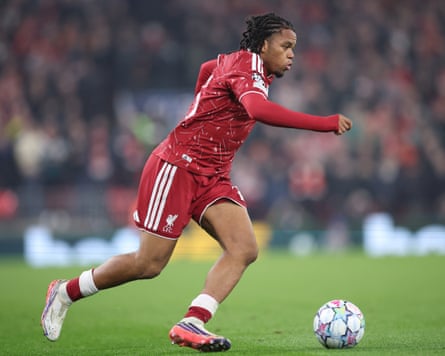
The 18-year-old Rio Ngumoha sparkled for Liverpool in their Champions League comeback against Villarreal on Tuesday. Photograph: Adam Vaughan/EPA 4. Farke faces triple injury blow
Daniel Farke has been dealt a blow before SundayâÂÂs Premier League game at Sunderland after revealing Dominic Calvert-Lewin, Anton Stach and Noah Okafor are all injury doubts.
Calvert-Lewin, whose fourth league goal of the season earned Leeds a 1-1 home draw against Manchester United last week, and midfielder Stach both sustained foot injuries in that match. Winger Okafor is struggling with a thigh strain and all three players are rated âÂÂmajor doubtsâ after missing out on team training this week.
Farke confirmed Daniel James is in restraint after recovering from his recent injury, while Lukas Nmecha, Harry Wilson and Jean-Mattéo Bahoya will also be hoping to feature. Nmecha has made six league appearances off the bench this season and Farke added: âÂÂOverall you have to say for a back-up striker, Lukas has scored I think seven goals last season,â said Farke.
âÂÂOf course, if he doesnâÂÂt play each and every minute due to the fact that Dominic was so outstanding, I think this is a really good record and I would have to say in the last game he looked sharp.â Press Association
5. Nothing has changed for us, says Arbeloa
Alvaro Arbeloa maintains âÂÂnothing has changedâ as his Fulham side look to build on a first Premier League win. The Spaniard â who took over as head coach at Craven Cottage in the summer â has come under scrutiny following a testing start to the campaign before easing some of the pressure with a 1-0 victory over Hull at Craven Cottage.
Fulham come up against another promoted side at Coventry on Saturday and Arbeloa wants his players to continue to show the same focused mindset. âÂÂNothing has changed for us,â Arbeloa said. âÂÂWhen we were not winning games, we believed that we were doing so many things well, and now we have the same targets, so we should come in and try to win a tough game.
âÂÂYes, now we have the reward that we were looking for, and now it is another week, another game, so we need to fight again for the win.âÂÂ
Arbeloa added: âÂÂWhen you are working and you are not winning, it is not easy, so everything is easier when you play well, in the way that you want and you win matches. That is the most important thing, and it is very important for your confidence, and I think we deserve it.â Press Association
6. Richest clubs face ã1.8m bill for regulator
The highest-earning Premier League clubs will pay up to ã1.8m towards the cost of the independent football regulator (IFR) from next summer, but could face paying much higher amounts in the years ahead.
The IFR has opened a consultation proposal on the levy needed to fund it, and has projected a total cost to the 116 clubs in the top five divisions of English football of ã20.3m in the first year of its licensing regime â 2027-28 â rising to ã20.9m in 2028-29. That figure is double the governmentâÂÂs original estimate of ã10m a year being required for the IFR.
It is thought Premier League clubs will cover around 85% of the total annual IFR costs, though the amount each club repays will be designed to be proportionate to their revenues. The highest-earning clubs will pay up to ã1.8m in year one, the IFR said, but it added that most Premier League teams would pay ã600,000.
However, costs could rise significantly in the future, with the consultation document confirming that set-up costs for the regulator ran to around ã45m. Only ã1m of that is being recovered in 2027-28, and ã2m the year after, leaving some ã42m to be recovered over the next eight years. A further ã1m of the 2027-28 levy is a contribution to building up reserves for any future litigation costs.
David Kogan, the IFR chair, confirmed last week that clubs would ultimately foot the bill for any legal action it may be involved in against Manchester City, depending on the outcome of their Premier League disciplinary case, which could be a significant amount.
He said that any legal costs incurred by the IFR in that matter would in the first instance be covered by the government and then recovered from clubs, but stressed that legal action would only be instigated if the advice was that it would succeed, meaning costs could be recovered from the other side.
City have been found guilty of breaching Premier League financial rules over a nine-season period, but have appealed against the verdict. The IFR has the power to force owners to divest from clubs in cases of serious wrongdoing.
The IFRâÂÂs media release compared its running costs with the Premier LeagueâÂÂs administration costs of more than ã200m for the 2024-25 season, a comparison is understood to have caused surprise within the top flight.
The Premier League has more than three times the IFRâÂÂs staff, generates more than ã4bn annually, and its administration costs include all operating expenses plus investments in other areas aimed to help the league grow further, such as the set-up of new production studios. It also includes its legal costs related to the City case and others.
The IFR said Championship clubs not in receipt of parachute payments would pay around ã45,000 for 2027-28, with clubs in Leagues One and Two paying around ã9,000 and ã6,000 each. National League clubs would pay around ã600 a year each, the IFR said.
Richard Monks, the IFR chief executive, said: âÂÂI am aware of the ã10m figure [originally estimated by the government] and, to be clear, that is not a number we believe reflects either the current financial reality or the task ahead of us. The levy we are proposing today represents a fair and balanced approach and will ensure that most clubs pay around 0.1% of their annual revenues.
âÂÂWe are confident football will see this is a relatively modest investment to help achieve a more sustainable ecosystem which will provide peace of mind for fans, clubs and the communities they serve.â Press Association

