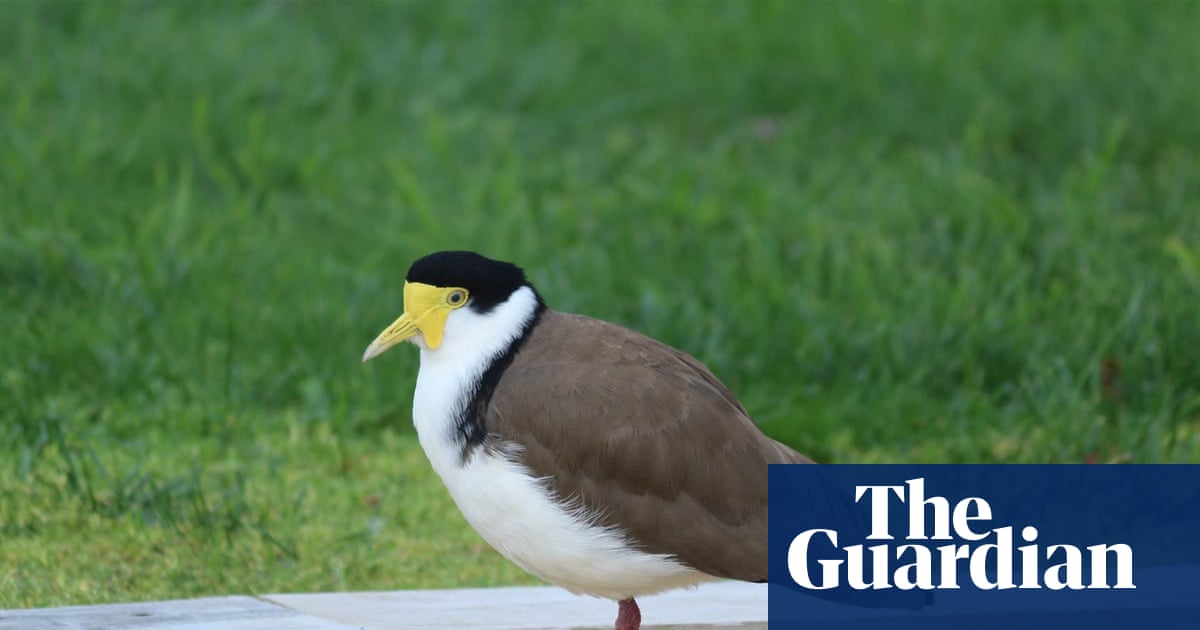

Plover, not a fighter: masked lapwing nesting on Tasmanian cricket ground indifferent as play continues
While masked lapwings have a reputation for swooping during nesting season, Windsor Park ovalâÂÂs resident plover just wants a good innings
At Windsor Park in Riverside, just outside Launceston in northern Tasmania, a masked lapwing has claimed prime real estate in the middle of a community sports ground, showing complete indifference to the weekend cricket matches taking place around it.
Warming a nest of eggs, the bird has been affectionately dubbed âÂÂFaf Swoop Plessisâ by locals â a play on former South African cricket captain Faf du Plessis.
Because the species is protected under state law, carrying fines of up to $21,300 for disturbing nests, ground staff have had to mow around the site, while players steer clear.
During a match early in the season, Great Northern Raiders player Caleb Brewer drew the short straw and was stationed directly beside the nest.
âÂÂAt the start it was pretty weird, but towards the middle we kind of got used to it and the plover wasnâÂÂt too bad at the end,â Brewer told local paper The Examiner.
The following weekend, Riverside first-grade opener Josh Partridge was tasked with fielding near the plover, but reached a peaceful âÂÂmutual understandingâÂÂ, according to The Examiner.
âÂÂIt was like the plover knew there was a game of cricket going on,â he said. âÂÂWe werenâÂÂt interfering with what was going on in its life, so it didnâÂÂt want to interfere with what was going on in ours.âÂÂ
That kind of sporting truce is common, according to Mark Holdsworth OAM from BirdLife Tasmania.
âÂÂLapwings will often become accustomed to the local patterns of people using a site and in many situations people modify their behaviour to avoid the core nesting area,â Holdsworth said. Everyone has learned to live with each other.âÂÂ
While masked lapwings â widely known across Australia as plovers â have an intimidating call and reputation for swooping during spring nesting season, choosing a wide-open lawn is actually a calculated survival tactic.
Sports ovals are a âÂÂfantastic placeâ for them to nest, Holdsworth said, because unobstructed views mean parent birds can spot threats early.
Sean Dooley from BirdLife Australia also said that what looks like eccentric behaviour to humans makes sense for plovers.
âÂÂThe places they choose to nest can seem crazy from our perspective, but there is logic to it,â Dooley said. âÂÂThey like to nest out in the open so they can see danger coming and they rely on camouflage to hide their eggs and their chicks. So by nesting on an oval, they have a clear view in all directions.âÂÂ
He said that when people give the bird a wide berth, lapwings generally realise they are not under threat.
âÂÂThey definitely arenâÂÂt out to get us by nature, they really only care about making sure their chicks arenâÂÂt being threatened â¦
âÂÂSwooping isnâÂÂt their only tactic; they also put on a display that mimics having a broken wing to lure potential threats away. TheyâÂÂre just being good parents and doing all they can to protect their young.âÂÂ
Lapwing eggs hatch after 28 to 30 days of shared incubation by both parents. If a clutch is infertile, incubation can continue for several weeks, while birds will often nest again at the same site if their eggs are destroyed.
Once hatched, the chicks quickly leave the nest. Dooley said parent birds carry stray egg fragments away to avoid attracting predators, before guiding their offspring across the turf.
âÂÂIf we can just give them their space, they can move away from the nest area once they are walking,â he said.
The West Tamar mayor, Christina Holmdahl, said council maintenance teams look after dozens of parks and sporting grounds across the municipality, encountering at least 10 nesting sites every year.
âÂÂGiven the protected listing of the masked lapwings in Tasmania, our staff take their responsibility of looking after these birds very seriously and take extra precautions to protect the birds and any nests they find,â Holmdahl said.
Council workers maintain strict buffer zones around the birds and their nests when conducting maintenance.
âÂÂThe plovers never act aggressively towards our staff on the ground,â she said.
The standoff coincides with the annual Aussie Bird Count which runs from Monday 19 October.
Now in its 13th year, the national citizen science project invites the public to record bird sightings to help researchers track how native species are coping with urban development and a changing climate. Last year, the Australian magpie was the most commonly spotted species, while the rainbow lorikeet recorded the highest overall tally.
âÂÂThe count is a great opportunity to discover the birds that share your neighbourhood and understand more about them,â BirdLife AustraliaâÂÂs James Johnson said.â For many of us, thatâÂÂs likely to include the amazing masked lapwing.âÂÂ
Register for the 2026 count here.