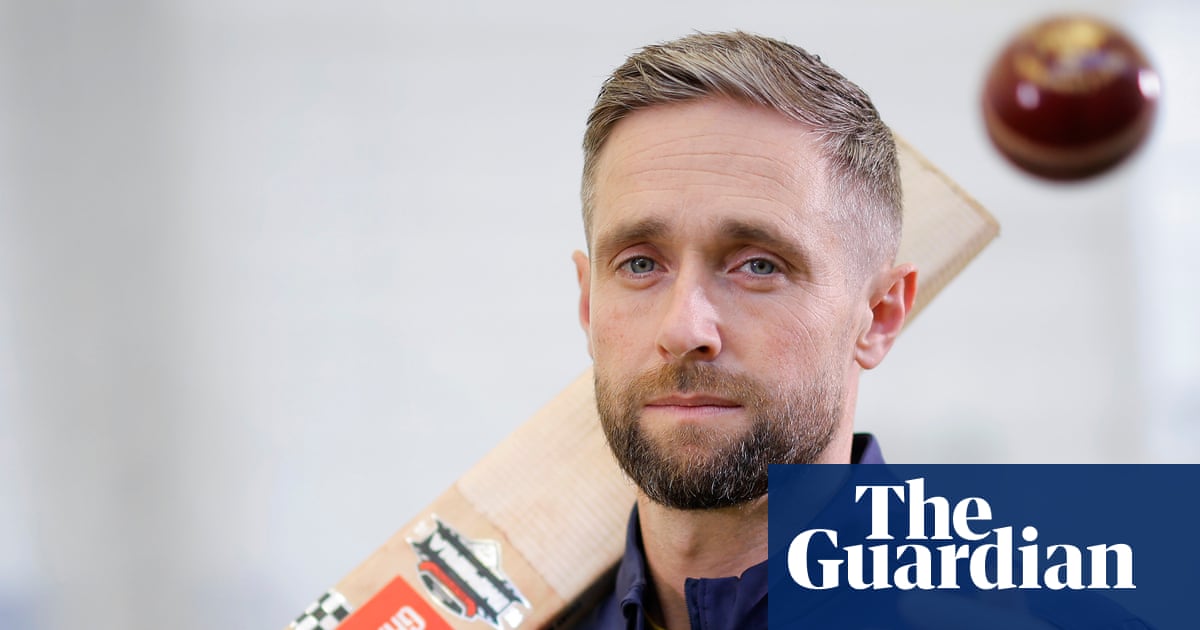

Chris Woakes: âÂÂItâÂÂs unacceptable seeing the way some England players have actedâÂÂ
The Test stalwart on his surreal last stand at the Oval, his âÂÂshabbyâ treatment by Rob Key and the vexed problem of cricketâÂÂs drinking culture
On a rainy October afternoon, after his 20th season as a professional cricketer, Chris Woakes sits down at EdgbastonâÂÂs indoor nets and thinks of the advice that helped him when he was 17 and about to start a career in this consuming sport. âÂÂThe words came from my parents, particularly my dad, and it was to always be myself,â he says in his thoughtful way.
Woakes has just won his third County Championship with Warwickshire and he played 62 Tests for England, taking 192 wickets and scoring 2,034 runs. He also won two World Cups and experienced a range of England coaches, from Andy Flower to Brendon McCullum, and played for captains as different as Sir Alastair Cook, Eoin Morgan, Joe Root and Ben Stokes.
Woakes has been a positive and steadying presence in a tumultuous time for English cricket. âÂÂThere were a couple of occasions where I stepped outside my character and tried to be something else and it backfired. I quickly learned that what I had, and the way I did it, was the way forward. IâÂÂm relatively reserved, but I had quite a bit of dog in me which I didnâÂÂt show verbally. You need that burning fire.âÂÂ
Woakes is routinely described asàthe nicest man in cricket, but itâÂÂs a reductive view that obscures theàskill and tenacity that defines him. âÂÂAsk some batters over the years and IâÂÂm sure they said: âÂÂHe isnâÂÂt that nice.â Once you cross the line, you need to find a way to compete and win.âÂÂ

The Wizard, his fine new autobiography, has been written with the GuardianâÂÂs Ali Martin, who captures WoakesâÂÂs voice expertly while providing trenchant insights into the contrasting eras that span his long career. The book opens with his ending in Test cricket, on the bizarre morning last August when Woakes came in at No 11, with his damaged left arm in a sling, to try to help England score the 17 runs that would secure a 3-1 series victory over India.
There was a fitting symmetry as Woakes walked down the stairs at the Oval, where he had made his Test debut 12 years earlier, while typically putting the interests of the team first. Woakes had dislocated his shoulder while fielding and could hold the bat only with one hand. The pain became excruciating when he tried to run and he knew IndiaâÂÂs bowlers would show no mercy at the climax of a riveting series.
âÂÂIt was amazing to go out like that but, in another way, quite sad,â he says. âÂÂTo walk out in front of a full house, and get a standing ovation, was maybe meant to be my farewell. But it was a horrible moment as well. I had the agony of the shoulder, but thereâÂÂs no worse feeling, especially as a bowler, when you leave the team handicapped: 10 v 11. Not many teams win from that position. That hurts.âÂÂ
How did he feel as he stepped on to the field? âÂÂI donâÂÂt think IâÂÂve ever been as nervous because I was going into the unknown. I was going to bat with one arm, which was never going to look pretty or be great. One of the things you have to get over is the thought that, when someoneâÂÂs bowling at 90mph with a hard cricket ball, it can hurt even when youâÂÂre batting the right way round. It was a challenge to build up the courage to face that.âÂÂ
Was he scared? âÂÂAbsolutely, because in international arena itâÂÂs dog eat dog. So there was certainlyàsome fear in the cauldron. It would be stumps or head, so I was going to have to wear a few. Your brain naturally tells you: âÂÂI donâÂÂt want to do this.â But you have to get over that. We got [the run chase] down to seven because GusàAtkinson did fantastically well. So close, yet so far.âÂÂ
Atkinson was bowled before Woakes could take his mark. âÂÂIn a selfish way I didnâÂÂt want my wicket to be the deciding one, but part ofàme still wishes I could have facedàa ball.âÂÂ

Woakes describes the harsh way he was soon jettisoned by England. He could accept he had not been selected for the Ashes tour last year, and that his England contract was terminated, but he was hurt by Rob Key, the England team director, breaking the news in public. âÂÂChris Woakes isnâÂÂt in our plans,â Key said, âÂÂat all.â âÂÂThat final bit felt a bit cold,â Woakes writes. âÂÂA bit shabby, really.âÂÂ
He is too kind to put the boot in again. âÂÂIâÂÂve always got on well with Rob and maybe those words slipped out, not necessarily how he meant it. But he could have easily had that conversation first with me, rather than the press.âÂÂ
Has he discussed the matter with Key? âÂÂWeâÂÂve barely spoken since. HeâÂÂs a busy man and moved on to different things. IâÂÂm sure at some point weâÂÂll discuss it. But in any walk of professional sport there isnâÂÂt much loyalty because the game moves on. Rob probably had bigger fish to fry at that time. There was an Ashes series and that was his priority, which I understand.âÂÂ
The Ashes were an unmitigated disaster with the familiar drubbing by Australia exacerbated by nocturnal mishaps featuring Harry Brook and Ben Duckett. Those incidents added to the pressure on McCullum and Stokes. McCullum was relieved of his role, while retaining control of the whiteâÂÂball team. Stokes remained as captain, but after leading England to victory in the first Test of the summer against New Zealand he and Atkinson were caught up in a postâÂÂmatch fracas with members of the Saracens rugby academy, breaking a curfew meant to curb such skirmishes.
Stokes then looked exhausted as he announced his unexpected retirement from international cricket a few weeks later. âÂÂBeing Test captain does beat you up,â Woakes says. âÂÂWe saw it with Joe [Root] last time round. Cookie was the same. We saw it with Ben.
âÂÂHe was desperate for that Ashes series to be a winning one, and he probably deserved it. But the game owes you nothing and he didnâÂÂt get it quite right on that tour. I think that was the nail in the coffin. Although he said he wanted to move forward, maybe deep down he knew he couldnâÂÂt re-energise himself.âÂÂ
What did he say to Stokes? âÂÂOn the day itself I saw him briefly at Trent Bridge and it was: âÂÂWhat a career, mate. Hope you enjoy the moment.â All that sort of stuff because it happened quite quickly. I was on Sky commentary that day. It was a very slow day and it got to three oâÂÂclock and all of a sudden we heard the news he was going to retire and it became a bit manic. It would be nice to be able to sit down with him and discuss it.âÂÂ
Woakes has always had a balanced relationship with alcohol. He enjoys a few beers after a big match but he is smart about his consumption and before the victorious 2019 World Cup he gave up drinking as part of his preparation for the sweetest moment of his career. But does English cricket have a drink problem?
âÂÂIâÂÂd like to say no, but drinking culture is mentioned a lot. There are lads at Warwickshire that enjoy a drink after a win or a hard four days of cricket. Other guys here are almost teetotal and this is the most professional county team IâÂÂve ever seen. But IâÂÂve played in teams where the majority enjoy a drink so it becomes the norm.

âÂÂPeople say within professional sport it should be zero alcohol. But cricket is very different to football and rugby. Test cricket is played over five days, on tours which last for months. It consumes you and people need to have a release. But that doesnâÂÂt mean they should get in trouble, like weâÂÂve seen within the England team recently.âÂÂ
Yet curfews donâÂÂt solve anything. âÂÂNo. You need to give players some freedom and treat them like adults. But itâÂÂs unacceptable seeing the way some England players have acted.âÂÂ
Woakes points out that, as cricketers, âÂÂweâÂÂre brought up on alcohol to a certain extent. In club cricket thereâÂÂs a lot of alcohol and it becomes the norm from a young age. The professional game needs to be different, but the sport is so mentally draining itâÂÂs almost impossible to tell people they canâÂÂt have a drink. ItâÂÂs a human release.âÂÂ
He is optimistic, however, that England have the right Test coach inàStephen Fleming. Woakes also pays tribute to McCullumâÂÂs ability to free up players, while admitting that, as a senior player, he should have spoken out when he saw clearly that McCullumâÂÂs ultra-aggressive style, played without much thought of consequence, would fail against the best Test teams.
âÂÂThere were times where we had the opposition pretty much by the balls and could have played a little more conservatively in that moment to get us to a point whereàthe other team didnâÂÂt have a sniff,â Woakes says. âÂÂBut there were too many occasions where we let them back in. We could have been more vocal in those moments and say we need to shift gears within the game. We always went up the gears, but never really came backàdown.âÂÂ
His book offers some fascinating snapshots of how it felt being coached by men as opposite as Flower and McCullum. At the start of his Test career, Flower would shout at Woakes with withering ferocity. âÂÂHe was ridiculously hard,â Woakes says. âÂÂI was almost scared to train, but that was also what I needed at the time. I just didnâÂÂt realise it. So it worked out perfectly. Flower was exactly what I needed at the start and McCullum was exactly what I needed at the back end of my career.âÂÂ

After such a successful county season he is open to playing one more year for Warwickshire for his love of red-ball cricket remains undimmed. But he has already shown a deft touch in his television work. It is easy to see Woakes becoming the face of cricket on Sky and he rocks in amusement when I say I would like to see him introduce the first day of the first Ashes Test at Trent Bridge next summer â as he confirms the sudden return of Stokes to RootâÂÂs team. âÂÂWow,â Woakes laughs. âÂÂGod, could you imagine that?âÂÂ
Could Stokes make one last comeback against Australia? âÂÂWhen it comes to Ben, I genuinely think anything is possible. A large part of me says it wonâÂÂt happen. I think heâÂÂs done. But if thereâÂÂs one person that could talk Ben Stokes round to playing again, it would be Joe Root. TheyâÂÂre very good friends and have known each other for a hell of a long time. If Joe was to say to Ben: âÂÂI want you back for one last series,â it could happen. It would certainly be box office. It always is with Ben Stokes.âÂÂ