

âÂÂItâÂÂs the most heartbreaking thingâÂÂ: the active-duty soldiers who have to visit Texas food banks
Nearly half of enlisted families struggled to afford enough food last year. Congress has known for decades how to solve the problem
This article was produced with the Food & Environment Reporting Network, and supported by the Economic Hardship Reporting Project
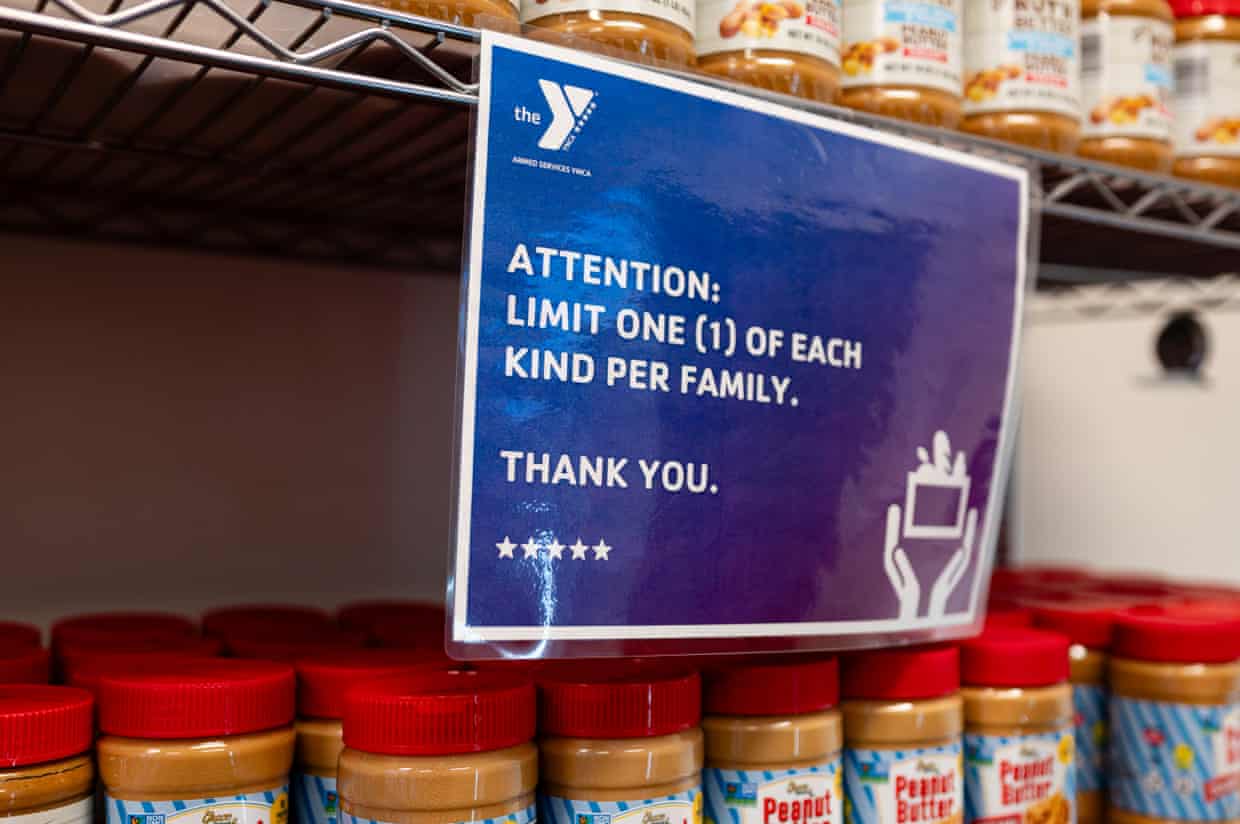
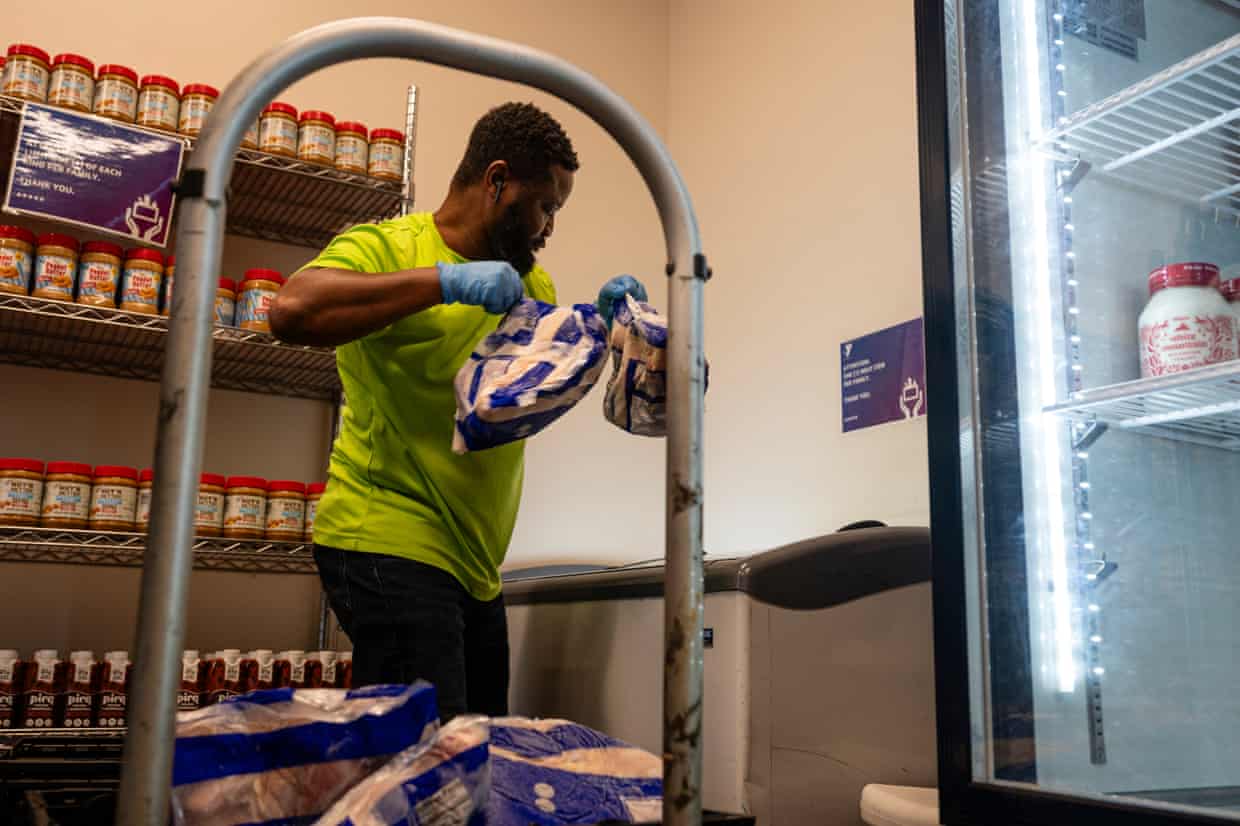
The Armed Services YMCA in Harker Heights, Texas, is a state-of-the-art facility, with a swimming pool, gym and coffee shop. ThereâÂÂs also a food pantry tucked away in a small room at the far end of a hallway on the second floor, where active-duty soldiers stationed nearby at Fort Hood can receive free groceries. More than a dozen pantries surround the army base, where about 40,000 soldiers are stationed.
The pantryâÂÂs parking lot is where I found Miguel Pérez on a July morning, lugging a heavy reusable grocery bag to his pickup under the already blazing central Texas sun.
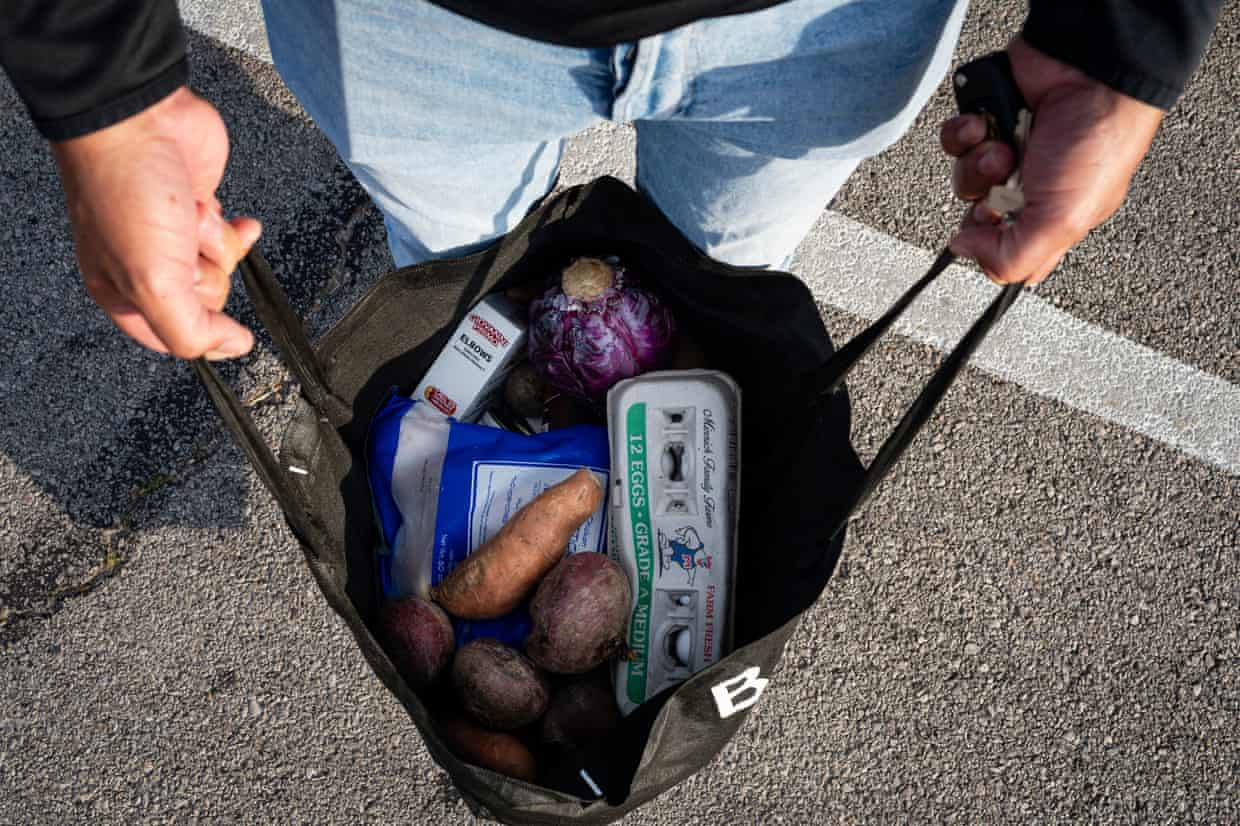
Pérez, a 39-year-old army combat engineer, was on leave and asked that I not use his real name. His bag contained sweet potatoes, a box of elbow macaroni, a 5lb bag of frozen chicken breasts, some enormous beets, a dozen eggs and a few other staples â about $100 worth of food by his reckoning.
Born in the Dominican Republic, Pérez lived in Colorado and worked in casinos before losing his job during the Covid-19 pandemic. A friend who worked as an army recruiter suggested he look into the military. He was 34 when he enlisted, completing basic training at Fort Leonard Wood, Missouri, and eventually landing at Fort Hood.
Combat engineers are responsible for emplacing and destroying obstacles on behalf of infantry and tank units. ItâÂÂs dangerous work, involving explosives and grueling physical labor, but Pérez said he was happy in the army. âÂÂI always wanted to do this,â he said.
Still, constant financial stress has made an already difficult job even harder. Military pay breaks down into several main categories, including base pay, housing allowance, food allowance, and dozens of minor supplements for things like hazardous duty, combat, demolition, diving and aviation. Pay also depends on rank and time in service. Pérez, who joined five years ago and has earned the rank of sergeant, said he brings home about $4,800 a month, including about $1,600 for housing and $476 for food â or just shy of $58,000 a year. âÂÂIn the military we donâÂÂt make that much to cover gas, housing, kidsâ back-to-school costs, utilities,â he said. âÂÂItâÂÂs hard today for us.âÂÂ
Pérez usually visits the ASYMCA pantry twice a month, shaving about $200 from his monthly grocery bill. âÂÂWhen you come early, you see a lot of military people,â he said. âÂÂWe need it.âÂÂ
As a sergeant responsible for several younger soldiers, Pérez said he had seen how shame deters troops from seeking assistance. âÂÂThey look at it like if youâÂÂre taking something for free to eat, itâÂÂs a bad thing,â he said. âÂÂI guess theyâÂÂre embarrassed about it.âÂÂ
Reluctance to seek help can obscure how widespread the problem has become. Nationwide, nearly half of all active-duty military families experienced food insecurity in 2025, according to research from the non-profit Military Families Advisory Network â more than double the rate in 2023. The ASYMCAâÂÂs food distribution programs, which serve more than 50 military installations, saw a 23% jump in demand last year. The problem is especially acute among the enlisted ranks, with almost 57% reporting food insecurity last year, compared with 14% of officers.
Lower-ranking troops with families are the hardest hit. One out of every five active-duty families reported eating âÂÂless than they felt they should because there wasnâÂÂt enough money for food in the past yearâÂÂ, according to a similar study by the non-profit Blue Star Families.
Instead of getting help, Pérez said, some soldiers make difficult choices about where to allocate their limited funds. One of his soldiers got a speeding ticket and told Pérez: âÂÂI canâÂÂt pay it, because if I pay it, IâÂÂm not gonna buy groceries.âÂÂ
PérezâÂÂs finances took a hit after a recent divorce, when he became the sole provider for his two sons, a 16-year-old and a three-year-old. Like many troops living off base, his $1,900 monthly rent outstrips his housing allowance, which means heâÂÂs paying part of his rent out of his base pay. After covering all of his expenses, thereâÂÂs little margin for error â and his case is typical.
According to Sheri Yerrington, executive director of the Killeen ASYMCA â which serves the Fort Hood area â demand for food assistance has grown steadily since the pantry opened three years ago. âÂÂItâÂÂs been anywhere from a 12-19% increase every year,â she said. In 2025, the Killeen ASYMCA delivered 500,000lb of food to more than 19,000 families. About 80% of the Killeen pantryâÂÂs customers are active-duty military personnel and their families. Open every Thursday, the pantry often runs out of food by the early afternoon.
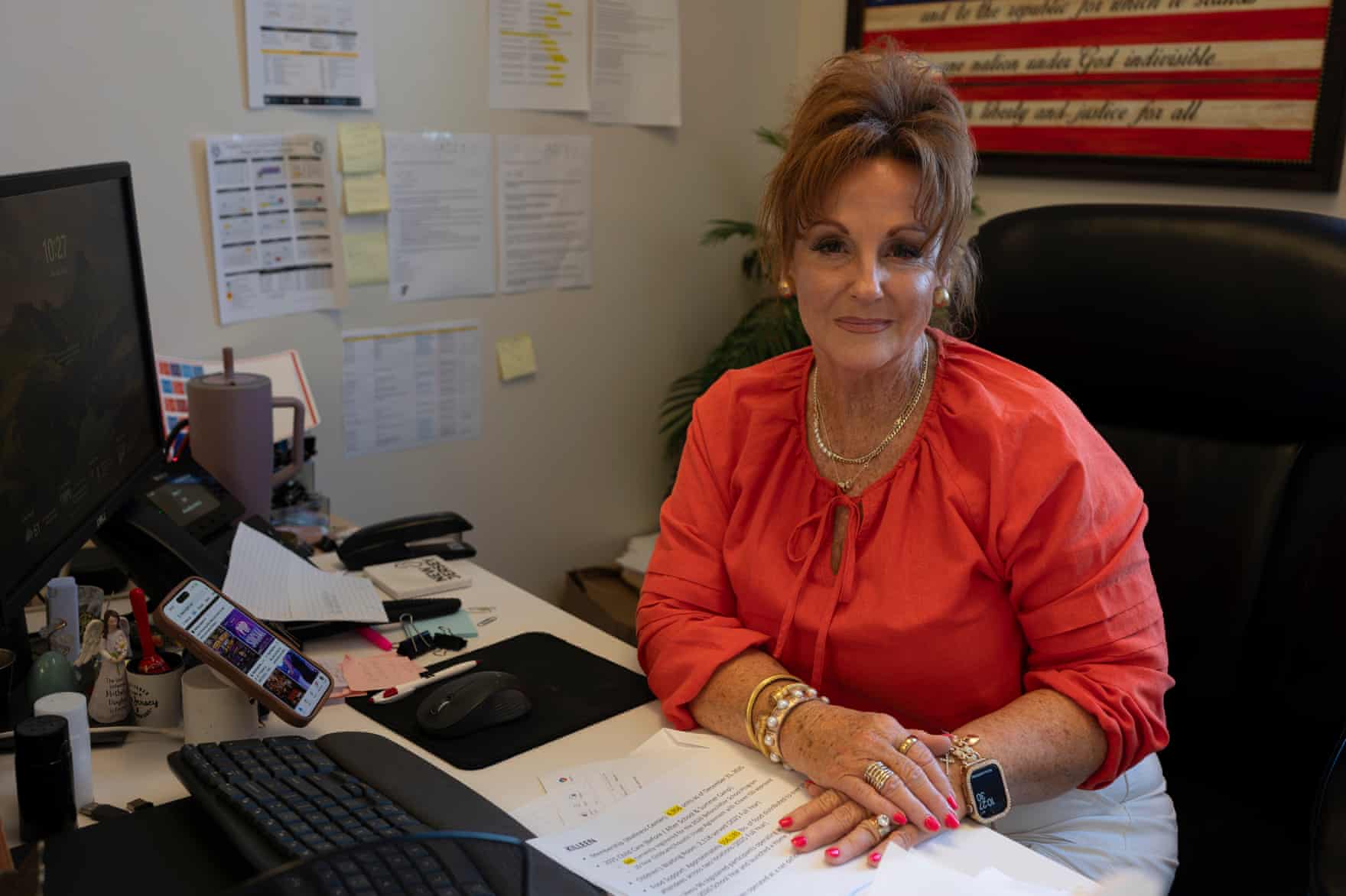
âÂÂItâÂÂs the most heartbreaking thing for a soldier in uniform to walk in here at one oâÂÂclock and our pantry is already empty, and I have to turn them away,â Yerrington said. âÂÂThat is the worst feeling, and I have had it.âÂÂ
Shocking as it may seem to people who have never relied on a military paycheck, food insecurity among active duty troops has been a problem for decades.
The reason is clear: military pay is insufficient for many enlisted families. The Gates Commission â appointed by President Richard Nixon in 1969 to study the feasibility of ending the draft and transitioning to an all-volunteer force â highlighted the âÂÂinequityâ of military pay, compared with civilian wages, as a likely barrier to recruitment.
For a few years in the 1970s, increases in military pay for the junior ranks outpaced wage growth for comparable civilian jobs. As members of the newly minted all-volunteer force grew up and started families, flaws in the structure of military pay emerged.
By the late 1990s, Senator John McCain, a Republican and a veteran, was railing against the fact that tens of thousands of soldiers were collecting food stamps, calling it a âÂÂnational disgraceâÂÂ. In 2000, he authored a bill to provide service members eligible for food stamps with a monthly nutritional allowance in their military paycheck. âÂÂWe must end the days of a âÂÂfood-stamp Armyâ once and for all,â he said.
McCainâÂÂs bill failed, but it inspired a mandate in the 2001 National Defense Authorization Act that the basic allowance for subsistence be included in every military memberâÂÂs paycheck as a standard allowance. McCainâÂÂs bill also led to the creation of the family subsistence supplemental allowance, which was designed to raise qualifying military familiesâ income to 130% of the federal poverty level. (In 2002, that was $18,100 for a family of four. By 2026, inflation had raised it to $33,000.)
The program was a failure, bogged down by restrictive criteria and a complicated approval process. Few families applied, and of those who did, almost all were rejected. In 2013 â when 620,000 military households sought some kind of food assistance and âÂÂnearly $104 million worth of food stamps were used at military commissariesâÂÂ, according to the military news outlet Task & Purpose â the FSSA program denied 97% of applicants. The program was discontinued in 2016.
The failure of the FSSA showed that the militaryâÂÂs financial assistance programs often exclude the service members who need them most. The same is true for federal programs outside the military. For example, the Department of Agriculture, which administers the Snap program, counts basic allowance for housing â a stipend provided to troops living off-base to offset local housing costs â toward household income. Because housing allowance is pegged to local rental rates, it often pushes a military familyâÂÂs income above the Snap eligibility threshold, especially in high-cost markets such as California, Hawaii and Alaska.
According to Liza Lieberman, vice-president of communications at the non-profit Mazon, an anti-hunger organization, the inclusion of the housing allowance as income amounts to an administrative barrier that locks troops out of Snap. âÂÂThey never see that money,â she said.
For five years, Congress stalled on creating a replacement for the defunct FSSA. âÂÂThere were Republicans and Democrats on the hill that were laughing us out of the room,â said Lieberman, who advocated for an improved program to address military food insecurity. âÂÂNo one wanted to acknowledge or confront the fact that we were not paying our troops enough.âÂÂ
In 2021, Congress finally approved a new program called the basic needs allowance, which is now available â in theory â to service members with dependents whose annual income is less than 200% of the federal poverty level. But the approval process remains confusing and time-consuming, according to Lieberman. The new program also requires troops to apply through their chain of command, which can be intimidating and embarrassing, especially for troops worried that appearing financially irresponsible might negatively affect promotion. The military does not publish data related to enrollment in the basic needs allowance, but in 2023 â its first year â only 77 families received the supplement.
Most years, Congress approves a modest increase in military pay to keep pace with cost of living increases, usually between 1% and 4%. In 2025, the Senate approved an exceptional 14.5% pay increase for the junior enlisted ranks and a 4.5% increase for all other troops. Consecutive pay increases brought the average base salary of an enlistee with less than two years of service from about $22,000 in 2022 to nearly $28,000 in 2025, according to USAFacts, a non-profit that analyzes government data. But inflation and sharply escalating living costs have neutralized a large portion of those gains. âÂÂThereâÂÂs a misconception that they got a pay raise, so the issue is resolved,â said Lieberman, âÂÂbut the cost of groceries and gas have also increased.âÂÂ
Childcare costs have increased more than 36% since 2019, residential rents are up by about 40% and vehicle insurance has surged by 48%. The cost of energy has jumped 16% in the past year alone, with gasoline prices spiking about 40% since the start of TrumpâÂÂs war on Iran in February.
Housing allowances are supposed to be pegged to local rental markets, but rents have soared nationwide in recent years, which means that military personnel with families are often required to dig into their base pay to cover the gap, as in PérezâÂÂs case. The problem is getting worse: according to a report from the armyâÂÂs Directorate of Prevention, Resilience and Readiness, only 37% of soldiers were able to find housing within the limits of their allowance in 2025, down from 58% in 2020.
According to Shannon Razsadin, co-founder and CEO of the Military Families Advisory Network, the perennial insufficiency of military pay â even with need-based supplements and periodic pay raises â speaks to a more fundamental problem. âÂÂThe reality is that the military compensation structure is not designed to sustain a full household,â she said. Instead, she explained, it was designed to support 18-year-old single enlistees living in barracks and eating at dining facilities. Today, Razsadin said, many recruits enter the service with spouses, young children and sometimes extended family members depending on them.
The foundations of the current military pay structure were established by the Career Compensation Act of 1949. At the time, only about 30% of enlisted army soldiers were married. With the creation of the all-volunteer force in the early 1970s â which transformed enlisted service into a potential career instead of a temporary obligation â enlisted marriage rates climbed, hitting a peak of nearly 60% by the 1990s. In 2024, across all branches, about 44% of enlisted troops were married, roughly equivalent to the civilian population. About a third had children.
âÂÂWe need to provide a wage that can sustain a number of dependents in a way that they can live with dignity,â Razsadin said. âÂÂNo one joins the military to get rich, but they ought to be able to put food on the table and have a cushion in case of emergency.âÂÂ
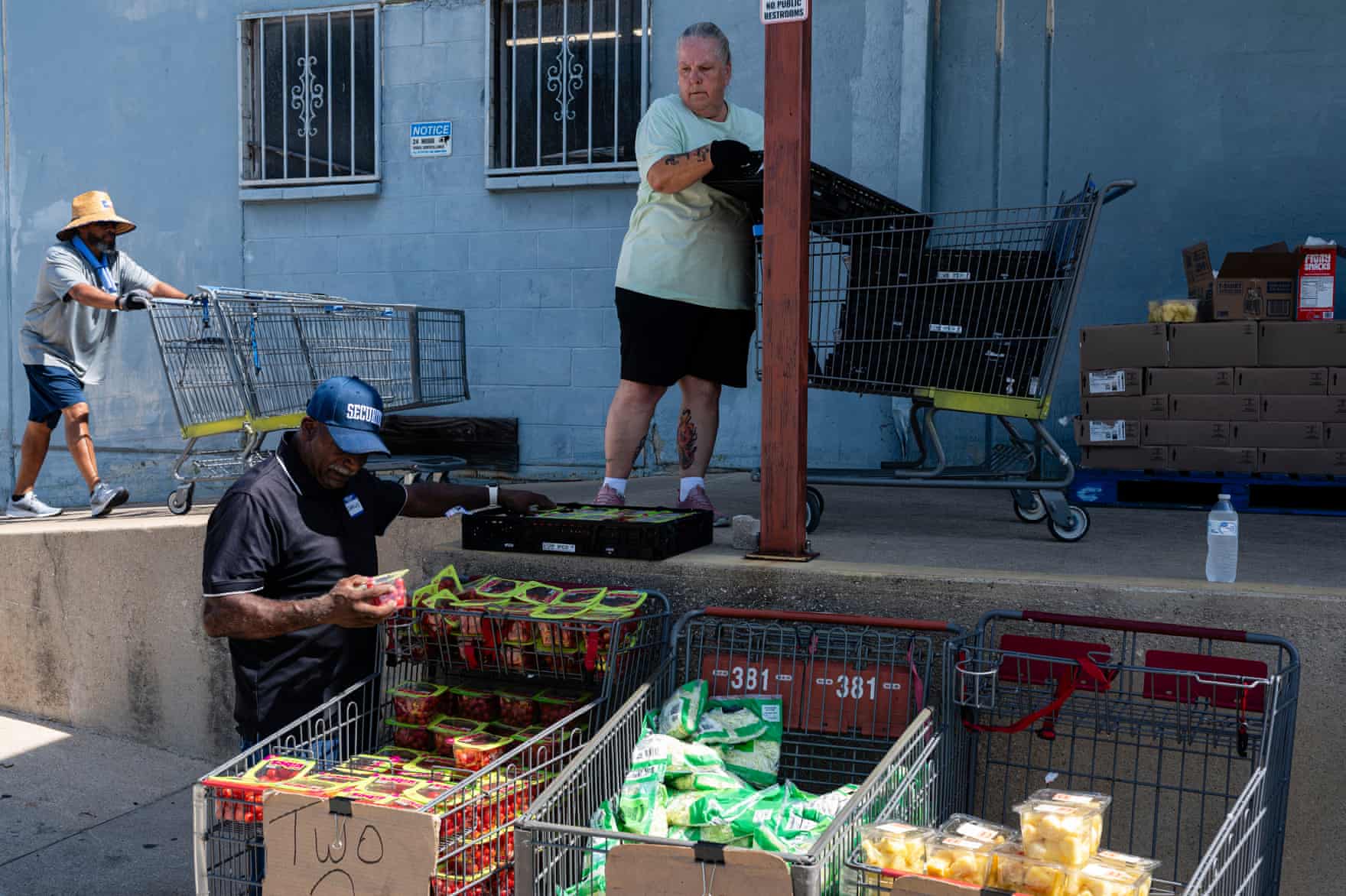
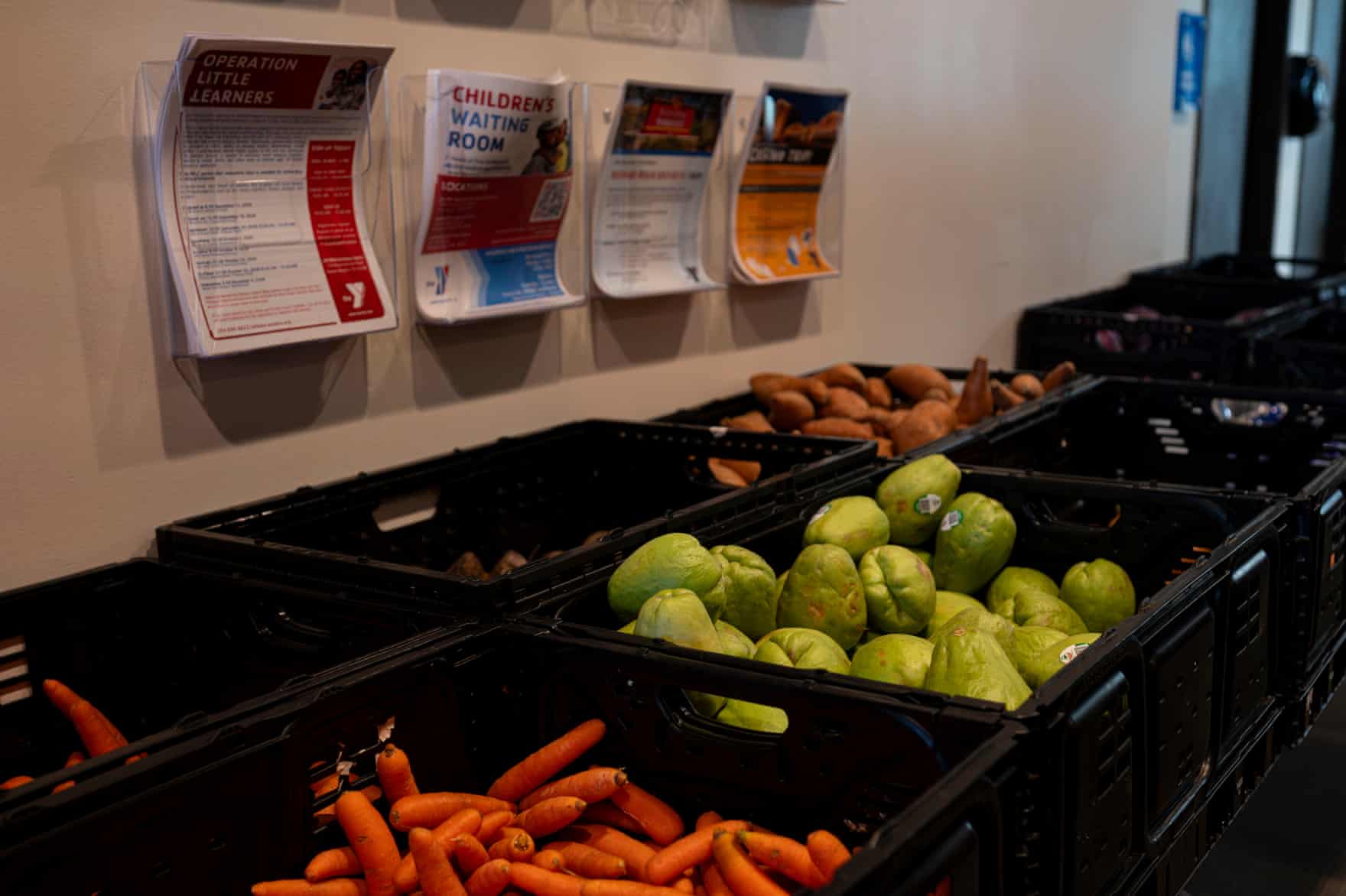
On the morning I visited the ASYMCA pantry, a few dozen active-duty and retired military family members waited in a single file line that stretched past milk crates filled with fresh produce.
Toward the end of the line, Rebecca Maurer, 21, stood bouncing her 18-month-old daughter on her hip. Married to a fellow soldier and pregnant with a second child, Maurer was still serving on active duty as an army supply specialist. Even with two military salaries and what she described as a âÂÂfrugalâ approach to spending, they were still having a hard time covering expenses. âÂÂItâÂÂs manageable,â Maurer said, âÂÂbut barely.âÂÂ
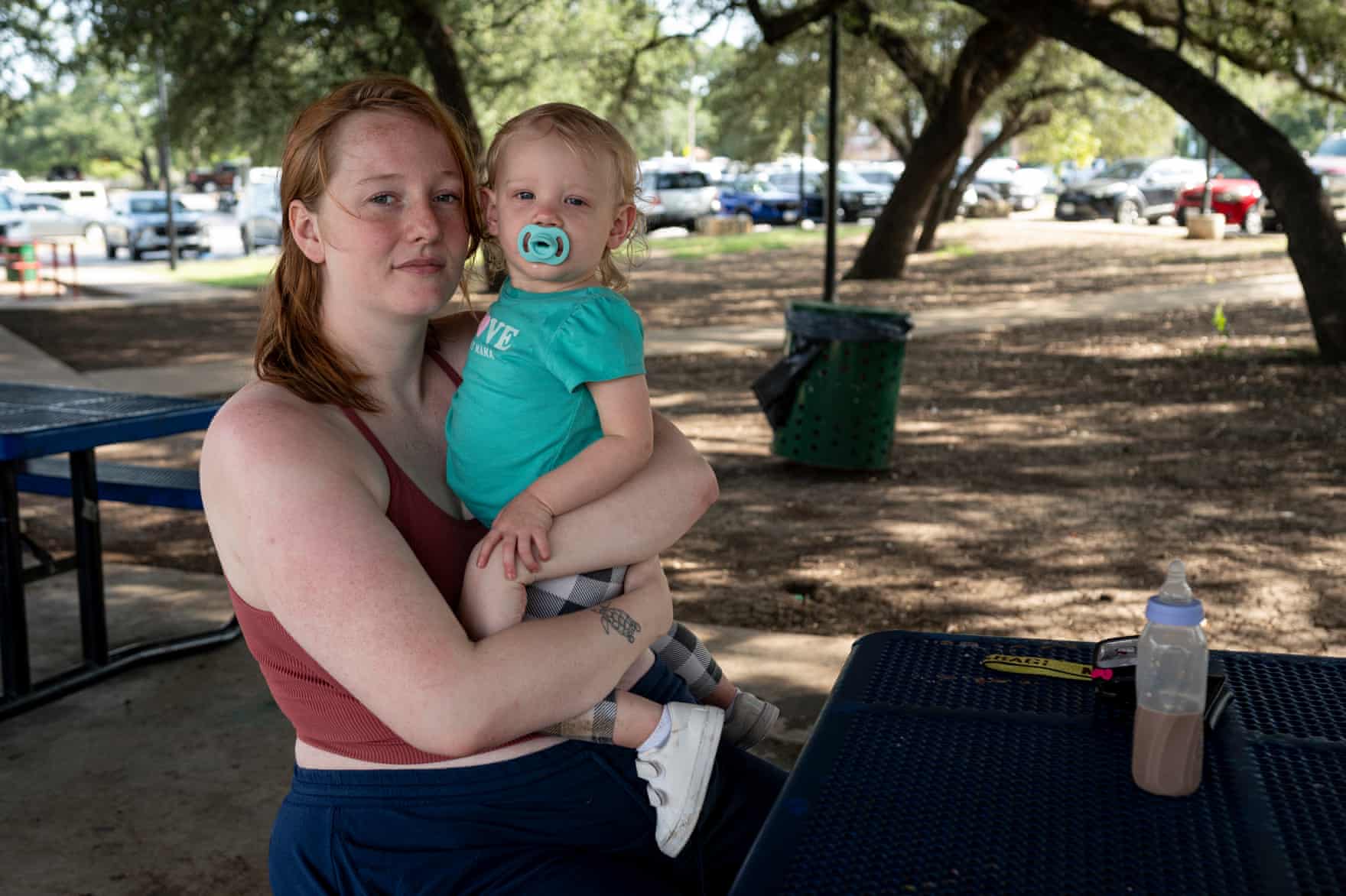
It was MaurerâÂÂs first time at the pantry. Like many active-duty soldiers, she had a hard time accepting that her family needed help. âÂÂI didnâÂÂt go for a really long time because I thought I could be taking from someone that needs it more than me, because I have a job and my husband has a job,â she said. âÂÂIt didnâÂÂt feel good.âÂÂ
But as inflation drove prices ever higher, and her familyâÂÂs childcare costs grew, she began to reconsider. Her husband, who grew up in a low-income household and still sends part of his paycheck to his relatives every month, reassured her that accepting help does not mean depriving someone else.
On top of a nearly $800 monthly daycare payment that she expects to climb to $1,400 when she eventually returns to work after her second child comes, Maurer said she spends about $140 every month on diapers and baby wipes. âÂÂDiapers, oh my God,â she said, rolling her eyes in disbelief.
âÂÂThe more childcare goes up, the more the family has to pay, the less money there is to put food on the table,â said Yerrington. âÂÂAnd then as food costs rise, itâÂÂs this vicious circle for that active duty family.âÂÂ
To offset the cost, the Killeen ASYMCA offers low-cost before- and after-school care at 30 area schools and provides free short-term childcare during medical appointments at on-base clinics. âÂÂThe biggest challenge most of the time is children, the cost of childcare, and thatâÂÂs many times why the mom doesnâÂÂt work,â said Yerrington.
Even when military spouses want to work, jobs can be hard to find near military bases, and the transient and unpredictable nature of military life can make it difficult for spouses to build careers. When service members receive orders to new duty stations across the country or across an ocean, employed civilian spouses are uprooted and forced to start the job search anew. According to Razsadin, these periods of transition are especially challenging on military familiesâ finances.
Deployments, which can be planned years in advance or occur at a momentâÂÂs notice, create further uncertainty for employed spouses. Dorene Ocamb, chief development officer at the ASYMCA, said surges in demand for food assistance track deployments at many of the organizationâÂÂs pantries. âÂÂOften, a military spouse may have a job and then canâÂÂt work once their service member deploys because they have to take over 100% of childcare,â Ocamb said.
The combination of obstacles to military spousal employment results in an unemployment rate five times that of the civilian population. According to the Department of Labor, more than 20% of military spouses are unemployed and actively seeking work, and 67% of military spouses cite a lack of childcare as a hindrance to pursuing employment or education.
âÂÂWhen you think about American households today, there are very few that can be sustained on a single income,â said Razsadin, who described the cost of groceries as a âÂÂcore financial stressorâÂÂ.
ThereâÂÂs an old joke in the Marine Corps that makes light of the hardship military marriages and families endure: âÂÂIf the Marine Corps wanted you to have a wife, they would have issued you one.âÂÂ
Of course, thereâÂÂs nothing funny about the fact that military service is brutal on families. One result is that the Marine Corps and other branches lose thousands of talented personnel every year who might otherwise stay in â and fail to retain quality troops degrades the overall strength of the force.
In 2021, the Marine Corps commandant, David Berger, a four-star general, decided it was time for a change. âÂÂWe have to treat people like human beings instead of inventory,â he said during a press conference outlining a new strategy for retaining marines. In particular, Berger stressed the importance of easing the burden of service on families, because marines who cannot care for their families are not likely to re-enlist. âÂÂWe have to pull out all the stops to try to find ways where we can keep them,â he said.
That same year, the army conducted a survey of 38,000 soldiers to understand why they choose to leave or remain in the service. More than 40% reported the âÂÂimpact of military service on my familyâÂÂs wellbeingâ as one of their top five reasons for declining to re-enlist. Among those who remain, financial stress negatively affects readiness â the term for how prepared a military is to fight a war.
âÂÂThe distraction of financial stress can lead to decreased operational efficiency and mission readiness, as service members preoccupied with financial worries are less likely to perform at their best in high-stakes environments,â according to a 2025 report from the Army Network Enterprise Technology Command.
âÂÂWe are not talking about this enough as a nation, and certainly I think we are not talking about it often enough in Congress,â said Veronica Escobar, a Democratic representative whose El Paso, Texas, district includes Fort Bliss, one of the nationâÂÂs largest army bases. âÂÂEven with the salary increases that weâÂÂd programmed into the pay for junior enlisted members of the military, weâÂÂre still not keeping up with the rise of inflation and increasing costs,â she said. âÂÂWe need to do a better job of adjusting to the changes in the economy.âÂÂ
Escobar, who formerly served on the House armed services committee and currently serves on the appropriations committee, described the military pay structure as âÂÂarchaicâ and badly in need of modernization. She also emphasized the importance of creating programs within the military to increase access to affordable childcare and to help military spouses find employment.
In the meantime, Escobar said the quickest way to address financial insecurity among active-duty personnel is to raise pay and increase housing allowances, which is what Congress did in the 2024 National Defense Authorization â the bill that authorized the 14.5% salary increase for junior enlisted troops. âÂÂBut that is just a Band-Aid on the overall challenge,â she said, âÂÂbecause as we try to balance things out on the military side, then here comes a punch in the face from the economy and inflation.âÂÂ
âÂÂThereâÂÂs one area where the Hegseth team has hurt us,â said Representative Don Bacon, a Republican from Nebraska, and a veteran, who serves on the armed services committee and helped secure the recent major pay increase for junior enlisted personnel. âÂÂOur office worked for three years to fix the housing allowance, which underpays service members living off base in high-cost areas,â he said. âÂÂCongress appropriated $2.9bn to address this, but the Pentagon took that money and distributed it evenly to everyone as a bonus, which meant those living off base received less than we recommended.âÂÂ
This was the so-called âÂÂwarrior dividendâÂÂ, a one-time $1,776 bonus paid to all but the most senior officers in December 2025. The Trump administration had claimed the bonus would be financed by tariffs, but financed it entirely with the funds Congress had approved for housing allowance increases.
Five years after BergerâÂÂs report and the armyâÂÂs landmark survey, and more than a year after one of the largest pay raises for junior enlisted troops in history went into effect, the military remains mired in a forever battle against financial insecurity. Long lines at food pantries are one of the most visible manifestations, but the crisis is pervasive. When the threat of missed paychecks emerged during the October 2025 government shutdown, the Military Families Advisory Network launched an emergency food assistance program and received more than 50,000 applications within the first 72 hours. âÂÂSo many military families are living in a bubble of just getting by, and then something happens and it throws everything off kilter for them,â said Razsadin.
âÂÂAbsolutely it has a direct impact on our national security,â said Escobar. âÂÂWe want service members focused on the mission, on global threats, on their training, and on cohesion, and we want families to feel supported and taken care of so thereâÂÂs an incentive for the service member to stay. That becomes really hard to do when youâÂÂre worried about paying bills and putting food on the table.âÂÂ
Becky Maurer said she had decided to leave the army after her contract expires in September. She was planning to use her VA benefits to study psychology or behavioral analysis online. âÂÂIâÂÂve already started applying to some colleges,â she said, âÂÂIâÂÂll have so much free time when the baby is born.âÂÂ
Her current schedule requires her to be at work from 6.30am until after 5pm. Soon, with another baby in tow and down to a single military income, she may find herself lined up on Thursday mornings with other veterans and military spouses on the second floor of the Harker Heights ASYMCA, waiting for her turn in the pantry.
-
This article was produced in collaboration with the Food & Environment Reporting Network, an independent, non-profit news organization, and co-published co-published and supported by the journalism nonprofit the Economic Hardship Reporting Project