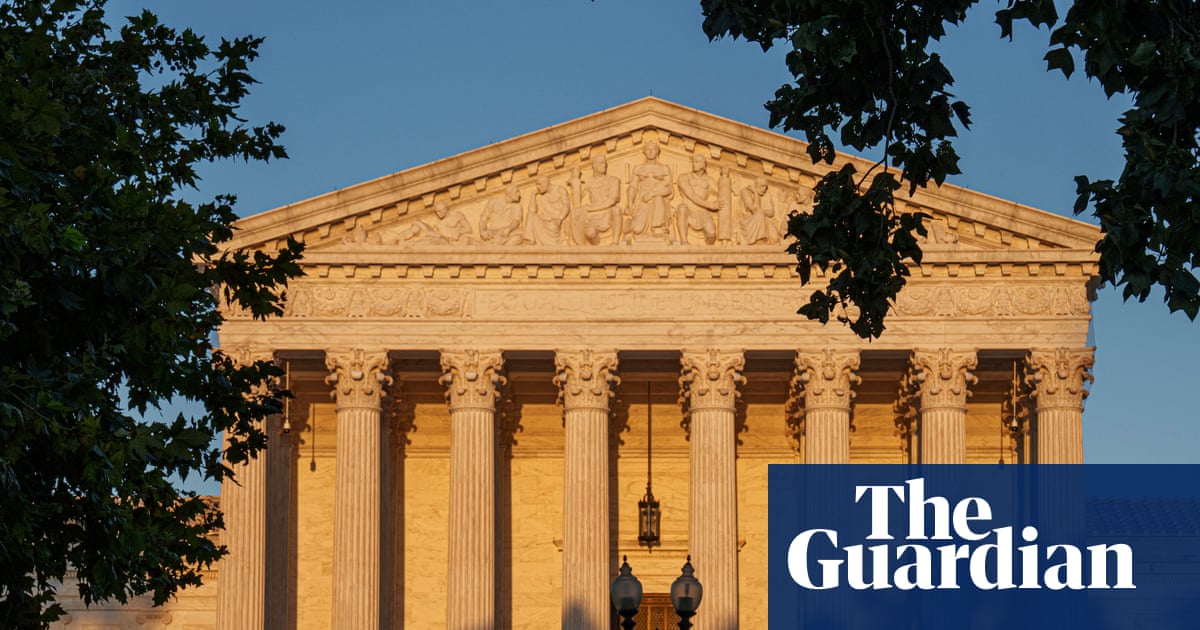

Immigration, climate, guns: key Trump policies to be tested at supreme court
Conservative court asked to rule on several signature policies in 2026-27 term â will it rule in presidentâÂÂs favor?
Several of Donald TrumpâÂÂs second-term policies will be tested at the supreme court in the coming months: it is being asked to rule on challenges to theadministrationâÂÂs harsh immigration and deportation policies, along with a climate change lawsuit against energy companies and an attempt to loosen restrictions on assault-style rifles.
The Roberts court is often split in favor of conservative issues 6-3, but it has also diverged from Trump on some key cases, leading the president at times to rage against some of the justices he nominated for the bench.
Decisions are expected in or before June 2027.
Here are some of the major supreme court cases in the 2026-27 term.
1. Suncor Energy Inc v County Commissioners of Boulder County
The case centers on a question raised in dozens of similar lawsuits: how can states, cities or counties hold energy companies accountable for contributing to climate change through fossil fuel burning.
In 2018, officials in Boulder, Colorado, sued ExxonMobil and Suncor Energy, alleging damages to the stateâÂÂs environment from burning fossil fuels.
ExxonMobil and Suncor Energy argued the lawsuit was incorrectly brought in state court instead of federal court. Justices are being asked to decide if the lawsuit can move forward.
The case could potentially end in a 4-4 split because Justice Samuel Alito recused himself, citing a conflict of interest.
2. Rhoney v Barbosa da Cunha
The case is a challenge to the Trump administrationâÂÂs practice of indefinitely detaining immigrants who are arrested in the US and awaiting deportation.
Previously, undocumented immigrants who had been living in the US could be released back into their communities on bond, as long as they did not pose a threat to safety nor were considered a flight risk. But last year, the administration reinterpreted the statute to mean any migrant who entered the US illegally should be held in detention while awaiting legal proceedings.
The reinterpretation has led to a huge surge in the number of migrants held in detention centers and disputes in lower courts.
3. Department of Homeland Security v DVD
The case focuses on the Trump administrationâÂÂs swift deportations of immigrants to âÂÂthird countriesâÂÂ, or countries other than their own, without allowing them to contest their removals.
The administration has entered into a series of agreements with other countries that have agreed to safely accept immigrants who cannot be deported to their home countries. But several immigrants say they were not given sufficient âÂÂnotice and opportunityâ to raise concerns about fear of torture or persecution in the countries where they are being sent.
The supreme court will examine whether a lower court judge had the authority to pause the quick deportations and if the policy itself violates law, the constitution or international law.
Already, the high court handed Trump a victory in the dispute by allowing officials to temporarily deport immigrants to third countries while legal proceedings continue.
4. St Mary Catholic Parish v Roy
The case is the latest example of the clash between statesâ anti-discrimination laws and religious organizationsâ right to exercise their values.
Two Catholic parishes say their preschools were precluded from participating in a state-funded universal pre-school program because it required them to sign a nondiscrimination agreement that prevented them from denying admission to families who do not align with Catholic values â such as same-sex couples.
The Catholic parishes requested an exemption, which was denied.
They say it violated their first amendment right because it excluded them from receiving state benefits that were âÂÂgenerally availableâÂÂ, and other pre-schools received exemptions, such as only admitting low-income families or children with disabilities.
The conservative majority of the court has been largely sympathetic to plaintiffs in similar disputes, such as allowing a Colorado baker to refuse to create wedding cakes for same-sex couples.
5. Viramontes v Cook County & Grant v Higgins
The consolidated cases serve as a vehicle for justices to expand access to semi-automatic firearms, such as AR-15-style rifles, by striking down state or local bans on the types of weapons.
Residents of Cook county, Illinois, challenged a county ordinance banning the sale, transfer or possession of any âÂÂassault weaponâ â which AR-15-style rifles fall under. Separately, a group of Connecticut residents challenged a similar state law that was enacted after the Sandy Hook elementary school shooting.
Lawyers in the cases argue that banning AR-15s is unconstitutional because they are common-use firearms.
In recent years, the supreme court has expanded second amendment protections. In 2022, the court created a new test, requiring courts and legislators to determine whether a gun law conflicted with the United Statesâ âÂÂhistory and traditionâ of firearm ownership.
6. Republican National Committee v Mi Familia Vota
The case centers on two Arizona laws, one requiring voter applicants to provide proof of citizenship, another allowing election officials to remove people believed to be noncitizens from voter rolls 90 days before an election.
Voting advocacy groups argue the laws, enacted in 2022, violate the National Voter Registration Act.
Donald Trump has long called for federal ID requirements and voter roll regulations to address his debunked claims of mass noncitizen fraud in elections.
While a ruling in the case would not impact federal law, it could open the door for states to enact their own voter ID rules.
Justices have yet to decide whether to take up several other major cases, including a dispute over providing gender-affirming care to transgender inmates, the administrationâÂÂs ban on trans service members and a case challenging state laws requiring the Ten Commandments in classrooms, among others.