
âÂÂI will not be moving onâÂÂ: sale of WNBAâÂÂs Connecticut Sun leaves Native fans facing cultural loss
The Mohegan Tribe made the Sun the first Native American-owned franchise in pro sports. Fans say the teamâÂÂs move to Houston echoes centuries of erasure and displacement
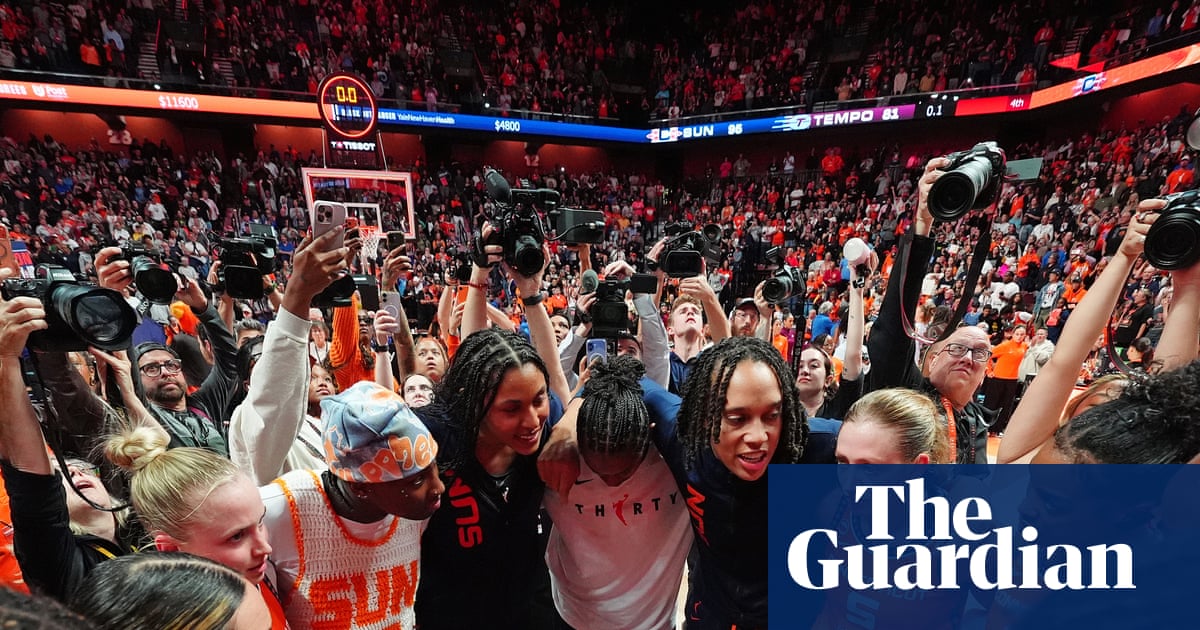
When the Connecticut Sun played their final WNBA game last month, fans at Mohegan Sun Arena came together in an act of collective celebration and grief. The beloved franchise was leaving after 24 seasons, sold to a new ownership group in Houston, in a process so controversial that the state of Connecticut is considering legal action. The end of the Sun is a loss for the entire New England region, which is now without a WNBA team.
The Sun entered the league in 2003 and brought professional womenâÂÂs basketball to Connecticut, which is considered the âÂÂBasketball Capital of the Worldâ â at least, according to signs along the stateâÂÂs highways. The Sun were the first independently owned WNBA team, and the first Native American-owned pro sports franchise.
The story of the Mohegan Tribe, which bought the Sun in 2003, often gets lost in conversations about the team. But it shouldnâÂÂt, Native fans told the Guardian. You canâÂÂt understand the birth or the death of the team without understanding Native history and the ways cultural and historical harm still reverberates today.
âÂÂWe are sovereign nations and sovereignty is so important to us, and thatâÂÂs something thatâÂÂs been continually challenged and disputed and really disregarded throughout history,â says Natalie Welch, a member of the Eastern Band of Cherokee tribe and the program director of MBA in sport and entertainment management at Seattle University. âÂÂThis whole situation, sadly, seems like another disregarding of sovereignty, and is really belittling to the Mohegan Tribe.âÂÂ
The Mohegan Tribe, whose ancestral lands are along the Thames River in southeastern Connecticut, fought hard to gain its sovereign status. Its land was taken by white settlers during colonization. The tribe applied for federal recognition in 1978, which was finally granted in 1994. The following year, the Connecticut governor signed a bill authorizing the state to return 240 acres of the tribeâÂÂs original ancestral lands to the federal government, to be held in trust for the Mohegan Tribe. Over the years, the tribe has bought more of its land back, acquiring hundreds of acres. It currently has more than 2,400 registered members.
The Mohegan Sun Casino and the arena inside it are located on the tribeâÂÂs reservation in Uncasville, named for a pre-colonial tribal leader, Sachem (Chief) Uncas. Shortly after the tribe received its sovereign status and land, it decided to pursue gaming as a way to âÂÂreturn the tribe to economic self-sufficiencyâÂÂ, according to the tribe. The casino opened in 1996, and many tribal members work there.
âÂÂBefore the casino was built, that land was also not ours,â says Haley Kerwin, a Mohegan tribal member and Sun fan whose father works at the casino. âÂÂIt was ours, and then it was taken away, it was something that we had to fight to get back. The reason that we were able to open the casino there, the reason that my dad was able to get a job and start a family, is because of the work that the members of our tribe have done to not let us be erased.âÂÂ

The Mohegan Tribe chose to invest in the WNBA at a time when it was not financially popular to do so. When the league began in 1997, the NBA collectively owned the teams, and each WNBA team was run by its NBA counterpart in its city. After a rapid expansion process that saw the league double in size over its first four seasons from 1997 to 2000, it restructured in 2002. The NBA teams had to decide for themselves whether they wanted to operate their W counterparts. Four WNBA teams folded in the wake of that change â the Portland Fire and the Miami Sol ceased to exist (the Fire would return as an expansion franchise this year), while the Utah Starzz moved to San Antonio and the Orlando Miracle were bought by the Mohegan Tribe for $5m and became the Connecticut Sun.
âÂÂBasketball is really big in Native communities, but I think whatâÂÂs so special is that the WNBA has always been a majority-Black women, and so for the Mohegans to come in as a business and invest in something that people didnâÂÂt think would exist 30 years later, much less be thriving, I just think itâÂÂs a really great display of investment in community,â says Shea Vassar, a Sun fan and a registered member of Cherokee Nation.
Val Ackerman, the WNBAâÂÂs president at the time, says the significance of bringing the first Native-owned pro sports team to the league wasnâÂÂt really part of the consideration around the awarding of the franchise. The area was already a womenâÂÂs basketball stronghold. An hour north was UConn, where coach Geno Auriemma was building a dynasty; when the Sun entered the WNBA, the Huskies had just won their third national title in four years. There were multiple bidders in the state, but ultimately the Mohegan Tribe won out because they had a built-in arena with just over 9,000 seats â the perfect size for the fanbase.
âÂÂWe saw [having the first Native-owned team] as a positive, but that wasnâÂÂt why we did it,â Ackerman says. âÂÂIt was really the other factors. It was this very unique setup in a part of the country where we knew womenâÂÂs basketball had a great following, and we knew they were great operators because they also have a lot of other events they bring into the building there.âÂÂ
From day one, the tribe played a huge role in the public image and branding of the team. In a world where sports franchises have adopted Native imagery for team names or mascots that many consider racist, having an identity that was Native-informed was significant. Kerwin, who grew up going to Sun games with her family, interned for the teamâÂÂs content department for the 2022 and 2023 seasons. She was proud to help shape the public narrative and bring a Mohegan perspective to the teamâÂÂs social presence.
In 2021, when the WNBA debuted its âÂÂRebel Editionâ uniforms, the SunâÂÂs set highlighted and honored Mohegan culture. The 2024 and 2026 versions continued that trend. On the front, instead of having the word âÂÂSunâ on the jersey, it said âÂÂKEESUSKâÂÂ, which means âÂÂsunâ in the Mohegan language. Symbols on the waistband corresponded to the four dome directions in Mohegan Tribal culture â east, south, west, north. Along the neckline, arms, and trim of the shorts, dots represented the âÂÂTrail of LifeâÂÂ, or the Mohegan belief that, âÂÂWe walk as a single spirit on the Trail of Life. We are guided by 13 generations past and responsible for 13 generations to come.âÂÂ

Vassar was drawn to the Sun specifically because of their Native ownership. âÂÂI wanted to get into the WNBA but being in Oklahoma, I wasnâÂÂt sure which team I wanted to root for,â she says. VassarâÂÂs dad went to UConn and his side of the family still lives in Connecticut, so when she found out that the Sun were owned by the Mohegan Tribe, she instantly knew they would be her team: âÂÂHaving that entry point to the Connecticut Sun just felt like magic.âÂÂ
When players joined the Sun, they were educated on Mohegan beliefs and traditions. Members would come to practices and games and offer traditional blessings for the team. Point guard Charlisse Leger-Walker played her rookie season this year with the Sun, and she cherished the opportunity to spend the first season of her career playing for a Native-owned team. She is an Indigenous New Zealander of MÃÂori heritage from the Te Whakatà Âhea and NgÃÂti Porou iwi (tribes).
âÂÂIt just really hits a different part of my identity and connects me back to my roots, without it actually being my roots,â Leger-Walker says. âÂÂComing into the league and everything is so new, that [connection] almost feels familial in a sense. ItâÂÂs something IâÂÂll definitely remember throughout my career.âÂÂ
Kerwin spoke with Sun players Brittney Griner and Saniya Rivers during this seasonâÂÂs Indigenous Peoples Night game, and offered them wampum, beads that carry significant ceremonial significance to the Mohegan Tribe.
âÂÂWampum is an honor to be gifted, and I was just going to vaguely say that it was âÂÂa Mohegan thingâ when handing it to them,â Kerwin says. But the pair surprised her by already knowing about the significance of wampum and understanding the honor it was to receive it. âÂÂThem already knowing and they remembered what it means, thatâÂÂs something that means something to them now, too. That is something really special, that a part of the tribe will also be with all the players that will go on to their new teams.âÂÂ
The handling of the Sun sale was roundly criticized, but for Native fans of the league, it hit particularly hard. They say it brought up centuries of disenfranchisement and erasure. The Mohegan Tribe was selling the team to reduce debt and focus on their core gaming operations. As the league grew, the SunâÂÂs lack of a dedicated practice facility for players was becoming a detriment. The state of Connecticut looked into ways to keep the franchise, including a bid from a Hartford-based ownership group and an effort to bring in minority ownership via state funds and private investment to build the Sun a practice facility in Hartford and keep games at Mohegan Sun Arena. The league rejected those options.

In 2025, the Mohegan Tribe secured a deal with a Boston ownership group for $325m to move the Sun from Connecticut but keep them in New England. Then the WNBA stepped in and said that the Boston ownership group could not buy the team, as they had not put a bid in for an expansion team during the previous round.
Instead, the tribe would reach an agreement to sell the team for $300m to an ownership group in Houston, which had pursued a franchise in recent rounds of expansion but missed out. Not only did the tribe get less money for the team, but the new ownership group was led by Tilman Fertitta, the owner of the NBAâÂÂs Houston Rockets and Donald TrumpâÂÂs ambassador to Italy. Some politicians called the sale âÂÂriggedâ and called for antitrust investigations into the league.
Despite a season plagued by injuries, where the Sun went 11-33 and finished second to last in the standings, their final home game on 24 September was a triumph. The crowd of diehard Connecticut fans celebrated as their team defeated the Toronto Tempo 95-81. The SunâÂÂs final season was spent honoring their legends, from franchise icon Alyssa Thomas to 2021 MVP Jonquel Jones. The concern for all fans â but especially Native fans familiar with having their stories erased â is that the franchiseâÂÂs rebrand once it moves to Houston (where the Comets identity will be resurrected) will mean a loss of 24 seasons of history.
Many fans of the Sun, whether they were Native or not, were drawn to the team because of its independent ownership and the fact that their monetary support was going back to a Native tribe. To them, the move to Houston is about so much more than just location. ItâÂÂs also about values. For a tribe that fought long and hard to be granted tribal sovereignty, the decision being taken out of their hands can feel like a violation of that sovereignty.
âÂÂTo me, it really harkens back to the fact that for Native people, land is so important and place is so important,â Welch says. âÂÂTo have this team in this area and to see the success that they saw and build this fanbase and then completely leaving them with nothing. ItâÂÂs so tied to the continued erasure and displacement of Native people.âÂÂ
âÂÂThat erasure of the SunâÂÂs history intertwined with the tribeâÂÂs history is anxiety-inducing,â Kerwin adds. âÂÂIf IâÂÂm being honest, I just donâÂÂt want people to stop talking about them. I fear people are going to move on very quickly, and I will not be moving on any time soon, if ever.âÂÂ