
Houthi conflict casts shadow as Saudi Arabia scales back sporting pipe dreams
A match delayed by missile attack warnings is not what Cristiano Ronaldo and co signed up for but itâÂÂs the new reality; the Saudi sporting juggernaut is stalling
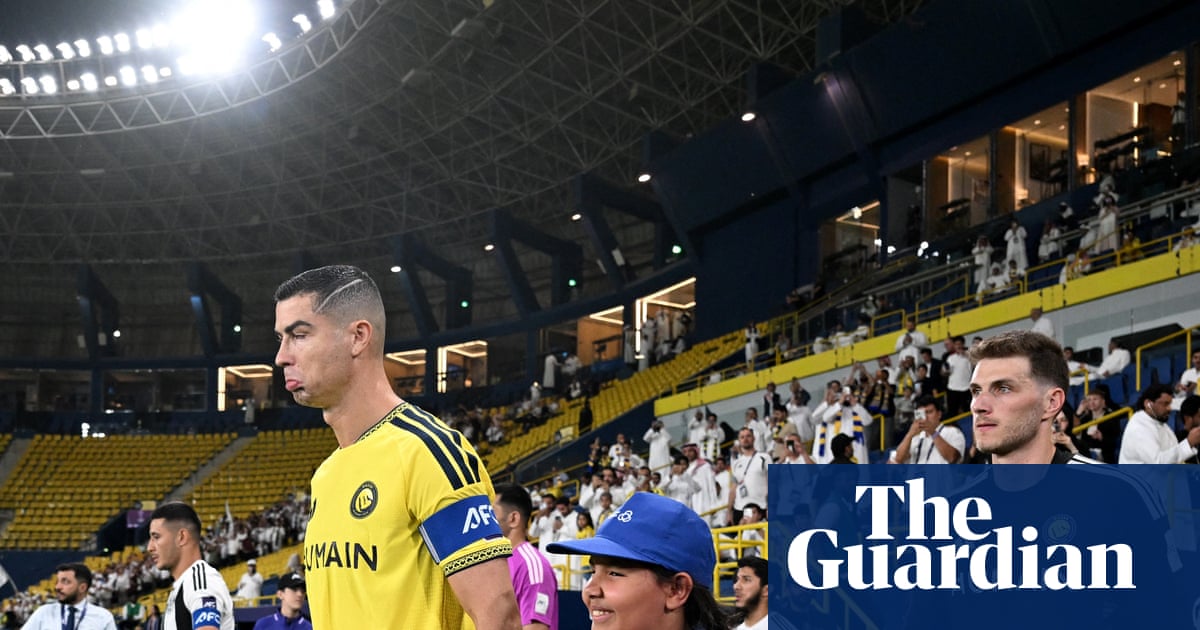
Cristiano Ronaldo grabbed the scarf in the colours of the Saudi Arabian flag and waved it at the sparse but enthusiastic crowd, who responded with rapturous cheers. It was a gesture of defiance rather than a victory salute, encapsulating the Saudi equivalent of âÂÂKeep calm and carry onâÂÂ.
Monday nightâÂÂs Asian Champions League Elite game between Al-Nassr and the Uzbek side Neftchi Fergana had ended with a 3-1 win for the Saudi club coached by Ange Postecoglou, with Ronaldo, supported by Sadio Mané, scoring, the smattering of star names indicative of the lure of the Saudi Pro League. Yet this isnâÂÂt quite how Ronaldo and co would have anticipated life in Riyadh. The meagre attendance aside, MondayâÂÂs game was delayed by a threat of missile attacks from YemenâÂÂs Houthi rebels. A safety warning issued 15 minutes before kick-off came two days after 13 people died and more than 300 were wounded by Houthi strikes on RiyadhâÂÂs King Khalid international airport.
Saudi ArabiaâÂÂs hosting of footballâÂÂs Asian Cup in January and February is being questioned â it insists preparations are on track â and a combination of rapidly changing geopolitics and a reality check being applied to the more quixotic projects means the kingdomâÂÂs position in the sporting landscape looks hugely different from a year ago. GolfâÂÂs Asian Tour has postponed next monthâÂÂs Saudi International indefinitely, next monthâÂÂs cycling urban world championship in Riyadh has been cancelled, the Fifa esports World Cup â which had been due to start on Friday â has been postponed and the Six Kings Slam tennis event, due to be held next week, has been pushed back until late December.

Alongside the humiliating collapse of LIV Golf, the planned 2029 Saudi Winter Asian Games has been relocated to Kazakhstan, which has actual mountains with snow. In the football sphere, it has been reported that five proposed new stadiums for the 2034 World Cup may not be built. One of them is the Neom stadium, which was planned with an elevation of 350 metres, after huge cuts to the fantastical city development project known as the Line.
In September last year there were signs all might not be what it seemed. At a Washington DC investment thinktank the Newcastle chair, Yasir al-Rumayyan, dressed in suit and tie, very much in sync with the patrician vibe of the event, addressed hedge fund chiefs and entrepreneurs along with the private equity billionaire David Rubenstein.
Unsurprisingly, NewcastleâÂÂs Carabao Cup triumph was barely mentioned. Al-Rumayyan was principally there as the chair of Aramco, the Saudi oil company, and as the governor of the Public Investment Fund (PIF), the countryâÂÂs largest sovereign wealth fund. PIF is chaired by Crown Prince Mohammed bin Salman, the de facto ruler of the kingdom and the man accused by US intelligence of approving the murder of the journalist Jamal Khashoggi.
Al-Rumayyan took time, in between banter about how the result of his golf match with Donald Trump was a âÂÂstate secretâÂÂ, to lecture the audience on history and why the need for Saudi to divest from oil was existential
âÂÂPortugal was one of the richest countries in the world with all the gold that they had,â he said. âÂÂAnd thatâÂÂs like a disease. ThatâÂÂs what the crown prince always talks about ⦠âÂÂWe have the oil disease.â We cannot rely only on oil because this will make you more dormant, less active. We have growth in population and we need to find new jobs for new people coming. Seventy-five per cent of Saudis are under the age of 35. We need to give them the quality of life they deserve and find them jobs. We cannot just rely on one commodity. We donâÂÂt want to do the same mistakes that [other] great nations have made.âÂÂ

The unspoken threat alluded to by al-Rumayyan is that a nation of âÂÂdormantâ young men in the birthplace of Osama bin Laden could turn to radical Islam, as the 15 Saudi nationals among the 9/11 bombers did. And now there is the prospect that the Houthi missiles and the US war with Iran may jeopardise the best-laid Saudi state plans.
âÂÂIf the war affects the ability of the regime economically â by which I mean [creating] jobs â then potential for unrest grows,â says Christopher Davidson, author of From Sheikhs to Sultanism: Statecraft and Authority in Saudi Arabia and the UAE. âÂÂIf rulers fail to deliver on jobs for a massive youth bulge, the seductive message of online forums becomes even more compelling for young men.âÂÂ
LIV was part of that shift to leisure investments and was al-RumayyanâÂÂs brainchild, if thatâÂÂs the correct word for a project that made a reported $6bn (ã4.5bn) loss for PIF. Given the country club ambience among his Washington audience, golf was addressed and al-Rumayyan was still talking about wanting to âÂÂbring the game of golf back togetherâ and âÂÂincreasing the share of [revenue] pieâÂÂ, this being six months before Saudi Arabia pulled the plug on the LIV project, which filed for bankruptcy protection in September.
Yet even in Washington al-Rumayyan was strongly hinting that entrepreneurs shouldnâÂÂt come asking for money for pet projects unless they could give something back to his country beyond financial returns, explaining that from 2021 PIF had shifted investment back towards Saudi Arabia. âÂÂThe trigger for us, if we want to deploy capital with asset managers, [is that] we would like to get some of the deployment back to the country [Saudi Arabia] because we need to increase and grow our local content,â al-Rumayyan said. âÂÂOne of the best ways to do so is direct foreign investment.âÂÂ
The reassuring news for Newcastle is that a trophy investment in the Premier League will survive the overseas investment cull. âÂÂThey are reducing their spending but I think football is probably ringfenced, given theyâÂÂre hosting the 2034 World Cup,â says Davidson. âÂÂI would imagine the PIF funding [for Newcastle] is secure going forward.â That said, the supportersâ dreams of huge spending will never happen, as most have accepted. In the Saudi Pro League, PIF this year sold a controlling stake in Al-Hilal but it continues to own three others: Al-Nassr, Al-Ittihad and Al-Ahli.
âÂÂThere is pressure from the very top in Saudi Arabia for PIF to cut some corners,â Davidson says, âÂÂand that is accelerating because of the war and more focus on their efforts at domestic economy building.âÂÂ
Boxing too â assuming Saudi is safe for events â will survive the cut and esports, a $38bn slice of PIF and a proven way to divert young men from extremism, could thrive. âÂÂThey require very little budget but hit an enormous audience,â Davidson says.

But a World Cup stadium in the sky, skiing in the desert and futuristic cities are out, as are any more expensive overseas money pits such as LIV. âÂÂ[TrumpâÂÂs] Republicans struggling in the midterm election in the USA will factor into what type of sports all the Gulf states will be thinking of investing in,â Davidson says. âÂÂLIV was seen as a project closely aligned with TrumpâÂÂs passions. And that may be reduced if they see the direction [of politics] swinging.âÂÂ
The Saudi Pro League and World Cup 2034, though, are very much still on the agenda, even with fewer stadiums. However, that will be reliant on the cessation of the US-Iran war and the subjugation of Houthi rebels, neither of which is likely to have featured prominently in RonaldoâÂÂs transfer negotiations when he opted to join Al-Nassr for his career sunset in Saudi but suddenly seem very pertinent.
PIF has been contacted for comment.