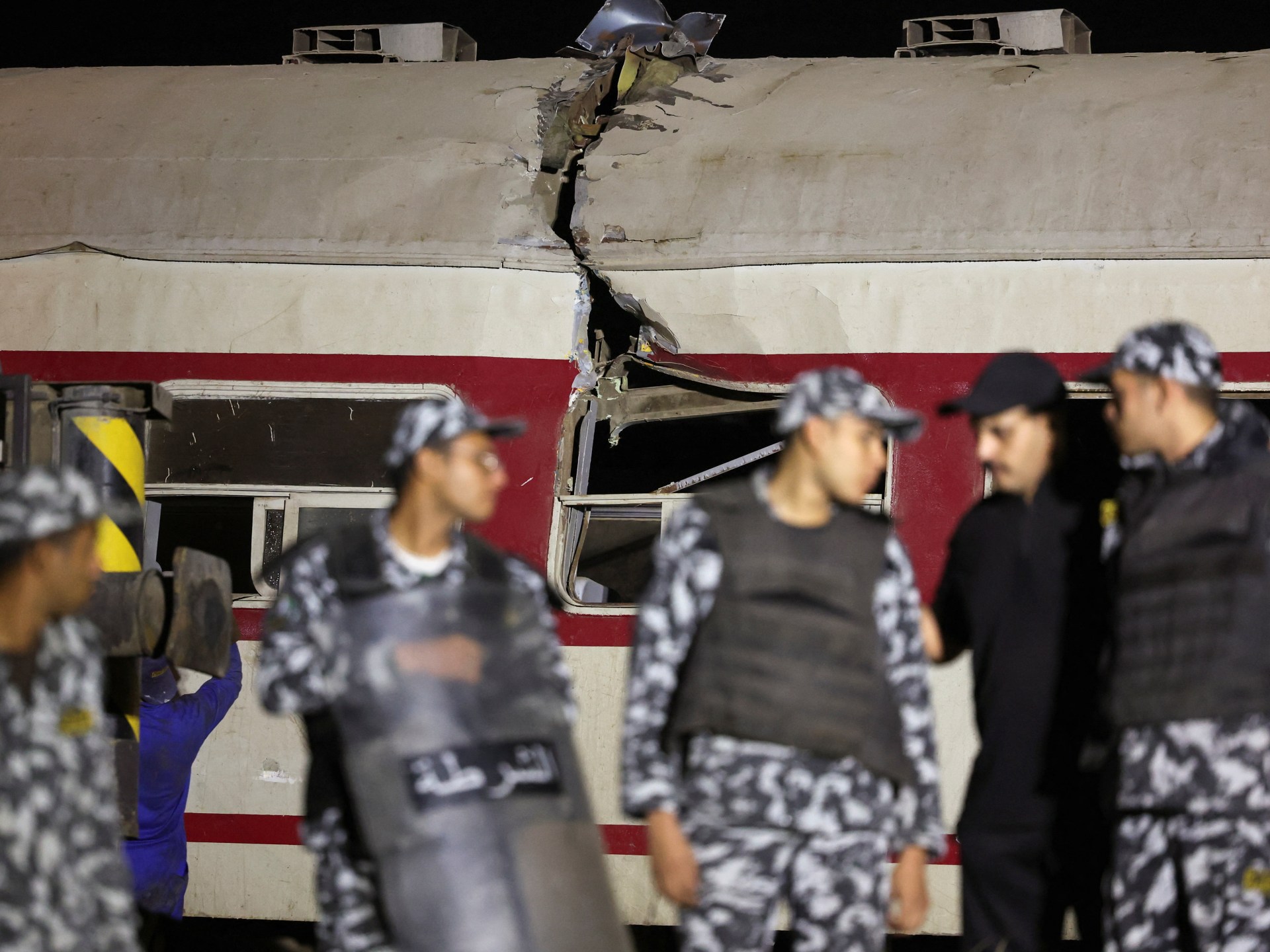

A deadly train collision in the outskirts of the Egyptian capital Cairo, which killed at least seven people and injured more than 125 others according to the countryâÂÂs Ministry of Health and Population, has ignited a wave of parliamentary and political demands for accountability. The disaster raises urgent questions about the effect of the millions of dollars the Egyptian state has poured into upgrading the railway network and whether those investments are genuinely improving passenger safety.
A train travelling between Giza and Fayoum on Sunday ran into the back of another train on the Cairo-to-Aswan route, causing the latter to derail onto a countryside road in al-Ayyat district. Following the crash, President Abdel Fattah el-Sisi directed authorities to conduct an urgent investigation to âÂÂhold accountable anyone found to have been negligentâÂÂ.
Recommended Stories
list of 3 items- list 1 of 3Iran lifts 2,000km limit on its ballistic missiles: What that means
- list 2 of 3Moroccan trio make African Player of Year shortlist as Salah absent
- list 3 of 3Palestine Weekly: West Bank on fire â and GazaâÂÂs tents under water
The Egyptian parliamentâÂÂs Transport and Communications Committee summoned Transport Minister Kamel el-Wazir to an emergency session on Tuesday to investigate. Meanwhile, opposition voices have escalated demands for political accountability, ranging from criticising the minister to demanding the dismissal of the entire government.

Abdel Moneim Imam, a member of Parliament and head of the Justice Party, told Al Jazeera that the situation requires decisive action, and highlighted several previous train disasters in al-Ayyat. A 2002 fire killed more than 370 people, while a train collision in 2009 killed 15 people, and three separate collisions in 2016 killed 14 people in total.
Al-Ayyat is a major corridor for trains travelling between Cairo and southern Egypt, with heavy railway traffic and railway switches in the area.
âÂÂThe recurrence of train accidents in the al-Ayyat area, despite what the Transport Ministry has repeatedly announced regarding the development of the railway system, reflects the absence of genuine accountability for the officials responsible for those accidents,â Imam stated.
âÂÂTaking decisive measures and holding officials accountable for previous accidents would have prevented the recurrence of these scenes,â he added. âÂÂThe minister of transport enjoys the protection of the parliamentary majority, which prevents the activation of parliamentary accountability ⦠The continued turning of a blind eye to the shortcomings and the recurrence of accidents without genuine accountability leads to the continuation of the crisis.âÂÂ
Imam, who has described himself as a reformist politician, called for ministers to be questioned in Parliament over the latest accident.

Legislative response
EgyptâÂÂs parliamentary transport committee met on Tuesday in the presence of Transport Minister Kamal el-Wazir to discuss the circumstances of SundayâÂÂs train collision, and measures to prevent similar accidents.
However, Ahmed el-Derby, the secretary of the committee, told Al Jazeera before the meeting that its purpose was not to âÂÂinterrogate [el-Wazir] or confront him with premeditated accusationsâÂÂ.
Asked whether the government bore political responsibility for railway accidents, el-Derby said that ultimate responsibility rested with those overseeing the railway system.
âÂÂOfficials bear responsibility for mistakes that occur during their tenure, even if they did not personally make those mistakes,â el-Derby said, adding that the accident showed that something had gone wrong and that an investigation was needed to establish who was responsible and hold them accountable.
âÂÂWe do not support the hasty demands to dismiss officials, and dismissals alone do not represent a solution to the crisis,â he said.
Policy failures
Atef el-Maghawry, head of the Tagammu PartyâÂÂs parliamentary bloc, said the repeated railways accidents in al-Ayyat pointed to wider government failures, rather than problems confined to the Transport Ministry.
âÂÂDespite the ministrys announcements about upgrading the railway network and signalling systems, the recurrence of accidents in al-Ayyat points to a crisis that goes beyond the the Transport Ministry and reflects broader government policies,â he told Al Jazeera.
El-Maghrawy argued that replacing the transport minister would not be enough, and instead called for the dismissal of the entire government over its failures to address a wide range of social issues.
âÂÂWhat is required is a change in policies, not simply a change of personnel,â he said.
âÂÂThere are achievements that have been realised in the railway sector, and other sectors, but questions remain regarding the cost of these achievements and the results entailed by them,â el-Maghawry explained.
Financial transparency
Parliamentarians are now demanding answers on railway funding.àIrene Saeed, head of the Reform and Development PartyâÂÂs parliamentary bloc, called for a detailed breakdown of how the Transport Ministry spent loans obtained in 2026.
Saeed wants to know what proportion of loans taken out by the ministry during el-WazirâÂÂs tenure went towards safety, signalling and maintenance, and how many accidents in 2025 and 2026 were found to be the railway authorityâÂÂs responsibility.
The Transport Ministry says approximately $37bn was allocated to transport investments between 2014 and 2024.
Hassan Mahdy, a highway engineering professor at Ain Shams University, warned against drawing conclusions before the investigation is complete. He pointed to upgrades across EgyptâÂÂs railway network, including a shift to electronic systems intended to manage train movements and reduce reliance on human intervention.
Mahdy said that investigators had to establish why one of the trains stopped on the main track â highlighting the possibility of a sudden technical failure or someone activating the emergency brake. In addition, investigators would need to verify whether the second trainâÂÂs signalling system warned its driver of a stationary train on the line before the collision.
El-Derby said that the railway signals had issued a stop instruction, citing information from the signalling director, but it remained unclear whether the driver received the warning early enough to stop.
He also urged caution about directly comparing the collison with the previous deadly incidents in al-Ayyat, saying railway operations and signalling have since been upgraded.
âÂÂThe results of the investigations will reveal all the circumstances of the accident, whether the cause is linked to the human element or a technical flaw in the system,â Mahdy said.