
Datacentres are deeply unpopular. Has Sweden made one we can all love?
It is built of wood, resembles an Ikea and its power is totally renewable. Plus, it was built with the local community in mind. Is this facility in Falun the best datacentre in the world?
âÂÂIt was pretty cool, when they were building it. It looked like a very large Ikea,â says John Wernvik, of EcoDataCenter. He is giving me a tour of their facility in Falun, Sweden, which could lay claim to being the worldâÂÂs greenest datacentre â although to many, that is a contradiction in terms.
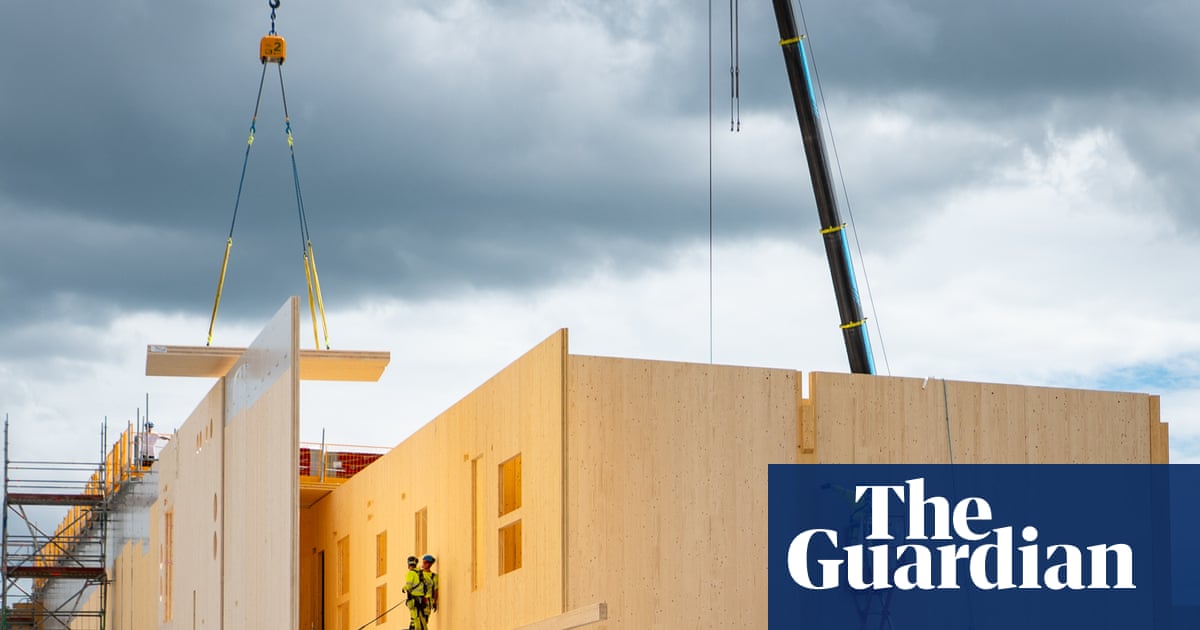
One difference is immediately visible: this datacentre is made out of wood. Huge panels of cross-laminated timber arrived at the site pre-cut, and were assembled by crane according to instructions, like flatpack furniture. Aesthetically, this section of the datacentre is more like an Ikea before the fit-out, a cavernous, echoey, immaculately clean hangar. The wood is not EcoDataCenterâÂÂs only claim to sustainability; it is more than just cosmetic, says Wernvik, the companyâÂÂs chief external relations and sustainability officer. âÂÂCompared with a traditional datacentre built with steel and concrete, we lower the embodied carbon of the full structure by three times.â With a complex the size of a football pitch, that is a lot of wood, but, says Wernvik, âÂÂthe amount of timber one of our datacentres uses takes the Swedish forest about 10 to 15 minutes to grow backâÂÂ.
Datacentres have become a dirty word and a political issue in much of the world â especially the US, where opposition to them was said to be a factor in the recent midterm elections â but here in Sweden, not so much.

There is a familiar litany of reasons why datacentres are bad: they are being built without the consent or knowledge of local people; they consume vast amounts of land, electricity and water, with knock-on effects for communities and the environment; they provide no jobs and enrich rapacious tech companies.
WhatâÂÂs remarkable is how little any of those arguments apply in Sweden, especially here in Falun, a former copper-mining town a few hours north of Stockholm. If your abiding image of a datacentre is something like xAIâÂÂs Colossus facility in Tennessee, built at lightning speed with little public notice, partly powered by banks of unpermitted, methane gas-burning temporary generators, releasing huge amounts of CO2 and harmful pollutants into the atmosphere and the community, then EcoDataCenter is practically the polar opposite. âÂÂIâÂÂm biased, but we believe that we build datacentres in a somewhat different way,â says Wernvik.
For starters, the companyâÂÂs electricity supply is 100% renewable: 75% from hydroelectric power and 25% from wind. SwedenâÂÂs power mix as a whole is virtually carbon-free â just 1% of it comes from fossil fuels (in the EU as a whole, the figure is 29%, in the US it is 55%). In rural areas like Falun, there is sometimes too much electricity being generated by nearby hydroelectric, solar and wind, so power-hungry datacentres are actually helpful in balancing the grid.

Conditions for datacentres are pretty good in Sweden as a whole. The cold northern climate means less cooling is required; the energy is not only green, it is cheap and reliable; there is plenty of water and space; and the country is relatively politically stable and well-regulated â as Wernvik puts it, âÂÂitâÂÂs very hard to develop something in Sweden where thereâÂÂs not a consensusâÂÂ.
Energy is still a concern at EcoDataCenter, considering this place has a capacity of 80MW (the equivalent of about 60,000 homes). There are two key measures of datacentre performance. One is carbon usage effectiveness (CUE): the carbon emissions for each kWh of energy consumed. The average for US datacentres is 414gCO2/kWh, the European UnionâÂÂs is 263gCO2/kWh, EcoDataCenterâÂÂs is 1.17gCO2/kWh. Another key measure is power usage effectiveness (PUE); how efficiently the datacentre uses the power going into it. The EU average is 1.36 (where a score of 1 would be 100% efficiency), EcoDataCenterâÂÂs is 1.15. The company is bringing down both its CUE and PUE year by year, according to EcoDataCenterâÂÂs sustainability report.
The primary use for energy is powering the graphics processing units â the expensive chips that do the computing, mostly made by the US company Nvidia. (Wernvik reminds me that although 70% of their computing power goes towards AI, almost everything online is run through datacentres somewhere, from banking transactions to streaming TV.) The supply must be constant â even a small drop in current for a few milliseconds could be consequential â so there are numerous backup generators on site, but even these are fuelled by hydrotreated vegetable oil (HVO), a biofuel made from waste vegetable oil and animal fat, so also fossil fuel-free.

The other main energy use is cooling; removing the vast amounts of heat the chips generate. This is where controversies have arisen in the US over extracting from the local water supply, but it is less of an issue here, says Wernvik. The Swedish climate means less cooling is required, and there is plenty of water around (they get most of theirs from a nearby lake that was once used for drinking water). On a dreary, rainy day, no water is needed: the air is cold enough already (15C â anything below 20C will do). They simply have to pipe it around the building. On days when it is hot, or there is surplus electricity to use, there are electrically powered chillers on the roofs that cool air using a mist of water before it is circulated around the buildings.
The future, however, lies in liquid cooling â where the heat from the chips is transferred directly to liquid, rather than through the air. The latest generation of chips require this, Wernvik explains, as we walk through a spotlessly clean room containing several fridge-sized racks of chips, arranged in two parallel rows. They take up about the same amount of space as a bus. The noise is deafening (but inaudible outside), the chips themselves are barely visible behind a spaghetti of cables and cooling tubes connected to the backs of the server racks. It is a closed-loop system, so it does not use any external water, he says. âÂÂEach rack here is basically 25 saunas that we need to cool away and keep at about 27 degrees for it to not burn up inside,â says Wernvik. âÂÂThatâÂÂs the whole engineering challenge weâÂÂre trying to solve.âÂÂ
These particular Blackwell chips are powering DeepL, the German-based AI translation platform. Some of EcoDataCenterâÂÂs clients are confidential; declared ones include US cloud computing company CoreWeave, French AI firm Mistral, and research institutes including the universities of Hull and York. Supporting sovereign European tech is one of their key aims, Wernvik says.

The final part of the energy equation is excess heat, which EcoDataCenter reuses as much as possible. Much of it is used to dry wood pellets â a byproduct of the timber industry. The pellets go into incinerators in populated areas to provide heating. There is one right next door, which is no coincidence. (Admittedly, burning them emits CO2, but given the circular nature of the timber industry, they are arguably carbon-neutral.)
The rest of the heat (such as from the liquid cooling) goes directly into the local district heating system in Falun. Since the 1950s, Sweden has been building district heating networks across the country, where water is heated at large, centralised boilers, rather than in individual homes, then piped around towns and cities in underground pipes, typically at 60C to 80C. Homes and businesses extract the heat via a heat exchanger on their property. Already, district heating systems make use of excess heat from wastewater, sewage and supermarket refrigerators; datacentres are now another source to add to the mix.
ThereâÂÂs another aspect of EcoDataCenterâÂÂs operation that stands out. While datacentres are being imposed on many communities from the outside, in Falun it was practically the opposite. The project was initiated by local government, says Wernvik, âÂÂso the idea from the beginning was very much based on, how do we integrate a datacentre in the local community in order for it to fit the municipality?â This was in 2010, long before the AI revolution. The municipality (like a local council) decided the project would be better handled by a private company, which led to the formation of EcoDataCenter in 2014. The first part of the Falun site was up and running in 2019. The final phases are still under construction.
Local benefits were built in from the outset: 90% of its suppliers are sourced locally and 60% of its capital expenditure is spent locally, Wernvik says. It invests in local education and training, including sponsoring local sports teams and youth activities.

Local integration is even more evident at EcoDataCenterâÂÂs second site, in the industrial city of Borlänge, about a 20-minute drive away. This facility, the first phase of which will open in 2027, has a capacity of 240MW â three times larger than Falun. And the site is enormous: 200 sq km. In Borlänge, by contrast, they are building on a brownfield site. Poetically, perhaps, it used to be a paper mill, which closed in 2021. A datacentre is a good replacement: it can plug into the existing industrial infrastructure in much the same way â the power grid, the nearby water supply, the district heating. It will also employ 200 to 300 people, roughly the same number that worked at the paper mill before it closed, says Wernvik. âÂÂThe discussion that datacentres donâÂÂt generate that amount of jobs, that needs to be put in context. There are a lot of different datacentres.âÂÂ
In Stockholm, the datacentre strategy is different, but no less joined up. SwedenâÂÂs capital has become something of a European tech centre in its own right, and demand for datacentres is high. Stockholm Data Parks â a joint initiative by the city council and the cityâÂÂs energy, power grid and fibre optic companies â was founded in 2014 as âÂÂa one-stop shop in order to make it easier to attract datacentre operators,â explains Michael Gullberg, product manager at energy company Stockholm Exergi. They free up suitable land, and again, the emphasis is on sustainability, including clean power (the city hopes to be net zero by 2035) and recycling waste heat. Stockholm claims to have the worldâÂÂs largest district heating system, with more than 3,000 km of pipes, serving close to 90% of the capital. There are about 50 small-scale datacentres in the region (typically less than 20MW), and about 20 are connected to the district heating. They contribute about 1.5% of the cityâÂÂs annual heat demand, which might not sound much, âÂÂbut 110 gigawatt-hours of recovered heat is still a decent amount, because the system is so vast,â says Gullberg.
I visit one such facility in Kista, a suburb north of the city centre that has become StockholmâÂÂs tech hub. It is an unobtrusive shed on an industrial estate, with a capacity of 12MW. Crucially, it is right next door to a district heating plant, so the datacentre basically pipes its heated water over the fence. ItâÂÂs a win-win, says Sandra Karlsson, senior public affairs manager: âÂÂWhen they need to do district heating, they donâÂÂt need to boil the water from six degrees, they get it at 30 degrees from us, so they save a lot of energy.â In return, it takes in cold water from the district heating plant, which it uses for cooling.

This datacentre is run by atNorth, a company that began in Iceland, and now has 13 datacentres running or under construction across Sweden, Iceland, Norway, Denmark and Finland. Conditions are similar to Sweden in all these countries, says atNorthâÂÂs CEO, Eyjólfur Magnús Kristinsson: renewable power, reliable grids, district heating, âÂÂas well as the crappy weather that we have. We barely can live there as human beings, but datacentres love it.â As with EcoDataCenter, it claims to put sustainability and community engagement to the fore, investing and employing locally, using resources efficiently.
In terms of heat recovery, itâÂÂs a bit of a catch-22, Kristinsson points out: larger datacentres must be built in more remote areas, where there is less need for district heating, and vice versa. So they have been thinking of other ways. At its âÂÂmega siteâ in Varde, Denmark, with an initial capacity of 250MW, as well as district heating the plan is to channel excess heat into a 20 ha complex of greenhouses. âÂÂThat means that Denmark can be self-sufficient with tomatoes during the six months of winter,â says Kristinsson. In turn, that means fewer imported vegetables: âÂÂthat also saves a lot of carbon footprint, creates local jobs, and increases energy efficiency.â In Rjukan, Norway, Green MountainâÂÂs datacentre channels excess heat to the fish farm next door.
Could other countries replicate this model? Yes and no. For one thing, the AI âÂÂhyperscalersâ â such as Google, Meta, Amazon Web Services and Microsoft â dwarf Europe in terms of demand. Currently EuropeâÂÂs datacentre capacity is estimated to be between 15% and 25% of that of the US. In addition, the renewable energy infrastructure in countries like Sweden has taken decades to establish; it is difficult to see the US catching up quickly. Added to which, European countries are relatively strict, both in terms of building and environmental regulations, and in areas like data privacy and protection. Elon Musk would never get away with trucking in some gas generators without permission in Sweden. To many critics, tighter regulation is exactly what the US datacentre landscape is crying out for. In July 2025, the Trump administration announced its AI Action Plan, which dismantled environmental and planning protections and rejected âÂÂradical climate dogmaâ in order to win the AI race.
Having said that, the US is building big in Nordic countries, to service their European users. In Sweden, Meta is building a 723MW facility in Lulea, Canadian-American firm Brookfield is planning a 750MW datacentre in Strängnäs, and Google broke ground on a 150MW plant in Horndal this June. These companies profess to be adopting the Nordic model, including building their own renewable energy supplies, although last month, the Guardian reported that Google had illegally felled 250,000 trees in Muhos, in northern Finland, to clear a site for its datacentre, leaving a barren 330 ha landscape. GoogleâÂÂs Finland country manager, Antti Järvinen, has apologised for the forest clearings but claimed the company had acted âÂÂon the best understanding we had of the legislation at the timeâ and planned to plant trees across 130 hectares there. Contractors building MicrosoftâÂÂs datacentre in Gävle, Sweden, have been accused of housing their mostly foreign workers in poor conditions and subjecting them to long hours. Microsoft said of its contractors and suppliers, it âÂÂset clear requirements on health and safety, working conditions, and the freedom of association and right to collective bargainingâ and had âÂÂrobust processes in placeâ to ensure contractorsâ compliance with MicrosoftâÂÂs human rights and fair labour policies. The community engagement has not gone so smoothly for Google in Sweden, either. In 2021, a local metal band, also named Horndal, released an album railing against GoogleâÂÂs imminent arrival, called Lake Drinker (sample lyrics: âÂÂThe digital devil shivers of thirst ⦠First you took our trees / Now you drink our lakeâÂÂ).
Both atNorth and EcoDataCenter avoid importing cheap foreign labour, they say, but Kristinsson acknowledges that opposition to datacentres in the region has been growing, largely fuelled by the backlash in the US: âÂÂItâÂÂs probably not as strong [here], but Nordics are early adopters of everything that is new. We adopt, also, the same TikTok propaganda that is showing now in the US.âÂÂ
Wernvik is more measured: âÂÂThe American companies and the hyperscalers are definitely needed in the ecosystem as well because they possess unique competitiveness and capabilities.âÂÂ
Could Sweden become a victim of its own success? The prospect of more and more of these gigantic facilities eating up the landscape is pretty dystopian even in a large country like Sweden. Wernvik is not too worried, though: âÂÂOur core components into what we sell are land and power. ItâÂÂs a very linear business in that way. ItâÂÂs very hard to have exponential growth because we work with physical constraints.â Exactly how many datacentres the world needs is largely a question of demand: how much more AI we require, and how much the benefits offset the harms. ThatâÂÂs really a separate conversation, but at the very least, SwedenâÂÂs joined-up, long-term approach to tech, energy and communities shows that there are better and worse ways to build our digital future.