Black girls in LA keep seeing women around them getting killed. TheyâÂÂre driving change
Black women and girls represent an outsized share of LA homicide victims â frustrated with police and legislatorsâ failures, theyâÂÂre stepping up and speaking out to stop the violence
As a child, Tioni Theus was a ball of energy. After school she liked to play golf and dance. On weekends, sheâÂÂd go to the movies and the mall with her older cousin. Driving back home at the end of the day to her familyâÂÂs apartment in South Los Angeles, California, sheâÂÂd ask: âÂÂWhat are we doing next?âÂÂ
Everything changed when Tioni was 13. Her mother was hit by a car and critically injured, leaving her unable to take care of her daughter. While her mom recovered, Tioni lived with other family members. But the accident left Tioni angry, her older cousin Nafeesah Kincy said, and she struggled to understand that her life had permanently changed.
Tioni started talking to strangers online, Kincy noticed, and hung out with unfamiliar people, including older teen boys and young men. Then she left her familyâÂÂs care and would bounce between random peopleâÂÂs houses, Kincy said, or spend nights with a boyfriend at a hotel. Each time she saw Tioni, Kincy would implore her to come back to her family.
Over the next two years, Tioni stopped going to school and became âÂÂlost in the streetsâÂÂ, said Kincy, who would take her cousin to get food, or meet at another family memberâÂÂs house to drop off care packages with deodorant, clean underwear and tampons. Family members pleaded with Tioni to stay with one of them permanently.
âÂÂIt was devastating because I couldnâÂÂt protect her,â she said. âÂÂWe did everything we knew to do.âÂÂ
Then, on 8 January 2021, TioniâÂÂs body was found on a stretch of highway with a gunshot wound to her neck. She was 16. How she ended up there remains unknown.
TioniâÂÂs killing shocked many in Los Angeles, but it outraged LAâÂÂs Black community. In the weeks following her death, there were repeated calls for a swift investigation, for compassion from local leaders, and tangible measures to curb the violence. Black women and girls make up about four percent of the population in the LA region, but represent an outsized share of female homicide victims.
Local and state leaders said they heard their calls. They put together a $115,000 reward for information, and the city commissioned a report to better understand why Black women are killed more often than women of other races. But five years later, there have not been any arrests for her killing, and families, community organizers and violence prevention workers say not enough has changed to prevent future deaths.

Families and organizers want local governments and police to be more outspoken about the harms Black women and teen girls face, to study the dynamics more deeply, to fund programs that address the intersection of domestic and community violence, and to make gender-based violence a key component of the regionâÂÂs general violence prevention strategy.
âÂÂWe are in a climate where Black women are the most unprotected species,â Kincy said. âÂÂWeâÂÂre not looked at as human. Even our own men donâÂÂt feel the need to protect, and itâÂÂs scary, itâÂÂs sad and disheartening.âÂÂ
At the same time, some of the root causes of this violence, including misogyny and long-held stereotypes about Black women and girls, canâÂÂt be legislated or policed away. So Black women in LA are doing it themselves, using taskforces, rallies, summer programs and podcasts to share their stories. Doing this, they say, can grow the number of people who are looking out for them â which is particularly important right now after the Trump administration cut millions in federal funds for gun violence prevention.
âÂÂIt feels like people just donâÂÂt care,â said KenâÂÂNiyia, 15. âÂÂIt feels like Black women are not seen as something that should be protected.âÂÂ
âÂÂWe talk about things that are important to knowâÂÂ
KenâÂÂNiyia, a 15-year-old track-and-field athlete who sports two long french braids, lives in Inglewood, one of several Black- and brown-majority cities in LA county. Over the summer, she enrolled in a program that gave teen girls a place to connect with each other, share their experiences and learn about systemic racism, gender-based violence, rape culture, and the myriad ways generations of Black women have overcome them.
The program has given the girls the rare opportunity to talk about their shared experiences of feeling unsafe in their neighborhoods, and understanding the ways stereotypes about Black women and girls influence their lives, they said.
âÂÂWe talk about things that are important to know when youâÂÂre a teen trying to navigate life,â said 17-year-old Laniyah. âÂÂIt gives us Black girls a chance to be vulnerable with each other.âÂÂ
The girls say theyâÂÂre regularly followed by men in cars and on the streets while they walk home, to school or the store. TheyâÂÂve witnessed shootings and lost loved ones to gunshot wounds. TheyâÂÂve heard stories of girls their age being killed on the streets and in domestic violence incidents.
âÂÂEven if itâÂÂs not happening to me specifically, just to know that it is happening makes me feel unsure,â KenâÂÂNiyia said.
In addition to not feeling safe, several of the girls said they felt left behind, or that the rest of the city was judging them. âÂÂIt feels like anything that happens to us, Black women in Los Angeles, is our fault,â said Dalila, 17.
There have been several shootings outside DalilaâÂÂs home, including one two years ago, when her cousin was shot in the mouth. The cousin survived.
All of these girls live in the areas that have long seen an outsized share of the cityâÂÂs violence and systemic neglect, where people live on meager incomes and access to grocery stores and thriving business corridors are scant.
Living here puts girls like Dalila at a higher risk of violence compared to their peers of other races and income brackets. And when they are harmed, Dalila said, they donâÂÂt get the same compassion white women do.
âÂÂPeople say, âÂÂShe lived in South Central. SheâÂÂs a product of her environment,âÂÂâ she said.

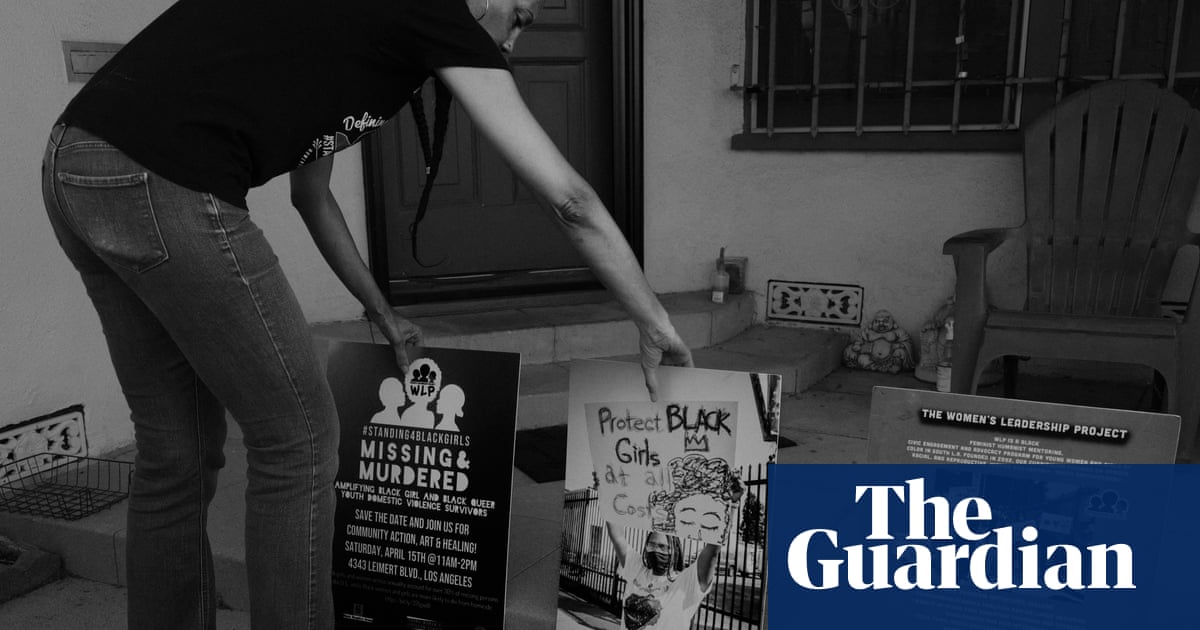
The workshops the girls attended were organized by the WomenâÂÂs Leadership Project (WLP), a nonprofit that offers mentorship to teen girls and queer youth and educates local high-schoolers on gender-based violence and the social issues that contribute to it.
Though the organization was founded 15 years before TioniâÂÂs death, her short life has galvanized the group, said its director, Sikivu Hutchinson. âÂÂI donâÂÂt like to say [TioniâÂÂs] a symbol, but she is unfortunately representative of so many things. ItâÂÂs really just symptomatic of the lack of protection, lack of harm reduction, and the lack of prevention and care,â Hutchinson said.
WLP has been pressuring local officials to focus on the violence Black women and girls face in their schools, homes and neighborhoods. The group is calling for the creation of a youth center in TioniâÂÂs name that would give young people in South Central a safe place to hang out, do homework, and take classes.
âÂÂIn South Central, we see boarded-up buildings, vacant lots, pot shops and liquor stores, but no youth spaces. All of that is a symptom of the disinvestment in the so-called inner city,â Hutchinson said. âÂÂWe want all of those resources and services in our community because of the high rates of harm and victimization that young people are experiencing.âÂÂ
Race and gender disparities
The city of Los Angeles and its police department have touted strong decline in overall homicides in recent years, but domestic violence killings, which overwhelmingly claim the lives of women, have remained a persistent issue. In 2022, LA recorded 392 homicides, according to LAPDâÂÂs annual homicide report, but by 2024 that number had declined to 284. The number of domestic killings remained consistent, though, with 32 murders in 2022 and 33 in 2024. Black women are disproportionately the victims of domestic homicides. Black women make up about 13.5% of the cityâÂÂs female population, but a third of its female domestic homicide victims.
This trend also extends to the rest of the county. Black women had the highest homicide rate of any racial group in 2024, according to California department of health data. The only other demographics with high rates are Black and Latino men, who historically have made up most of the regionâÂÂs homicide victims.
ItâÂÂs not just LA. Black women across the US have long had a higher risk of being killed than women of other races, according to a 2024 analysis of homicide data by the Violence policy center. That year about 700 Black women and about 1500 white women were killed by men. Black women make up 13% of the US female population, white women make up 55%. Black women were most often killed with a gun, by a man they knew.
The city of LA says itâÂÂs working to address the high rates of violence by bolstering its response network for domestic violence victims, and by funding programs that can prevent gun violence in the neighborhoods where Black women and girls die most frequently.
The office of the mayor, Karen Bass, pointed to investments the city has made in its nearly 20-year-old gang reduction and youth development (GRYD) program, which operates programs throughout the city, including South Central. Though GRYD is mostly geared toward pulling Black and Latino men and teens out of the cycle of violence, staff also refers families to supportive programs. The program has helped bring down homicides in the cityâÂÂs hardest-hit neighborhoods throughout South Central by almost 30% in 2025, the mayorâÂÂs office said.
California has tried to address the issue at a state level, when in 2023 lawmakers created the Ebony Alert, a first-in-the-nation emergency notification system specifically geared towards finding missing Black women and girls. Since the alert became law in 2024, it has been activated for 182 people. Of those, 175 have been found alive, one was found deceased, according to California highway patrol data.
Still, the racial and gender disparities in victims of violence remain.

Some cities and states have come up with frameworks to address the issue with more fervor. Minnesota created a taskforce made up of elected officials, nonprofit leaders and representatives from law enforcement agencies to specifically look into the killings and disappearances of Black women and girls. The group advises the stateâÂÂs department of public safety on ways to reduce violence against them, and how to work with service providers to give tailored support to Black victimsâ families and domestic violence survivors.
The Minnesota taskforce was in part created in memory of Brittany Clardy, an 18-year-old who was murdered in 2013. ClardyâÂÂs family reported her missing after she left to go to a nearby store but then stopped answering calls and texts. She was found dead in her car two weeks later.
The man who ultimately pleaded guilty to her murder was also convicted of murdering another woman, 24-year-old Klaressa Cook, who was found dead in the trunk of a car just months after Clardy.
In the years following ClardyâÂÂs killing, her sister, Lakeisha Lee, spoke in front of the state legislature and started a foundation to help support girls who are at risk of being sex-trafficked.
ItâÂÂs not uncommon for these kinds of efforts to be spurred by people whoâÂÂve lost a mother, daughter or sister to violence, said Dr Brittany Lewis, founder and CEO of Research in Action.
âÂÂThis happens because families endure going to committee hearings to convince people that the death of their family member matters,â she said. âÂÂAnd that what they need is much bigger than the band-aid solutions weâÂÂre producing.âÂÂ
Cases left unsolved
Not only do Black women and girls face disproportionate rates of violence, but when theyâÂÂre killed, their cases are less likely to be solved. In 2022, the Los Angeles police department solved all killings of Black female victims. But the next year, that rate declined to 90%. In 2024, it plummeted to 67% and in 2025, at a time when the number of homicides in the city was plummeting, just half of the killings of Black women and girls were solved, according to the LAPDâÂÂs annual homicide reports.
LA sheriffâÂÂs department numbers?
Shalissa Collier, whose daughter Mikeona Johnson was found dead in the trunk of her car in Los Angeles in September 2020, was determined to beat this trend.
After MikeonaâÂÂs death, Collier learned that she had long been abused by a former partner and that her daughter had filed for three separate restraining orders against the man.


Collier says she brought these findings to Los Angeles police, but six months later they came to her home to tell her that the department didnâÂÂt have any leads and would be closing the case, Collier said. âÂÂLAPD pissed me off. I canâÂÂt even sugarcoat it,â she recalled.
Collier began organizing candlelight vigils and press conferences in front of the LA countyâÂÂs district attorneyâÂÂs office. She also spoke with independent journalists and on the podcast Misogynoir Murders, which highlights the stories of missing and murdered Black women.
In February 2024, the roommate of Johnson and her partner, Phillip Charles Howze, went to police with new information, and Howze was arrested. He was convicted of second-degree murder and sentenced to 15 years to life.
With her daughterâÂÂs killer sentenced, Collier in October was finally ready to bury her daughterâÂÂs ashes, and she held a burial ceremony.
âÂÂI felt like it would be fitting to do it, especially after he got his time. Now she can finally rest,â Collier said.
Misogynoir Murders started out as an attempt to center the stories of Black women and girls in the true-crime genre. Now, host Ronnetta Rideout says she sees it as a community service for the families that want to keep the stories of their daughters, sisters and mothers alive.

âÂÂ[Black women] were still very underrepresented even in stories, even though weâÂÂre overrepresented in the actual data,â Rideout said.
LAPD declined to respond to questions about its initial decision to close Mikeona JohnsonâÂÂs case. When asked about the departmentâÂÂs approach to solving the homicides of Black women and girls specifically, public information officer Jeff Lee said LAPD âÂÂtakes all acts of violence seriously, and every homicide is thoroughly investigated. Detectives follow all available leads and work to identify those responsible, leaving no stone unturned in the pursuit of justice.âÂÂ
He did not offer specifics on whether or not the recommendations from the 2023 city report have been implemented within the department.
California highway patrol said it is still actively investigating Tioni TheusâÂÂs murder.
âÂÂWe canâÂÂt be silent any moreâÂÂ
While TioniâÂÂs family awaits answers from law enforcement, they say members of the South Los Angeles community, too, have a role in preventing violence against Black women and girls, whether itâÂÂs reporting underage girls on sex-trafficking corridors to police or supportive services, calling out predators who are grooming teens online, or sharing information that can lead to an arrest.
âÂÂI feel like as a community we canâÂÂt be silent any more,â Kincy said. âÂÂWe canâÂÂt wait for politicians, lawmakers or even the police. We have to stand up and make people accountable.âÂÂ
Michael Dolphin, TioniâÂÂs great-uncle, agreed. âÂÂThis is not a white folks problem, itâÂÂs not an LAPD problem, itâÂÂs not a Mayor [Karen] Bass problem. ItâÂÂs a community problem, because someone knows what happened,â he said.

He wants the city to pour resources into programs that can rehabilitate young people who have been repeatedly arrested or are currently incarcerated. These investments, he hopes, can stop teen boys from becoming violent.
âÂÂWe need to figure out ways to catch these kids earlier,â he said. âÂÂWe need to figure out how to get involved sooner and provide alternatives to hanging out on the street.âÂÂ
Dolphin remembers his niece as a smart, loving teenager. He saw her often in the mornings, on her way to school, when she would come by to visit her great-grandmother, whom Dolphin was caring for. They would share breakfast and go over her homework together. âÂÂShe liked her schoolwork,â he said. âÂÂAnd big mamaâÂÂs house was a quiet, peaceful refuge for her.âÂÂ
Kincy says she hopes that the story of her bubbly, sometimes clumsy teen cousin who walked on her tiptoes can lead to greater awareness around the increased risk of violence and exploitation Black teen girls and young women face and shed light on stories that received less news coverage than TioniâÂÂs.
âÂÂWhen TioniâÂÂs story hit, it resonated with people because it happened to their kid as well and they didnâÂÂt get the exposure,â Kincy said. âÂÂWe can bring light to these stories through her.âÂÂ