
âÂÂA complete repudiationâÂÂ: public health won big in US midterm elections
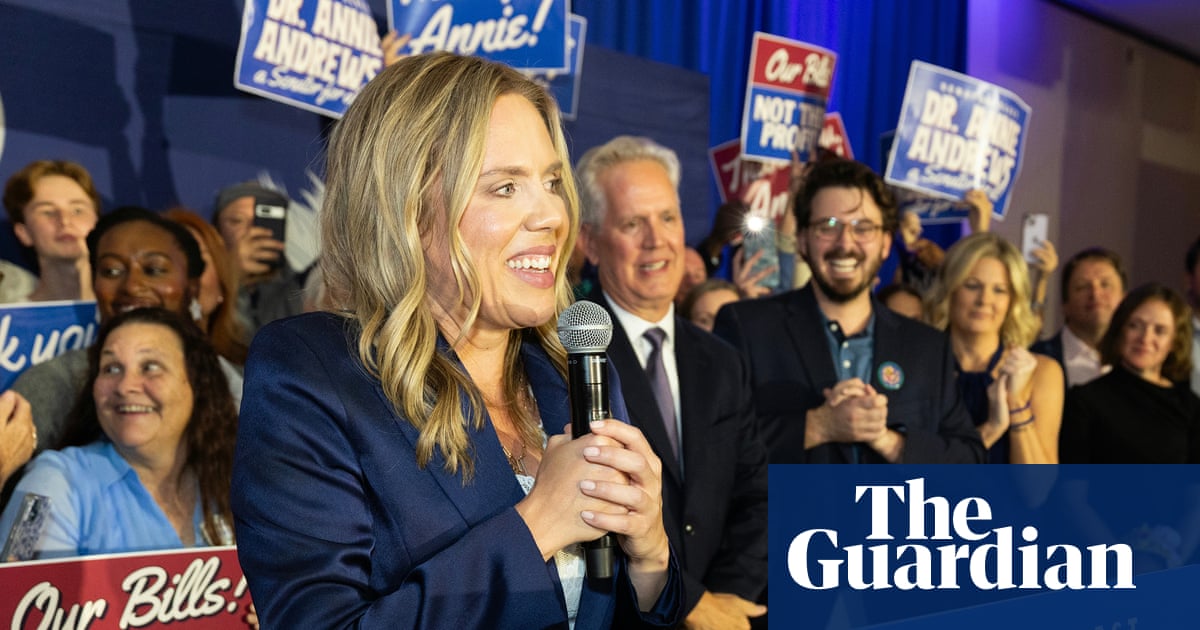
Election wins of Annie Andrews, Abdul El-Sayed and more who ran on healthcare issues are viewed as sign of home as Trump administration unravels US health policy
Public health leaders and politicians who made healthcare a central part of their platforms swept into office in the US midterm elections last week, setting the stage for national, state and local changes.
Voters, faced with an unprecedented rise in vaccine-preventable diseases such as measles, alongside devastating outbreaks of foodborne illnesses, chose national candidates who prioritized public health, healthcare affordability, reproductive health and the impeachment of Robert F Kennedy Jr, among other key issues.
âÂÂThe American people are speaking out against President Trump and the policies that heâÂÂs been rolling out since the day he took office,â said Julie Scofield, a member of the coordinating committee at the grassroots organization Defend Public Health. âÂÂI think itâÂÂs a complete repudiation.âÂÂ
Mallory Harris, a scientist in Austin, almost delayed having children because she was worried about accessing life-saving healthcare, such as vaccines and abortion, if she needed it. She had doctors check her immunity against viruses including measles, and sought assurances from her physicians that she would have access to appropriate care. Harris found out she was pregnant just as 2026 officially became the worst year for measles in the US since before she was born. Texas has no paid time off for maternity or paternity leave, but Harris and her husband will try to wait until the baby is six months old and can get the measles, mumps and rubella (MMR) shot early before starting daycare.
Dealing with public health emergencies like these have been âÂÂa top issueâ for her as a voter. After the election, âÂÂit suddenly became a lot less scaryâÂÂ, Harris said. âÂÂWeâÂÂve seen scientists and physicians getting elected in record numbers. We saw big shifts in places that have had measles outbreaks.âÂÂ
Democrats flipped state houses and legislatures in several states, and these leadership changes will dramatically reshape actions on abortion, gender-affirming care, vaccines and more, experts say. Several of the candidates successfully argued that cuts to Medicaid, Affordable Care Act subsidies, and the Supplemental Nutrition Assistance Program (Snap) have wounded America, and rising prices â especially in healthcare â are a big concern.
In Texas, attorney general Ken Paxton investigated pediatricians for giving vaccines; sued providers, even in other states, for mailing abortion pills; and declared that gender-affirming care for minors qualifies as child abuse. His successor has already announced he will be dropping several lawsuits like these.
In Georgia, the home of the Centers for Disease Control and Prevention (CDC), Keisha Lance Bottoms is now the first Black woman ever elected governor of a US state. As the mayor of Atlanta, Bottoms clashed with Brian Kemp, GeorgiaâÂÂs Republican governor, on public health measures for the Covid pandemic. Jasmine Clark, a microbiologist also from Georgia, will serve in the US House. Jon Ossoff, who won re-election to the Senate, concluded his victory speech by guaranteeing âÂÂhealthcare for every single AmericanâÂÂ.

Amy Acton, governor-elect of Ohio, and Abdul El-Sayed, senator-elect from Michigan, were public health leaders in the Covid response â which their opponents unsuccessfully tried to use against them.
Annie Andrews will be the first pediatrician in the US Senate, and she campaigned on impeaching Kennedy, who is the health and human services secretary, and pushed for improving vaccination rates after measles tore through her home state of South Carolina.
Richard Pan, a pediatrician who served as a state senator in California and will now serve in the US House, led the creation of a state law eliminating religious and personal exemptions to vaccination â and he sparred with Kennedy over the change. Kennedy later apologized for calling vaccines a âÂÂholocaustâÂÂ.
Amish Shah, an emergency medicine doctor, flipped a US House seat in Arizona after campaigning on improving public health, among other issues. Adam Hamawy, a surgeon from New Jersey, won a US House seat by focusing in part on affordable healthcare.
âÂÂThere were more candidates running in this midterm election from a public health perspective and background that made this part of their platforms and part of the issues they were talking about,â Scofield said. âÂÂI think thatâÂÂs extraordinary.âÂÂ
Voters in several states also rejected proposed restrictions on abortion, and Virginia passed a constitutional amendment to enshrine marriage equality and reproductive rights.
Several Democratic candidates faced anti-trans ads from their opponents.
âÂÂThe results show that those ads backfired,â Scofield said. âÂÂAnti-trans attacks didnâÂÂt work.âÂÂ

Candidates including Andrews and James Talarico in Texas changed their public support for gender-affirming care, which was disappointing to see, she said: âÂÂNo doubt we have educating to do.â Organizations such as Defend Public Health will continue to âÂÂstand solidly and squarely behind our transgender community and full access to gender-affirming careâÂÂ, she added. âÂÂThat is just a non-starter for us.âÂÂ
Anti-trans initiatives in states including Washington and Colorado appear to have passed, though Democratic leaders in those states have already begun questioning whether they are constitutional.
âÂÂItâÂÂs super important for people to remember that a lot of public health authority rests with the states,â Scofield said. While Congress plays an important role in setting policies and providing funding to state and local public health agencies, many public health decisions happen at the state and local level, she said.
On the federal level, it is likely Congress will take action around restoring cuts to Medicaid and Snap, addressing the premium tax credits, and making sure funds are deployed appropriately by agencies such as the CDC and the National Institutes of Health (NIH), Scofield said. Many of the administrationâÂÂs actions on gutting research and dismantling agencies were illegal, acting outside of Congress, she said.
Trump administration officials including Jay Bhattacharya, head of the NIH, and Kennedy have frequently positioned themselves in opposition to what they describe as government overreach on Covid measures and vaccines.
âÂÂVoters were willing to turn out for candidates who supported public health,â Harris said. That goes âÂÂdirectlyâ against what these health officials appear to have interpreted as their mandate, she said. After the election, she added, âÂÂa lot of things are going to change quickly, and also thereâÂÂs real damage thatâÂÂs been done and real risk that remains.âÂÂ
TuesdayâÂÂs results have reassured people like Harris who have had to confront more preventable disease outbreaks and more restrictions on abortion and other forms of healthcare than the US has had in decades.
âÂÂIt has meant a lot to see people getting elected who have spoken about these fears and address them head on,â Harris said. âÂÂItâÂÂs really important to have leadership who cares about you and your family.âÂÂ