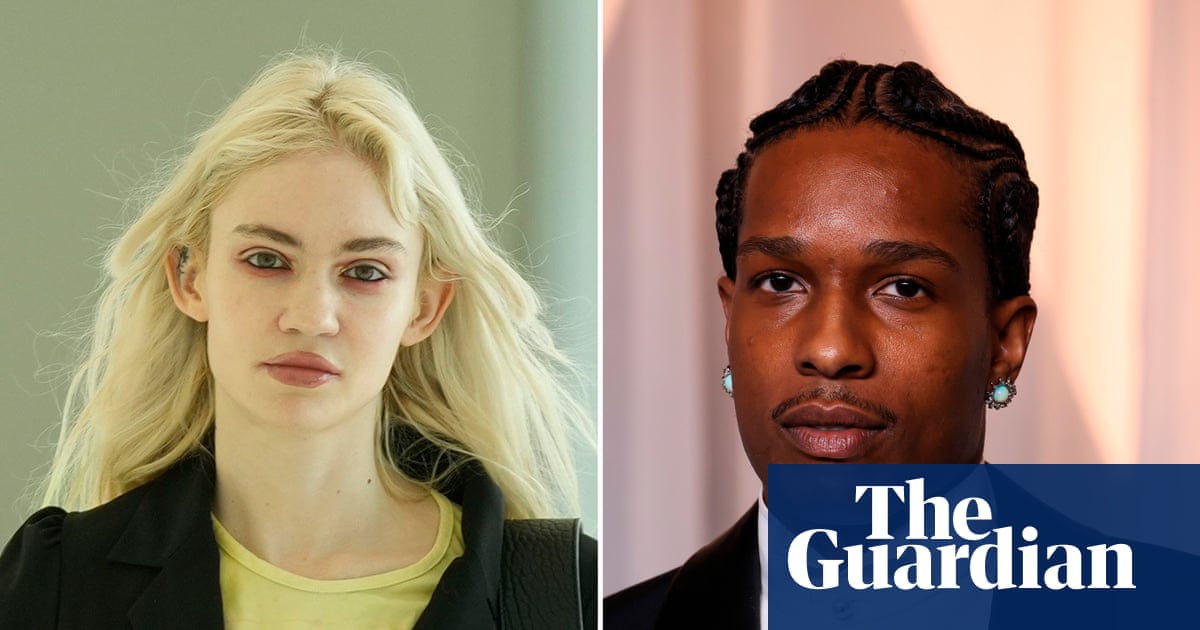

Enthusiasts like Grimes and A$AP Rocky may embrace AI-generated content, but they wonâÂÂt produce it themselves
Streaming services, notable musicians and fans are confronting the growing presence of AI-generated music and drawing lines in the sand.
On Tuesday, Spotify announced it had removed about 50m songs considered AI slop from its recommendations to users over the past year.
âÂÂOur editors hold the same standard and donâÂÂt program content identified as slop or spam,â a statement from the company read. Spotify requires âÂÂAI personaâ badges on artist profiles that donâÂÂt represent a real human being, but it does not require individual songs generated by AI to be labeled. Other streaming services have taken more stringent stances.
Though it is cracking down on slop tracks, Spotify is far from AI-shy. The company allows users to create playlists with generative AI and has promised a tool for making AI-generated remixes and cover songs.
Unable to ignore the tide, even early AI boosters like the singer and producer Grimes, former paramour of Elon Musk and mother to three of his 14 children, have declared their limits on allowable amounts of AI. She and other musicians say they are open to AI-generated music but wary.
Fans, by contrast, have little tolerance for it. They are voting with millions of streams against artifice in music. Songs and albums harkening back to analog instrumentation are dominating the Billboard charts, no futurism wanted.
Both A$AP Rocky, rapper and partner to Rihanna, and Grimes have taken the same position: accepting AI-generated music but not making it.
âÂÂI prefer to do things myself, practically,â A$AP Rocky told Billboard: âÂÂIf somebody does a totally AI-generated song where all they did was prompt something, then I think thatâÂÂs their thing. But who am I to say whatâÂÂs standard and whatâÂÂs not? IâÂÂm just doing me out here, and IâÂÂm doing my music practically â the right way.âÂÂ
Kelly Clarkson similarly outlined her own boundary while expressing enthusiasm for AI.
âÂÂI love AI. Controversial, I donâÂÂt care,â she told the Las Culturistas podcast. âÂÂHereâÂÂs the thing, I love AI. There are very amazing things with AI that IâÂÂm obsessed with. But also, and IâÂÂm very into it artistically too, I have fun with it just like everybody else does. But when you see AI artists competing on a chart with humans, I have an issue. I think there should be a separate chart.âÂÂ
Grimes, one of my own favorite musicians, has begun promoting her first new album in six years, Psy Opera, which she described to the Paris Review as capturing the âÂÂemotion of being thrust into the futureâÂÂ. Stereogum described the album as âÂÂAI-inspired but not AI-generatedâÂÂ, citing GrimesâÂÂs own insistence that her team of 70 be credited rather than reduced to machines.
Grimes offered a free license of her own voice to AI enthusiasts to make what they would three years ago. That she declined to generate her own music indicates that, even to a futurist like her, AI-generated music is lacking, similar to RockyâÂÂs stance.
I have also found myself listening to an AI-generated song, Bomboclat Wallahi, brought to my attention via frenetic, overstimulating videos on Instagram. Despite the songâÂÂs comical sonic maximalism, it lacks any staying power. Listening to it the day after I first heard it left no impression, similar to the way low-quality food leaves me hungry again just a few hours after eating. âÂÂSlopâ is still the best word to describe AI-made content.
In contrast with artistsâ nuanced stances, fans are making their position on tech-made music clear: they donâÂÂt want it. BillboardâÂÂs charts of the most popular albums and charts of the past week showcase a preference for music without obvious modification. Songs and albums that feature a simple voice-and-guitar arrangement are dominating. On the Top 200 album charts, most of the Top 10 albums foreground a singer over analog instrumentation â Olivia RodrigoâÂÂs you seem pretty sad for a girl so in love, Ella LangleyâÂÂs Dandelion, Olivia DeanâÂÂs The Art of Loving, Taylor SwiftâÂÂs The Life of a Showgirl, Noah KahanâÂÂs The Great Divide and Stick Season, and Morgan WallenâÂÂs IâÂÂm the Problem. In the Hot 100 singles chart, the top four songs bear the same sonic signatures: SwiftâÂÂs Patient Zero, LangleyâÂÂs Choosinâ Texas, Stella LeftyâÂÂs Boston, WallenâÂÂs Been by Now.
Incredibly, the Beatlesâ Rubber Soul, released in 1965, also made an appearance at No 4 on last weekâÂÂs Billboard rankings. Some listeners want to return to a time when producing music with artificial intelligence wasnâÂÂt even an option.