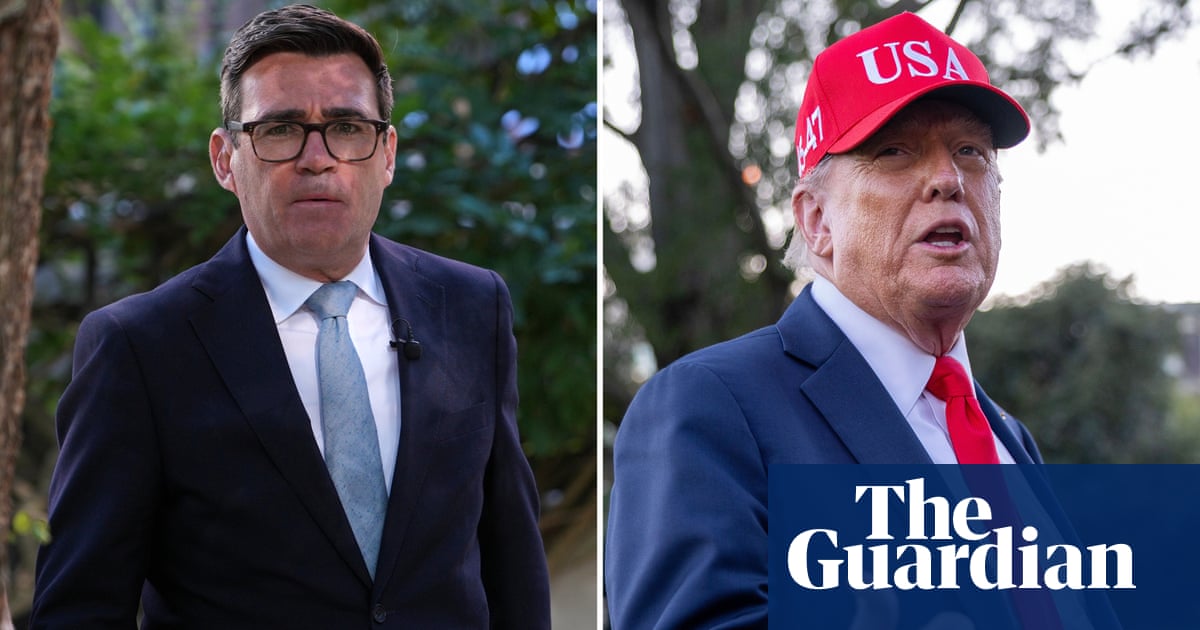
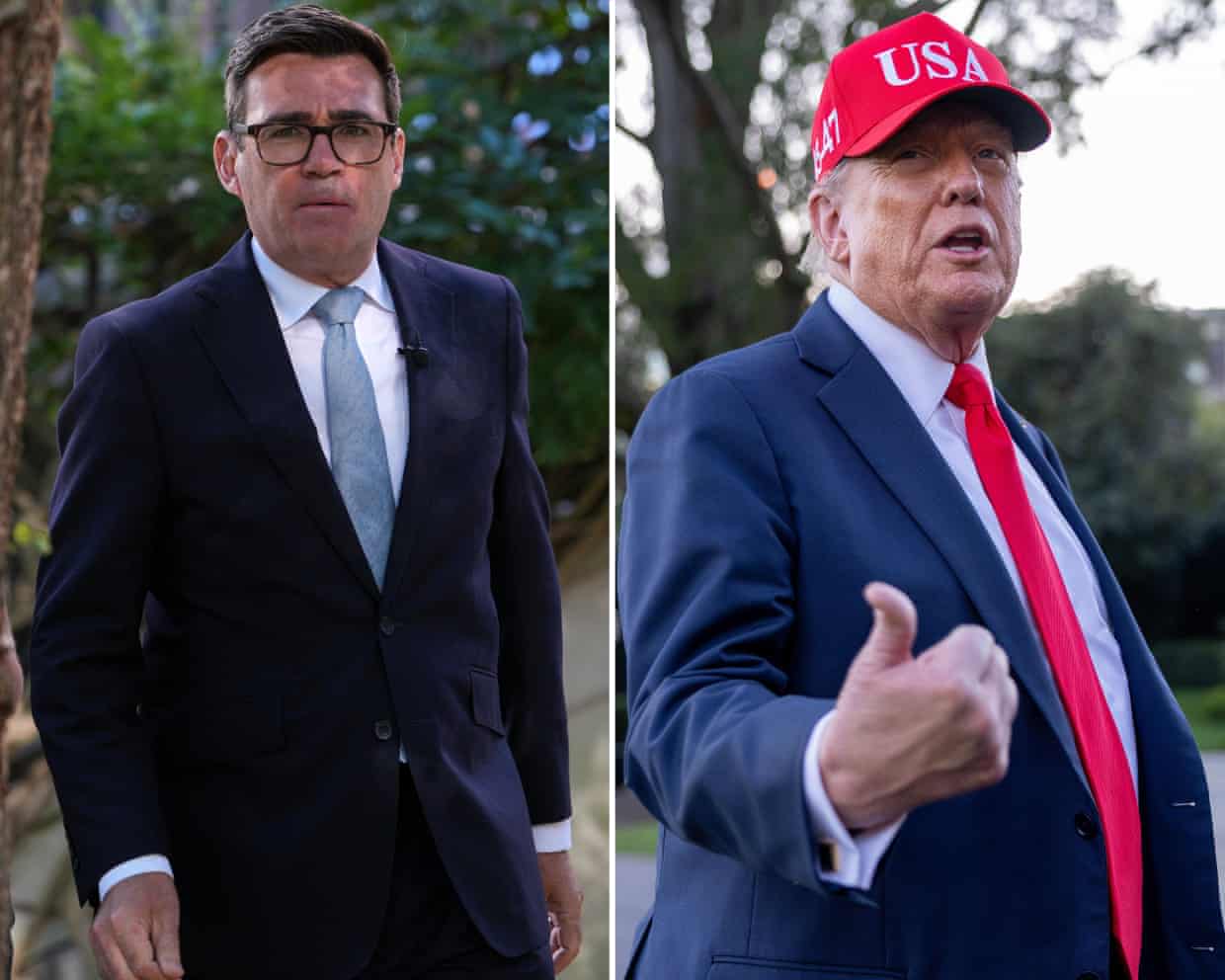
Andy Burnham faces a weakened Trump â but the president remains unpredictable
The PM hopes to be firmer with the US leader than his predecessor without provoking diplomatic warfare, as the Iran war weighs on the UK economy
No international relationship has more power to determine the success of Andy BurnhamâÂÂs premiership. So you might imagine the stakes for the prime ministerâÂÂs first face-to-face meeting with Donald Trump on Tuesday would be high.
Yet Burnham may prove to be a lucky general. The balance of risk has shifted. Trump is unpopular at home, where inflation remains high, and is mired in an intractable conflict in Iran that has the potential to sink his midterm dreams.
When Keir Starmer first visited Trump in February 2025, the situation could not have been more different. The notoriously unpredictable president had just won the US election and was at the height of his powers â and was showing muscle on Nato and Ukraine, and with threats of tariffs.
StarmerâÂÂs âÂÂkeep calm and carry onâ strategy helped keep Trump on board the defence alliance and also protected the UK from the worst of his aggression over trade. But it came with a cost: he was often left looking obsequious and at odds with the national mood.
Burnham defended his predecessorâÂÂs approach but in June signalled he would take a different direction. âÂÂObviously the relationship is important to the UK, but not to the point where we just go along with anything they say,â he said. âÂÂWeâÂÂve got in trouble in the past when that happens.âÂÂ
Downing Street insiders expect Burnham to be a bit more forceful when he feels thereâÂÂs a need to stand up for British interests. But there is no suggestion he will follow the more combative approach of Mark Carney, the Canadian prime minister.
Instead, one source said he would probably take a âÂÂthird wayâ between Starmer and Carney, pushing back more than his predecessor publicly and privately, but avoiding open diplomatic warfare. A second source said the prime minister had three ambitions for TuesdayâÂÂs talks: bond with Trump, make the case for Ukraine, and avoid any drama.
Early clues about how the talks might go from the White House perspective have been mixed. In June, Trump suggested Burnham was âÂÂextremely liberalâ (not as a compliment) and dismissively described him as the âÂÂmayor of a townâÂÂ.
The US president remains angry the UK did not join his strikes on Iran, and has attacked the country as a âÂÂdyingâ nation âÂÂon the edge of disasterâÂÂ. More recent comments that he might not help if Argentina again tried to seize the Falklands, and that he would love to see a united Ireland, suggest his displeasure has not abated.
But that will not necessarily translate into a strained personal relationship with Burnham. The pair have spoken on the phone twice and are said to have got on. The prime ministerâÂÂs laid-back, confident style is likely to go down well with Trump, who has already shown with the New York mayor, Zohran Mamdani, that he can warm to leftwingers.
On policy too, government insiders point to small reasons for hope: Trump responded warmly to reports the UK government was going to âÂÂopen upâ the North Sea (although the decision to drill at two fields has been delayed) and has â so far â been relatively restrained when asked about the UKâÂÂs planned West Bank settlement trade ban.
Their meeting will be fraught with tension over both matters, and other areas â such as defence spending and the Iran war â have potential for further clashes.
It will help Burnham that TuesdayâÂÂs talks will be held on the comparatively neutral ground of the UN, rather than at the White House. As such, he will avoid the jeopardy of an Oval Office press conference that Trump could easily derail.
Trump may also decide he has had enough fights for one day. His meeting with Burnham will follow his address to the UN. Last year Trump told world leaders their countries were âÂÂgoing to hellâ over their immigration policies. The UK meeting may end up as just a sideshow.
BurnhamâÂÂs views on Trump have also shifted since he took office. As mayor of Greater Manchester, he said the US president would not be welcome in the city, blaming his âÂÂpoisonousâ politics. After winning his seat as an MP in Makerfield, he warned against the âÂÂdivided, dark politicsâ of the US.
But over the summer, Burnham appeared to shrug off potential divisions, telling reporters that âÂÂeveryone says things as politiciansâÂÂ. The new prime minister said he would âÂÂsay what I feelâ to Trump but â crucially â would also try to âÂÂfind a connectionâ with the mercurial president.
With Trump now weaker domestically, political power in the US is starting to shift to who comes next. Burnham is walking into the room with a president who is running out of time. Yet Trump is in power for two more years, and he is nothing if not unpredictable.
BurnhamâÂÂs priority may be on domestic affairs, but his closest aides acknowledge that the biggest weight on the UK right now is TrumpâÂÂs war in Iran. While the war continues to wreak damage on the British economy, Burnham will struggle to deliver his promises of change.
So for the time being, the power still rests with Trump, and Burnham may yet find he has to navigate a perilous path as Starmer did before him.