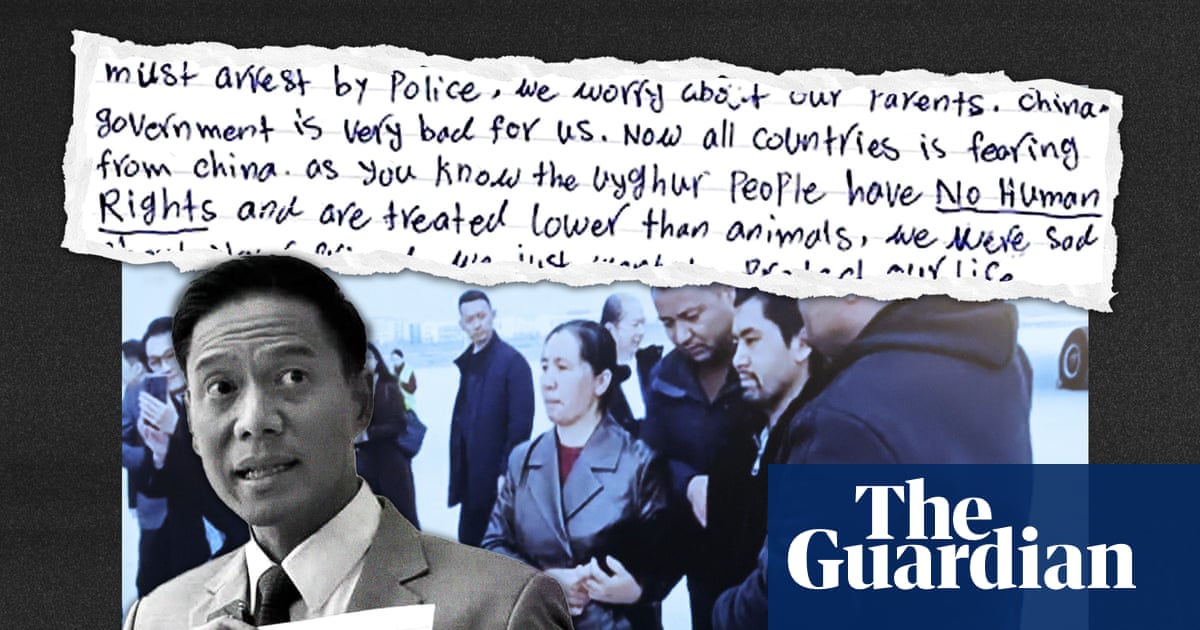

Uyghurs facing deportation by Thailand say they will be âÂÂlike slavesâ in China
Activists fear Bangkok will give in to pressure from Beijing despite reports of torture and human rights abuses against the mostly muslim ethnic minority
The deportation of two more Uyghurs to China from Thailand would put their lives in grave danger, activists have said, with one of the men saying he would be âÂÂlike a slaveâ if he was sent back.
Last year, Thai authorities forcibly deported 40 Uyghur men to China despite pleas from the men themselves and the UN.
The US and Canada had reportedly offered to resettle them, but Bangkok appeared to want to avoid upsetting Beijing. The UN has said the returneesâ whereabouts remain unknown.
Now, two more men fear becoming the latest victims of BeijingâÂÂs repressive crackdown against the largely Muslim ethnic group, condemned by the UN as a potential crime against humanity.
The girlfriend of one of the men said her boyfriend, whose name is being withheld for security reasons, told the Guardian he wanted to go âÂÂanywhere else but ChinaâÂÂ.
Human rights groups said two Uyghur men were at risk of deportation after recently being transferred to an immigration detention centre and they feared Thai authorities may once again give in to pressure from Beijing.
Elaine Pearson, Asia director at Human Rights Watch, called for the men to be allowed to travel to a safe third country. âÂÂPrevious Thai governments have kept Uyghurs in inhumane detention for years and then complied with BeijingâÂÂs demands to send them to China, where they were forcibly disappeared,â she said.
The men had been serving a seven-year prison sentence for offences related to an attempted escape from immigration detention in January 2020. They were part of a group of more than 200 Uyghur men, women and children who were apprehended by Thai police in 2014 near the border with Malaysia after they fled from China.
Since 2014, women and children in the group have been released to Turkey, while the men have been deported to China, in separate batches, attracting criticism from the United Nations and the US secretary of state, Marco Rubio.

Uyghurs, a Turkic minority mainly from the Xinjiang region in China, have been subjected to decades of oppressive and discriminatory treatment from the Chinese authorities. This has included the incarceration of hundreds of thousands of people in detention camps aimed at stamping out their cultural identity.
Beijing has defended its policies in Xinjiang as being aimed at poverty alleviation and counter-terrorism.
In July, Marzeyya KasemâÂÂs (who asked to be referred to by her Islamic alias) boyfriend wrote to her in a letter that he would be âÂÂlike a slaveâ if he was sent back to China. âÂÂSometimes I thought why IâÂÂm a human being. What I do wrong against China ⦠no want to go back to China,â he wrote. She shared the letter with a Thai rights group.
The two men facing imminent deportation reportedly pleaded their case to ThailandâÂÂs office of the National Human Rights Commission on Wednesday.
Relatives of Uyghurs have said the Chinese government was âÂÂparanoid about Uyghurs going to a safe country in large numbers and living togetherâÂÂ, and preferred to have them deported.
It is not clear whether China has issued a formal extradition request for the two men. But Chaipruak Doungprapat, ThailandâÂÂs national security council chief, told reporters that the men, along with three other Uyghurs who are still in prison, had arrest warrants outstanding in China.
Some have questioned whether criminal warrants could be credible considering that at least one of them, KasemâÂÂs boyfriend, was a minor when he left China. âÂÂIf they are really wanted for a crime in China, why didnâÂÂt China immediately issue a [Interpol] red notice [when they were detained in 2014]?â asked Kasem.
Kasem believes that because Thailand was criticised for last yearâÂÂs mass deportation, this time the authorities were trying to establish a more credible legal basis for the move.
A spokesperson for ChinaâÂÂs foreign affairs ministry said: âÂÂThe cooperation between China and Thailand in combating cross-border illegal and criminal activities such as smuggling is consistent with the laws of the two countries, international law and international practice.âÂÂ
A spokesperson for ThailandâÂÂs foreign affairs ministry declined to comment.
-
Additional research by Rebecca Ratcliffe