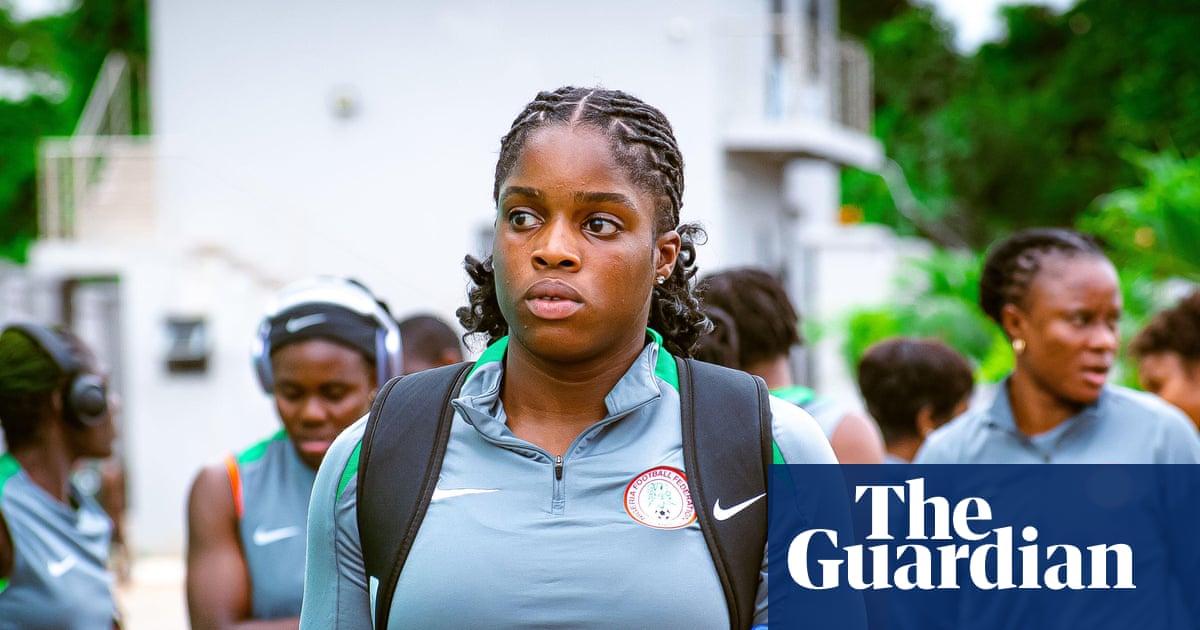

âÂÂAn absolute afterthoughtâÂÂ: the story of the Nigeria womenâÂÂs teamâÂÂs fall from grace
The Super Falcons wonâÂÂt be at the World Cup and with the prize money going up, they risk being left even further behind
It was a historic result in Casablanca â but not in a good way. NigeriaâÂÂs 2-1 defeat against South Africa in a playoff in August meant that the Super Falcons are missing out on the World Cup for the first time. It is a crushing blow for the most decorated national side in Africa across both men and women, one that has won no fewer than 10 Wafcon titles.
The journalist and lecturer Dr Victor Ademola was in Morocco the day of the defeat. âÂÂIt was a very difficult evening,â he says. âÂÂSome players were visibly emotional while others appeared to be processing what had just happened. I saw players crying as they got on to the team bus while some sat alone or remained on their phones, looking very sad.âÂÂ
The blow of missing out on the World Cup in Brazil next year came only a few days after they were eliminated from Wafcon at the quarter-final stage by Cameroon â only the semi-finalists qualified for the World Cup automatically, hence Nigeria ending up in that ill-fated playoff.
âÂÂWhat struck me most was the weight of what the result represented,â Ademola says. âÂÂThese players knew the history of the Super Falcons and understood that this was not simply another defeat. There was a sense of disappointment, disbelief and heartbreak.âÂÂ
The loss is not only historical but consequential. Nigeria will miss out on developmental funding with next yearâÂÂs prize fund expected to rise from the previous tournament four years ago. In 2023 the Fifa president, Gianni Infantino, pledged to equal the menâÂÂs and womenâÂÂs tournaments prize funds by 2027. The figure for the menâÂÂs World Cup in the US, Canada and Mexico was $727m (roughly ã539m). Recent news suggest Fifa will miss out on its target but it is nevertheless a blow for Nigeria not to be involved.

Janine Anthony, the African womenâÂÂs football journalist, says the stakes for the Super Falcons were especially high as âÂÂwomenâÂÂs football does not have the luxury of not being at a World CupâÂÂ. Anthony adds: âÂÂA spot at the World Cup is the ultimate window and itâÂÂs a dream to be able to represent your country at any stage, whether itâÂÂs in music or football. For womenâÂÂs football, the World Cup is such a commercially marketable vehicle. The Super Falcons team were one of only seven teams that had been to every World Cup, [and] the only African team. Now thatâÂÂs gone.âÂÂ
Anthony says that despite the Super Falconsâ success they are treated as an âÂÂabsolute afterthoughtâ in terms of the domestic leagues, management and preparation. The lack of preparation games proved problematic in Morocco, she suggests, manifesting itself in a lack of cohesiveness in most games. The then coach, Justine Madugu, frequently changed the starting XI throughout the tournament.
Before the tournament the team played two games against Senegal, who have never qualified for the World Cup, whereas before the 2025 edition they had three friendlies, against France, Cameroon and Portugal. âÂÂImagine if they had more games to prepare,â Anthony says. âÂÂThen they could have probably done all the tweaking from a tactical perspective. The Nigerian Football Federation absolutely failed to capitalise on the Wafcon being moved to July.âÂÂ
The landscape of African womenâÂÂs football is changing, and Morocco are the only country from the continent who played in the 2023 World Cup who are guaranteed to be at next yearâÂÂs tournament. South Africa are going into the inter-continental playoffs which start this month, and Nigeria and Zambia are out.
At the Wafcon, Malawi and Cameroon emerged as the standouts. It was MalawiâÂÂs debut at the tourmanent and the team gave a stellar performance with the attacking skill of the Chawinga sisters, Tabitha and Temwa, standing out. They will play at their first World Cup. The winners, Cameroon, were unexpected competitors at Wafcon, only qualifying after the Confederation of African Football expanded the tournament from 12 to 16 teams.
The Super Falconsâ absence from the World Cup next year is just the latest setback in a long line of disappointments. The menâÂÂs team have failed to qualify for two World Cups in a row while the under-17 menâÂÂs team have not reached the World Cup since 2019 or even Afcon since 2023. There have been signs of progress for the the under-20 women, who beat England 3-0 to reach the quarter-finals at their World Cup in September, but they then promptly lost against Colombia 1-0.

Players and coaches have long spoken out and protested against unpaid allowances and bonuses by the Nigerian Football Federation. The Super Falcons have staged numerous sit-ins and training boycotts to protest against the conditions, including at the Wafcons in 2004, 2016 and 2022 as well as the 2019 World Cup.
The NFF is under investigation by the countryâÂÂs department of state services for an alleged misuse of a 17bn naira (ã9.5m) fund issued by the government in 2024 to address outstanding payments owed to players and staff of the national teams, according to local media. The NFF did not comment when contacted by the Guardian regarding the accusations.
NigeriaâÂÂs president, Bola Tinubu, is unhappy about the situation. âÂÂNigerian football must undergo far-reaching changes to strengthen governance, administration, stakeholder representation, player development, domestic competitions and accountability,â he said in August.
That came shortly after Ibrahim Gusau resigned as NFF president along with several other board members. The NFF was scheduled to hold elections in September but they were suspended. They are now expected to take place following reforms made in consultation with Fifa and Caf.
What does the future hold for the Super Falcons? Anthony hopes for more investment, accountability and a bridge between veteran players and the current team on an administration level. âÂÂWe can only hope that there is the understanding that the Nigerian fans are really disappointed and sad that their national teams arenâÂÂt bringing the joy that Nigerians are used to as a football loving nation,â she says. âÂÂWe can only hope that the Super Falcons can finally be given the respect theyâÂÂve always deserved.âÂÂ
Get in touch
If you have any questions or comments about any of our newsletters please email [email protected].
This is an extract from our free email about womenâÂÂs football, Moving the Goalposts. To get the full edition, visit this page and follow the instructions. Moving the Goalposts is delivered to your inboxes every Tuesday and Thursday.