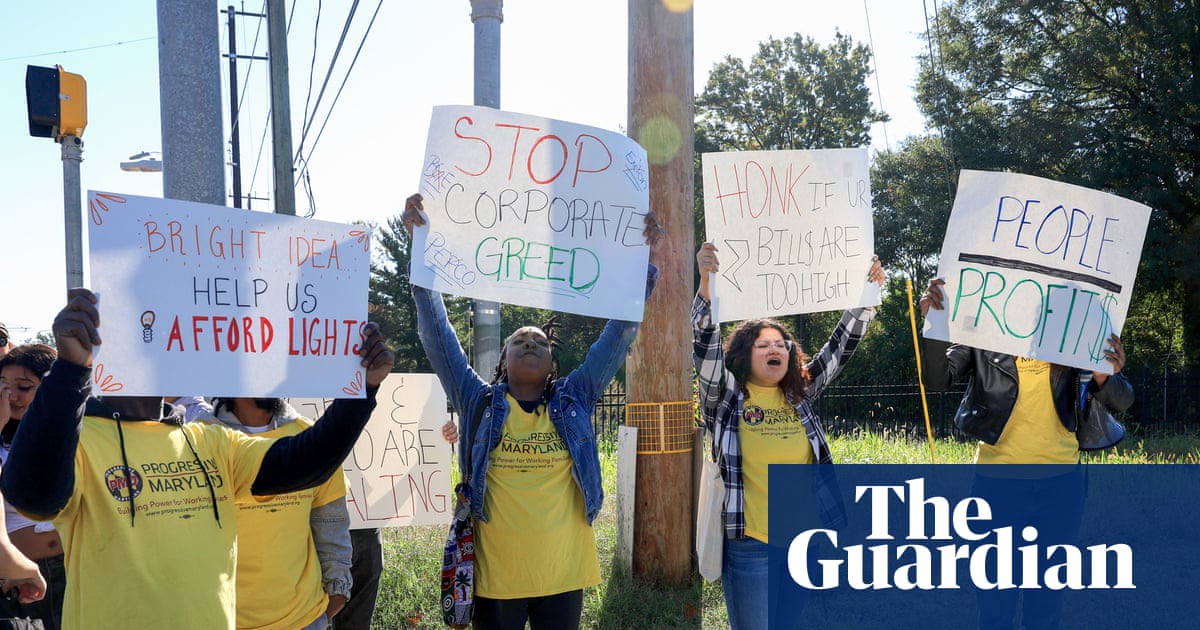

Affordability top of mind for voters in final sprint to midterms: âÂÂI have to pick between medicine or groceriesâÂÂ
Cost of living has loomed over this election cycle as workers and unions champion candidates fighting for higher wages and tackling rising prices
For millions of Americans heading to the polls on Tuesday, affordability is a constant and worsening issue, and itâÂÂs been a prevailing concern this election cycle.
In Lorain county, Ohio, Gina Jones and her co-workers at the Lorain county job and family services have been on strike since February 2026, the longest public sector strike in Ohio history and on pace to break the US record for longest public sector strike.
Ohio voted for Donald Trump in 2024 by more than 5%. As the final day of voting nears, Democratic Senate candidate Sherrod Brown has a slight lead on Republican Senate incumbent Jon Husted in polling, and the economy has been a key factor in the fight.
âÂÂThey donâÂÂt pay a living wage any more. They used to,â Jones said. âÂÂOur healthcare coverage has stayed the same, but the cost of it has changed significantly. It used to be $35 a month for a family. In January itâÂÂs going to be $600 a month for a family for the same coverage.âÂÂ
She said as wages have lagged, with starting pay at about $15 an hour, health insurance costs have eaten up any wage gains to the extent that some employees are making less than when they started.

Negotiations for a new union contract broke down with the county, now led by three Republican commissioners, as workers are pushing for a $1 an hour increase to their base pay.
Daniel Petticord, the deputy director of the Lorain county jobs and family services, said in an email âÂÂmanagement believes it recognizes the important efforts of our bargaining unit employees while maintaining fiscal responsibility,â and blamed the union for walking away from negotiations.
âÂÂWe service the clients of Lorain county that are the poorest of the community, and some of the people that work at jobs and family services qualify for those same services,â Jones said. âÂÂWeâÂÂre hoping that with the Ohio governor election, that we get somebody in there who will be in favor of labor and see the fact that people donâÂÂt make a living wage in Lorain county any more.âÂÂ
In Minnesota, Bob Mattila, a special education paraprofessional in Minneapolis and SEIU Local 284 member, is looking for elected officials who will back state legislation that would increase pay for himself and his co-workers to $25 an hour and to lower their costs for health insurance.
âÂÂWe simply arenâÂÂt paid enough to do the vitally important work that we do,â Mattila said. âÂÂI even take state health insurance because they decided I donâÂÂt make enough money.
âÂÂMoney, power and respect. Those three things are critical to what we need out of our work and what we deserve from our elected officials,â he added. âÂÂHaving very labor-friendly people in places of power is going to give workers like me things that we need to live, because weâÂÂre at a point where I canâÂÂt afford to put $50 of gas every time when I fill up my car when IâÂÂm not even making $25 an hour.âÂÂ
Labor leaders see a real advantage for Democrats now that so much focus is on the economy.
âÂÂThe labor movementâÂÂs been talking about the issues that affect workers and the kitchen table for decades, and weâÂÂre now seeing that everybody else got the memo,â said Liz Shuler, president of the AFL-CIO, the largest federation of labor unions in the US, which has been pushing to turn out 16 million union family voters this election.

âÂÂItâÂÂs pervasive. Everywhere I travel, every campaign that you see is talking about what working people are struggling through, and itâÂÂs the cost of gas, groceries, rent and healthcare, but itâÂÂs also the fact that our pay just canâÂÂt keep up with the rising prices.âÂÂ
In Detroit, Michigan, another key battleground state, 27-year-old Bailee Porter, who has worked at Detroit Diesel and is a member of the United Auto Workers, has been canvassing for candidates such as Democrat Abdul El-Sayed for the US Senate, citing his support for Medicare for All, which the UAW has also backed.
She said rising prices of basic necessities have made budgeting and cutting back on essentials like groceries a common worry.
âÂÂItâÂÂs just costly on every aspect. ItâÂÂs disrupting peopleâÂÂs routines, so itâÂÂs ridiculous. Food, gas. I donâÂÂt even want to talk about utility bills. ItâÂÂs just insane,â said Porter. âÂÂThings should be affordable. Your basic necessities have to be affordable. ThereâÂÂs just no other way around it. They have to be. Legislation needs to be changed or enforced or written to where it can help the middle class and labor.âÂÂ
But the financial struggles experienced by many Americans are unlikely to be easily alleviated no matter who wins the midterms. Joe Biden, the USâÂÂs most pro-labor president in recent history, also failed to appease voters who were feeling left behind.
Researchers have noted the federal governmentâÂÂs definition of and tracking of poverty doesnâÂÂt account for the struggles Americans are facing, as the federal poverty line is outdated from the 1960s and doesnâÂÂt account for geographic discrepancies in costs of living.
âÂÂThe percent of people that are struggling is so much higher than our official statistics are revealing,â said Dr Stephanie Hoopes, an economist and director of United for Alice. âÂÂThese are often people who are keeping our economy running smoothly and fueling our economic growth, and yet theyâÂÂre struggling to support their own families.âÂÂ
-
41.3% of US households, more than 54.5m households, faced financial hardship in 2024, according to a 2026 report by United for Alice.
-
12.5% of US households made under the federal poverty level threshold, an income of $15,060 annually for a single individual and $31,200 for a family of four.
-
28.8% of US households were Alice: asset limited, income constrained and employed. These households earn above the federal poverty level but did not make enough money to afford basic expenses in the county where they live.
-
2025 and 2026 projected data shows the costs of basic necessities continuing to outpace overall inflation.
âÂÂBy some measures, our economy is doing great, unemployment rate is low, stock markets booming, productivity and GDP are growing,â Hoopes added. âÂÂBut when you look at things like how many households are Alice [asset limited, income constrained and employed], and that number continuing to increase, and wages lagging behind the cost of living, thereâÂÂs some real concerns in the economy.âÂÂ
For Shunda Whitfield, a certified nursing assistant in St Louis, Missouri, those economic concerns can be life-threatening.
She has been struggling with a recent spike in costs for her medication for lupus, an autoimmune disease.
âÂÂI sometimes have to choose between if IâÂÂm going to get my medication or if IâÂÂm going to get groceries in house due to the fact that my medicine is going up,â said Whitfield, who has been struggling to afford a recent spike in costs for her lupus medication.
âÂÂYou have to juggle things around to make sure you have cash to get to work to make the money to afford groceries or your medication,â she added. âÂÂI would like to see people get out here and vote to put people in place that are for the working people and not just for the billionaires.âÂÂ