
With US measles deaths on the rise, local officials are stepping in where RFK Jr wonâÂÂt
As the countryâÂÂs top public health official spends his time in office undermining science, doctors and advocates mount an urgent campaign for childhood vaccines
On an early September morning, dozens of families stood in line outside a clinic in Yeadon, Pennsylvania. It was âÂÂexclusion dayâÂÂ, the deadline by which students without complete immunizations are barred from returning to class.
Instead of turning families away, school district leaders partnered with the county health department to vaccinate kids nearby so they could go back to their desks. That day, 42 middle and high school students were vaccinated to protect against tetanus, pertussis and meningitis, among other diseases.
âÂÂWeâÂÂve been doing this for a couple of years now, and itâÂÂs really effective,â said Lora Werner, director of the Delaware county health department.
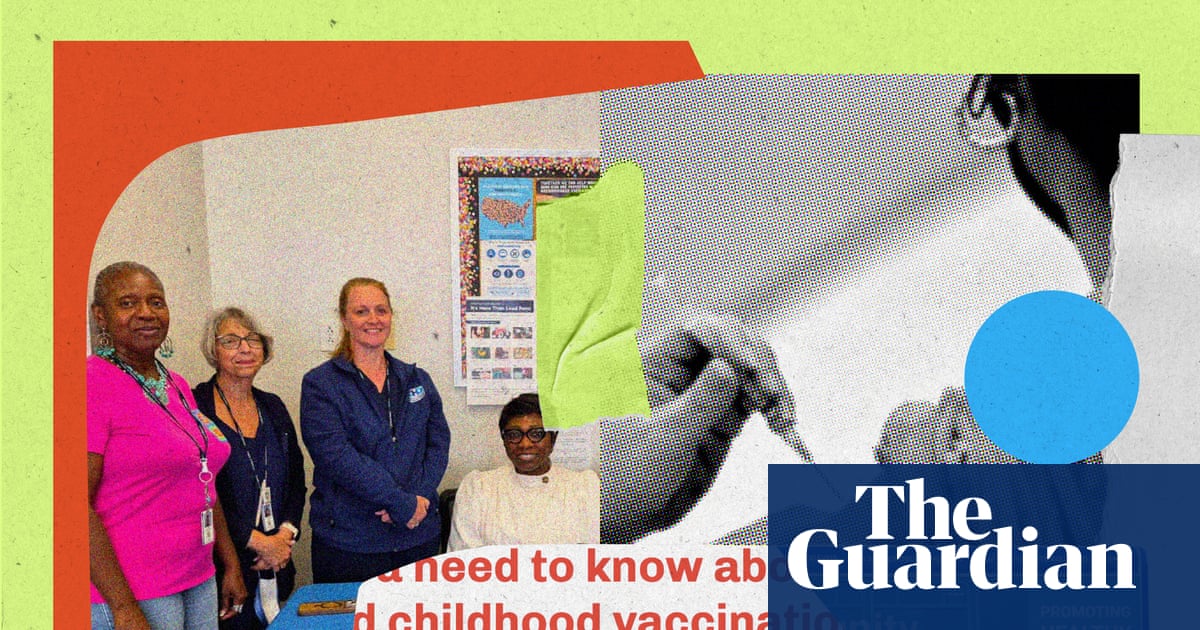
The vaccination day is one piece of the countyâÂÂs back-to-school immunization campaign, as measles cases climbed to 693 in Pennsylvania as of 14 September and this year so far claimed the lives of four residents. The campaign includes a mobile vaccine clinic â a 33ft traveling RV that brings vaccinations to pop-up community events â school district partnerships and vaccination data transparency, all to keep immunization rates from sliding.
The push is a local answer to a national problem. The countryâÂÂs top public health official, Robert F Kennedy Jr, has spent his time in office questioning the efficacy of vaccines and undermining vaccine science, culminating in a recent Trump executive order that seeks to break apart the measles, mumps and rubella (MMR) shot and shrink the list of vaccines recommended for American children. The administrationâÂÂs claims about vaccine safety are not just false, but are actively costing lives, advocates said.
With federal guidance no longer reliable, the responsibility for reassuring parents and caretakers has shifted downward to governors and state legislatures, state health departments, healthcare advocacy groups and the doctors on the frontlines. Across the country, theyâÂÂre mounting an urgent campaign to defend childhood vaccines against a wave of misinformation.
âÂÂOur responsibility is to demonstrate what the science shows and put out a [vaccine] schedule that people can depend upon that is science-based and evidence-based,â said Andrew Racine, president of the American Academy of Pediatrics. âÂÂMeasles is a canary in the coal mine and we have to now worry about other vaccine-preventable diseases, which is why the local effort at the state level is so critical.âÂÂ
Executive order creates chaos
As children got up to date on their immunizations before the start of the school year, Trump signed the âÂÂgold standard childhood vaccine recommendationsâ executive order, calling to reduce the number of universally recommended childhood vaccines from 17 to 11 and to split the MMR shot into three separate injections, delivered across additional doctorâÂÂs visits. The order arrived with no new scientific evidence behind it.
Paul Offit, director of the Vaccine Education Center at ChildrenâÂÂs hospital of Philadelphia, trains doctors to share with their patients that the MMR vaccine has been used safely in the US for about 60 years. Manufacturers have made clear they have no plans to split it into separate formulations, since doing so would offer no safety benefit, he said. Experts have also noted that more doctorâÂÂs visits would lead to more opportunities for missed appointments.
For many of the doctors and officials fighting the disinformation, the executive order is the latest development in a pattern set by Kennedy since he was confirmed. Offit recalled when Kennedy went on Fox News last year and falsely claimed the measles vaccine causes blindness and death. âÂÂCould he be more dangerously irresponsible?â said Offit. âÂÂHe should have been fired right there, but he wasnâÂÂt. And thatâÂÂs when he knew: I can say whatever I want with impunity.âÂÂ

Vaccine misinformation has led to vaccine hesitancy, Racine said. CDC data shows that the number of kindergarteners claiming vaccine exemptions for the 2025-26 school year hit a record high, while vaccination rates for kindergarteners decreased from the year before. Hesitancy is higher in certain rural areas, he said, and states that once had the highest vaccination rates in the country have fallen as they expanded vaccine exemptions.
âÂÂThis is the last thing parents wanted on their back-to-school list, to be confused about the childhood vaccine schedule or to be worried about their child coming home with measles,â said Shaughnessy Naughton, the founder of the non-profit advocacy group 3.14 Action. âÂÂItâÂÂs why so many doctors and health professionals are now stepping up and fighting back against these dangerous actorsâÂÂ
The pushback is state by state, doctor by doctor
Because the federal government has abandoned its traditional role as a trusted, science-based source of vaccine guidance, that responsibility has fallen to state lawmakers and health departments, local public health officials and doctors.
Following RFK JrâÂÂs appointment as health secretary, some state legislators examined their statutes on vaccines and removed references to the CDC. In January, dozens of states announced that they would reject the CDCâÂÂs guidance. Now, 30 states report relying on a source other than the CDC, such as the American Academy of Pediatrics and the American Academy of Family Physicians, for information about childhood vaccines.
Fifteen states sued the Trump administration earlier this year over its changes to the childhood vaccine schedule and the dismantling of the CDCâÂÂs vaccine advisory panel. TheyâÂÂve also banded together. California, Oregon, Washington and Hawaii formed the West Coast Health Alliance, and 15 states - including Connecticut, Maine, New York and Massachusetts â formed the Northeast Public Health Collaborative, two voluntary coalitions to strengthen regional awareness and preparedness on infectious diseases.
Racine said that clear and consistent communication and maintaining vaccine access are key in building trust with the public. ThatâÂÂs why states are reassuring practitioners of the standard vaccine schedule, regulating insurance to make sure companies continue to cover vaccines and launching public service announcements to communicate the importance of getting measles vaccines.
For example, the Pennsylvania health department says it is ensuring that residents understand the risks of remaining unvaccinated by sharing videos and infographics that explain how contagious the disease is. The response to messaging has been overwhelmingly positive, a spokesperson for the health department said, with more people choosing to vaccinate themselves and their families far more often than not. In August, healthcare providers in the state administered more than 46,000 MMR doses, compared with roughly 31,000 in the same month last year.
Hawaii governor Josh Green, a physician who formed the West Coast Health Alliance, said he treats vaccine communication âÂÂlike a family physicianâÂÂ, sharing granular, local data with the public rather than vaccine mandates.
âÂÂI believe that people can and should make some decisions based on their belief system,â Green said. âÂÂOf course, however, they should also be given the best information possible.âÂÂ
GreenâÂÂs urgency is shaped by his experience as a volunteer doctor during SamoaâÂÂs catastrophic 2019 measles outbreak, which killed 83 people, most of them young children, after a vaccination scare fueled partly by anti-vaccine activistsâ visits to the islands. Kennedy, as part of his career as an anti-vaccine activist, visited Samoa in 2019 to study the MMR vaccine months before the outbreak.
âÂÂWe would go into a village, and weâÂÂd find families huddled around a child who had just died,â Green recalled. âÂÂWe would have a funeral service in the bedroom, and then we would have to walk outside and ask: âÂÂDoes anyone want to be vaccinated?âÂÂâÂÂ
Green traveled from village to village vaccinating family members. âÂÂWe saw the same thing over and over again, people dying right in front of us,â he said. Samoa vaccinated nearly 37,000 people in two days, and the outbreak stopped within a week, Green said. He called the parallels to KennedyâÂÂs current rhetoric âÂÂthe same kind of stuffâ he saw before that crisis. âÂÂItâÂÂs RFKâÂÂs playbook,â he said.
âÂÂHe went into a vulnerable community of people that didnâÂÂt have a lot of education [â¦] and he scared people, and they didnâÂÂt get vaccinated, and the country got crushed,â Green said. âÂÂNow theyâÂÂre doing the same thing with other rural communities.âÂÂ
Filling the information vacuum
Countering federal misinformation has also fallen disproportionately on doctors and nurses who never expected to be doing that kind of work, health officials said.
âÂÂDoctors are facing a lot â many of them have never seen measles cases before, and now theyâÂÂre seeing it for the first time in their lives,â said Jeremy Funk, deputy director of the public health project at the non-profit Protect Our Care. He described an âÂÂenormous amount of burdenâ now being placed on pediatricians and state health officials to walk parents through basic vaccine safety information they never previously had to explain.
In Pennsylvania, that responsibility has landed heavily on county health departments â some of which face funding challenges or didnâÂÂt exist a few years ago. Delaware county was the largest county in the country without a health department until the pandemic, when the community built its own from scratch. âÂÂWe wanted to make sure we were meeting people where they were,â said city council member Monica Taylor.

Today, that means school partnerships and a mobile health van bring shots directly to parking lots, parks and community events. âÂÂItâÂÂs really about being out in the community as much as possible and being accessible,â Taylor said.
Werner said Delaware county has not seen a surge in outright vaccine refusal, but has seen rising anxiety, including parents asking whether funding for free vaccine programs will survive, or parents confused by shifting federal signals.
âÂÂWe saw more parents concerned that things might not be available,â Werner said, describing a summer awareness campaign the county launched, aimed particularly at reaching Spanish-speaking families. She credited the state health department with holding regular briefings for county officials and continuing to follow âÂÂthe scienceâÂÂ, even as federal recommendations shifted. Pennsylvania also began publishing school-level vaccination data for the first time this year, letting parents and administrators see exactly where local immunization rates stand and where support is needed.
âÂÂItâÂÂs a really hard place for public health right now with so much divisiveness being promoted,â said Werner. âÂÂAs public health officials, we really want people, from those who are underinsured to those who are undocumented, to keep themselves safe and have good information to make decisions about it. We want to help people hear the information they need to hear.âÂÂ