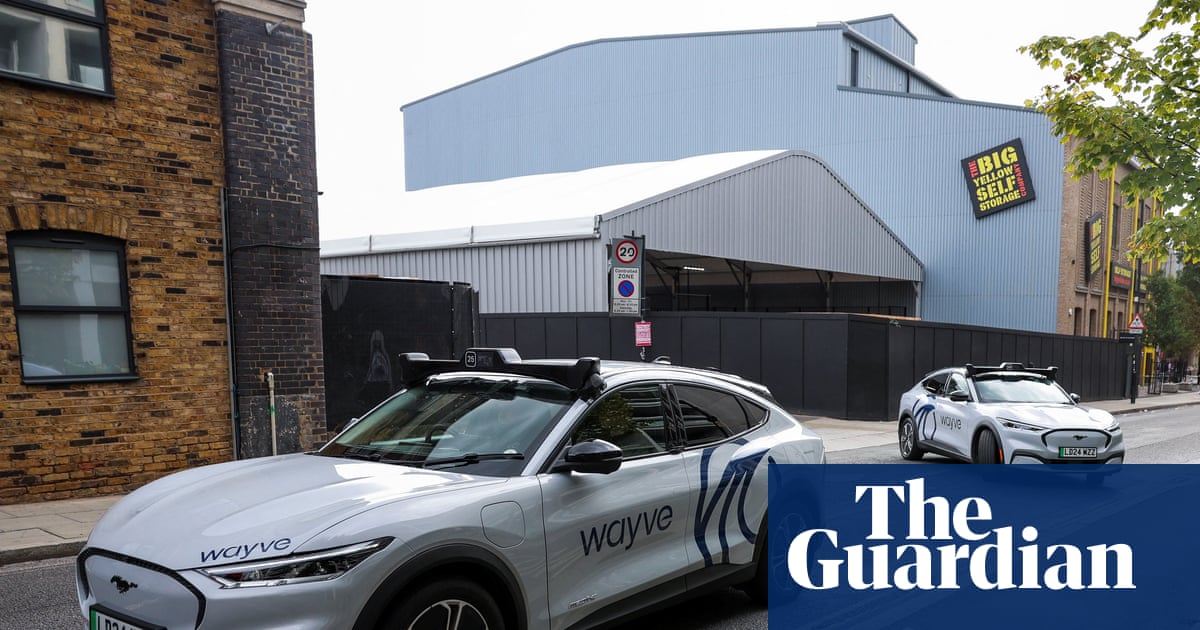

âÂÂWe should all be worriedâÂÂ: calls grow to limit London rollout of robotaxis
Protest planned at Wayve HQ as Uber drivers fear for their future and cityâÂÂs politicians demand TfL should have power over licences
For passengers in Britain who want to try the latest ride, robotaxis are eagerly awaited: more than 100,000 are on UberâÂÂs waitlist in London after the first UK services started in September.
Others view them with trepidation. âÂÂI think we should all be worried,â said Florentina Ghiuzan, an Uber driver from Essex. âÂÂI was shocked TfL approved it so soon. I knew change would come. But I thought it would come with a solution for us.âÂÂ
LondonâÂÂs rollout is facing mounting opposition, from drivers fearing for their future and the capitalâÂÂs politicians, with a critical report demanding Transport for London (TfL) is given full powers to permit or suspend operations.
Drivers will this weekend protest outside the headquarters and depot of Wayve, which has partnered with Uber to supply LondonâÂÂs first autonomous cabs for hire.
The direct action marks the latest salvo between unions and the global tech companies, whose driverless cars trials expanded this week to Manchester, with fears that hundreds of thousands of driver jobs could be lost.
Although only a handful of driverless cars now ply the streets, Uber has announced plans to deploy 100,000 Nvidia robotaxis worldwide starting next year, and its senior executives have talked about all new cars being autonomous by 2040. In San Francisco, WaymoâÂÂs fully autonomous cars already operate more than a quarter of all rides.
The mayor of London, Sadiq Khan, and bosses at TfL have expressed unease, and the London assemblyâÂÂs transport committee has called for the government to devolve authority over autonomous taxi services.
In a report published this week, the committee said there was âÂÂconsiderable uncertainty around many of the claimed benefits of autonomous passenger vehiclesâÂÂ, and fears over the impact on public transport and congestion, as well as safeguarding and accessibility for disabled passengers.
The chair, Caroline Russell, said they were not convinced that London should welcome robotaxis. âÂÂRather than just accepting the autonomous passenger service model proposed by operators, London should be looking at the transport problems it is trying to solve and then considering what solutions this technology could provide,â she said.
TfL is understood to see little benefit in the addition of robotaxi services to its crowded city streets, even if the numbers turn out to be relatively few in comparison to the wider traffic.
For the robotaxi companies, London is a tempting challenge to crack. Commercially, it is one of the biggest private hire markets in the world and a foothold in Europe; logistically, it is a tricky test bed to prove their vehicles are viable anywhere. Compared with the grid system of US cities in particular, it presents narrower, twisting and unruly streets, without the kind of rules on jaywalking that give cars priority on the road.
Under current rules, TfL licenses passenger services, but the government decides whether autonomous vehicles can operate. TfL has approved the start of Uber and WayveâÂÂs limited robotaxi services, which retain a human safety driver in the front seat.
As it stands, when it comes to fully autonomous passenger services, the Department for Transport would issue permits for robotaxis with TfL only able to grant or refuse consent, rather than regulate their usage on LondonâÂÂs streets.
That has alarmed TfL, which sees parallels with when Uber first started business in London, creating problems few had considered, and was twice rebuffed in licence renewals as not a âÂÂfit and properâ operator. Quite how driverless cars will affect the capitalâÂÂs transport ecosystem is unknown â and TfL wants to retain the power to intervene.
City hall is also concerned about the social implications of more than 100,000 licensed drivers losing income or a living. Those at the frontline in the App Drivers and Couriers Union (ADCU) are planning protests outside WayveâÂÂs London base from this Saturday.
Their members include Ghiuzan, 42, who started working as a driver four years ago after going back to college. She said: âÂÂOur earnings are the same or even lower since I started â and with the robotaxis on the market it could get even worse.âÂÂ
Ghiuzan said she was notified of the start of autonomous services as an Uber customer â but received no notification as a driver. She thinks people will switch to robotaxis: âÂÂYoung people like them, itâÂÂs new, and you donâÂÂt have to pay the driver ⦠I might have other skills, but for lots of drivers who are older and have done it their whole life, itâÂÂs going to be quite a challenge.âÂÂ

Faisal Osman, 51, from east London, has been an Uber driver for 12 years, after switching from a long commute to an IT engineering job to allow him to work nights when he had children. He knows four other engineers who joined Uber: âÂÂWe all used to talk about AI taking our jobs in IT. We thought, weâÂÂre not earning as much driving but weâÂÂll be safe for a while, support the family, pay the bills. But robocabs are a massive concern.
âÂÂPeople might be interested but it will decimate the livelihoods of many people including me â I really wanted some authorities to say no.âÂÂ

Abdurzak Hadi, an Uber driver and theLondon chair of the ADCU, said SaturdayâÂÂs protests would follow a similar action held at WaymoâÂÂs base in Park Royal in August. He said: âÂÂFor me as a driver, IâÂÂm thinking about competing with a machine thatâÂÂs not going to get tired, and could work 24 hours a day.
âÂÂBut as a Londoner with family, IâÂÂm thinking about safety. As licensed drivers weâÂÂre taught by TfL about safeguarding, looking out for a vulnerable child, or for abuse. Or looking after passengers who can only read your lips. WeâÂÂre a safety net. But losing my job â thatâÂÂs also losing a safety net for my family.âÂÂ
A recent report from the Centre for British Progress thinktank said more than 400,000 UK drivers (121,000 in London) would soon find âÂÂmuch of this work obsoleteâÂÂ, and urged the government to tax autonomous vehicles to help pay for the social consequences and economic losses.
The GMB union has demanded a âÂÂjust transitionâ to help drivers reskill and find new work. Speaking at the Labour conference last month, the GMBâÂÂs Mark Betteridge said the union was not against change but added: âÂÂThe people who do these jobs will know the reality far better of what change will look like ⦠Drivers tell us they want some sort of transition plan to get through this.âÂÂ
The roads minister, Justin Madders, told the meeting that autonomous vehicles could bring âÂÂopportunities for well-paid and unionised jobsâ and the government wanted Britain to be a âÂÂworld leaderâ in the technology. But, he added: âÂÂSometimes government hasnâÂÂt worked on the impact on workers ⦠WeâÂÂre absolutely committed to making sure that doesnâÂÂt happen that time.âÂÂ
An Uber spokesperson said: âÂÂDrivers and AVs [automated vehicles], which we believe will also offer considerable benefits to cities, are both expected to grow side by side for quite some time. That said, we shouldnâÂÂt hide that autonomous mobility will impact workers, riders, and the communities they live in.
âÂÂWe are in conversations with the government and local stakeholders to ensure we can realise the promise of AVs while not leaving drivers and communities behind.âÂÂ
Uber said it had not significantly increased its share of fares in London but VAT changes meant drivers were keeping less of the fares customers paid, and it said it was the only private hire operator in the UK recognising its drivers as workers with employment protections.

Wayve said that with Uber it was taking a âÂÂdeliberately phased approachâÂÂ, and had engaged extensively with political leaders, community organisations and accessibility advocates. A spokesperson said its robotaxis could âÂÂmake a positive contribution to LondonâÂÂs transport system, helping to improve road safety, expand connectivity and give people more ways to travel.
âÂÂThere is clear excitement in the potential for this technology to support safer, more accessible journeys, provided it is introduced responsibly and in partnership with the city. We have a positive, constructive relationship with TfL and weâÂÂre working pragmatically together to ensure any future services meet its expectations.âÂÂ
A spokesperson for Khan said the mayor was committed to ensuring that Londoners benefitted from the opportunities new technologies could bring but shared âÂÂconcerns about potential impacts on safety, congestion and jobsâÂÂ, as any changes needed to âÂÂwork for our world-leading transport system â including taxi and private hire services, and those who drive themâÂÂ.