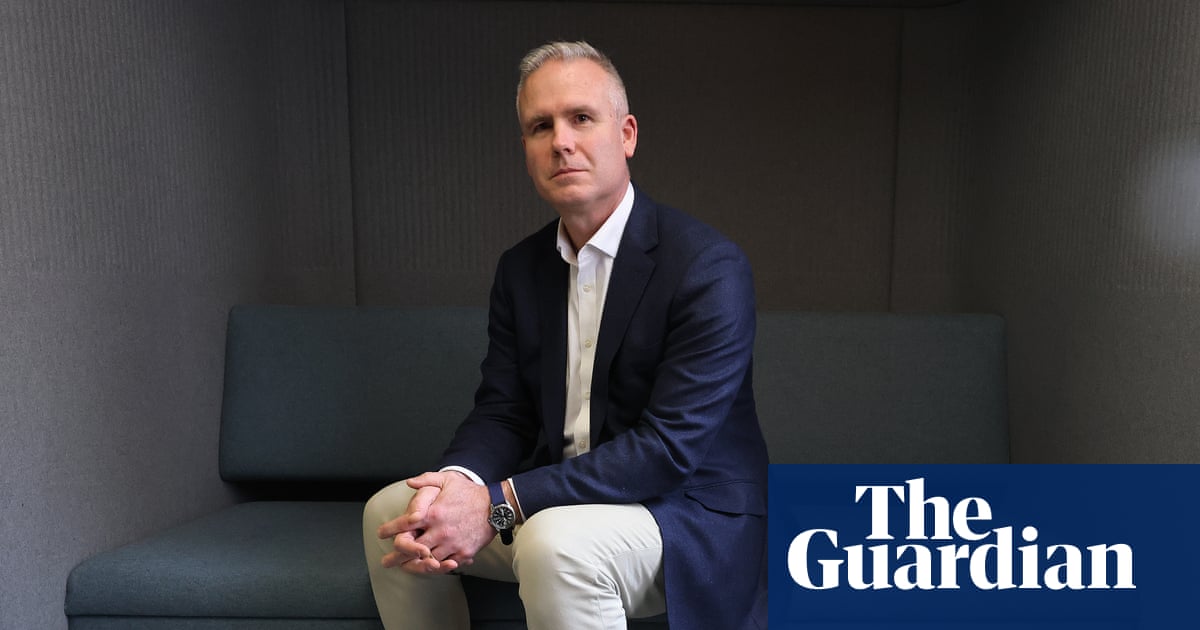

UK must not be beholden to foreign AI, says head of Alan Turing Institute
George Williamson says âÂÂnational resilienceâ is key focus of ATI amid US and ChinaâÂÂs runaway leadership in field
The UK must not become dependent on foreign AI systems that can be switched off at short notice and must develop its own versions of the technology, according to the head of the Alan Turing Institute.
The country needs a stronger domestic position in AI in response to the US and ChinaâÂÂs runaway leadership in the field, with âÂÂnational resilienceâ a key focus for ATI said George Williamson.
The institute is the UKâÂÂs leading AI research body and is under new leadership after the government, its main source of funding, demanded a strategic shift.
âÂÂAs AI becomes more embedded in critical services, in domains like defence, national security, critical infrastructure and healthcare we shouldnâÂÂt depend solely on systems we canâÂÂt inspect or control, or that could be restricted or even switched off,â said Williamson.
In June Washington temporarily blocked the release outside the US of AnthropicâÂÂs latest models, and has reportedly asked leading AI labs to withhold their models from being tested by the UKâÂÂs AI Security Institute until they have been examined by AISIâÂÂs US counterpart.
âÂÂWeâÂÂve seen now that both political and commercial pressures mean we may not have access [to AI] in all the circumstances when we want it. That is not a place where a nation wants to be,â he said.
Williamson added: âÂÂThereâÂÂs a set of circumstances where it would be a good idea for us to have something that we donâÂÂt have to ask other peopleâÂÂs permission to use.âÂÂ
He said national resilience would be a focus of ATIâÂÂs work amid concern about the geopolitical situation and the risk posed by increasingly powerful AI systems.
Those concerns were highlighted last month by the UK prime minister, Andy Burnham, announcing a new national centre to tackle state-backed disinformation, and Anthropic predicting the technology had a greater than 10% chance of wiping out humanity by 2030.
âÂÂItâÂÂs a moment when national resilience is definitely what the country needs and itâÂÂs definitely a thing I think the Turing institute can help with,â he said.
âÂÂWe are facing a more adversarial world, more frequent shocks to our critical infrastructure and now powerful AI amplifying these threats. To strengthen national resilience, the Turing will focus on securing critical systems against disruption, countering threats from AI itself and helping to shape the right strategic AI capability for the UK.âÂÂ
Williamson said the institute could assist in building such resilience by helping produce uses for AI âÂÂfor the public goodâÂÂ, working on areas from weather forecasting to farming, as well as helping spot disinformation. Referring to state-led disinformation campaigns, he said: âÂÂItâÂÂs very dangerous for the state of democracy and itâÂÂs an area that we can monitor.âÂÂ
Williamson is the former head of His MajestyâÂÂs Government Communications Centre, a secretive government body that makes gadgets for UK spy agencies and counts Alan Turing â the second world war codebreaker and AI pioneer after which ATI is named â among its former staff.
Williamson said it had become clear in recent months that the UK needed âÂÂmore agency on access to technologyâ and a stronger sovereign position in AI. âÂÂIt feels pretty uncomfortable if you donâÂÂt have some control or ability to use technologies when you want them, and also harder to imagine how you build an economy on the top of stuff that can disappear,â he said.
In recent weeks Christine Lagarde, the president of the European Central Bank, and Ursula von der Leyen, the president of the European Commission, have urged Europe to be more self-sufficient in AI, with Lagarde speaking about the threat of being âÂÂcut offâ from US and Chinese technology.
Williamson cited China as another reason for boosting domestic AI, amid concerns that Chinese-made systems might not âÂÂcoincide with our valuesâÂÂ. He said: âÂÂTry asking some of these models about some events in the recent past in China and youâÂÂre not going to get an answer thatâÂÂs particularly helpful if youâÂÂre doing GCSE history.âÂÂ
âÂÂThis is the defining technology of our time. We want to be able to shape that technology ⦠in a way that accords with who we are and our values,â he said, adding that while ATI and the UK probably could not match the financial resources of major AI labs, they could still produce âÂÂnationally owned IPâ or smaller models that could be made available to startups.
âÂÂWe can be ambitious here without trying to copy what frontier labs are doing,â he said.
Williamson said ATI, a registered charity, could be an âÂÂobjective and helpfulâ arbiter of concerns about AI, including existential threat. âÂÂA national institute should be an active partner to government and the public more generally in helping to navigate some of this stuff.âÂÂ
He said there was a âÂÂa lot of stuff being tossed aroundâ on the existential threat risk that âÂÂis not always well grounded in scienceâÂÂ. Referring to the penchant among some in the sector for expressing the risk of AI-triggered extinction in percentage terms, he said: âÂÂIâÂÂm not sure itâÂÂs helpful trying to assign particular percentages to it because I have not seen anyone show me a convincing evidence of how theyâÂÂve arrived at the number they then start throwing around.âÂÂ
Williamson indicated that the focus on national resilience would enable ATI to keep doing work on the environment that Keir StarmerâÂÂs government had wanted to sideline. In 2025 the then technology secretary, Peter Kyle, wrote to ATIâÂÂs chair demanding the institute switch its main focus to defence and security. WilliamsonâÂÂs predecessor Jean Innes resigned soon afterwards.
âÂÂFor me climate is as much a national security issue as defence. For me, it [national resilience] is a frame that enables us to cover the range of threats and opportunities to the UK,â he said.