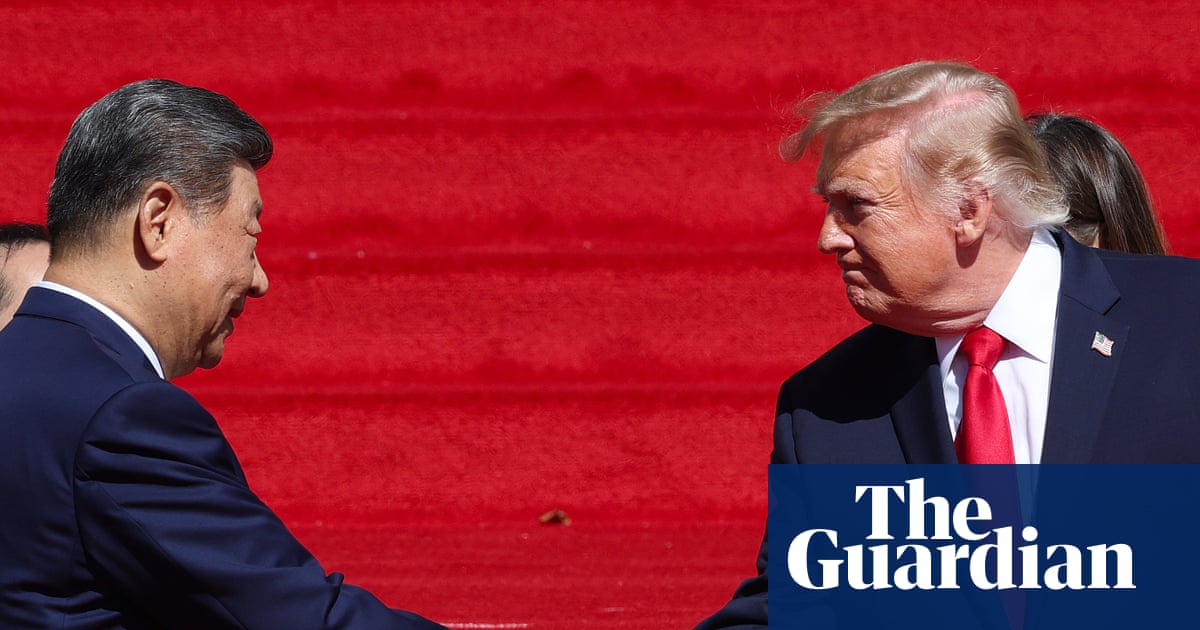

Trump and Chinese president Xi end summit without major agreement on AI
XiâÂÂs state visit to the US emphasized personal rapport with the US president, rather than substantial agreements to pause their respective countriesâ AI arms race
Donald Trump and Chinese president Xi Jinping wrapped up their Washington summit on Friday, facing criticism that they had squandered an opportunity to pause their countriesâ artificial intelligence (AI) arms race.
The three-day state visit emphasised pageantry and personal rapport rather than substantial agreements. The US president and Xi discussed the wars in Iran and Ukraine and the status of Taiwan. Their biggest policy announcement was a modest two-month extension of a trade truce.
But despite the presence of top tech executives at a White House state dinner on Thursday night, Trump and Xi failed to deliver the AI breakthrough that some experts and foreign governments had hoped for amid warnings that the technology could pose an existential threat to humanity.
âÂÂIt was such a layup,â said Ro Khanna, the top Democrat on the House of Representativesâ select committee on China. âÂÂIf [Trump] had just said, look, we have established technical working groups and weâÂÂve agreed to a framework that has called for DeepSeek and Moonshot and Alibaba to sit down with Anthropic and OpenAI and Gemini and with technical experts and theyâÂÂre going to commit to at least a pause on any self-improving AI, he could have looked like he was a statesman taking the lead.
âÂÂI believe Xi Jinping would have agreed to some of at least the technical working groups. But he [Trump] didnâÂÂt want to; he has no interest in doing that.âÂÂ
It was the first visit to the White House by a Chinese president in more than a decade and XiâÂÂs second state visit to the US. Three days of pomp and circumstance culminated on Friday with Trump and Xi drinking tea. Trump said â the summit â had produced great strides and that âÂÂour âÂÂfarmers are going to be happy,â but did not provide details.
The pair then went to the National Archives, where Trump and Xi looked at the original Declaration of Independence, the constitution and Bill of Rights. Trump told reporters they were comparing ChinaâÂÂs documents to AmericaâÂÂs founding documents. âÂÂOurs goes 250 years, which is great, and weâÂÂre proud of. Theirs goes 6,000 years. So thereâÂÂs a little difference between 6,000 and 250. But weâÂÂre very proud of our 250.âÂÂ
On Thursday, Xi acknowledged that the US and China have the âÂÂresponsibility to develop and manage AI for goodâ and âÂÂensure that the development of AI is always âÂÂunder human controlâÂÂ. China aims to have next-generation smart terminals and AI agents reach more than 90% penetration by 2030.
But Trump â who has repeatedly said the US must forge ahead to maintain its lead over China â appeared more focused on his push to rebrand artificial intelligence as âÂÂsuper intelligenceâÂÂ, later claiming on social media that Xi âÂÂseems to likeâ the term without divulging the substance of their discussions.
Later Trump hosted a black-tie state dinner attended by titans of the tech industry. Bernie Sanders, an independent senator of Vermont, used social media to label a photo of Trump and XiâÂÂs table with guestsâ net worth: Elon Musk of SpaceX and Tesla ($928bn), Lisa Su of Advanced Micro Devices ($3.5bn), Jensen Huang of Nvidia ($186bn) and Tim Cook of Apple ($3.1bn). Sanders commented: âÂÂA government of, by and for the billionaire class.âÂÂ
But their counterparts in the Chinese tech industry were not present and there was little sign of either country making even a symbolic gesture to apply the brakes.
Khanna commented: âÂÂTrump didnâÂÂt have to have some groundbreaking treaty like Reagan and Gorbachev did [on nuclear weapons]. He could have at least said, look, weâÂÂre going to have a working group of Chinese and American technologists working together to make recommendations and enforcement and verification of the labs.âÂÂ
Jonathan Czin, a fellow in the China Center at the Brookings Institution thinktank in Washington, agrees that an opportunity was missed. âÂÂWe are in this potentially transformative moment for both countries and for the world and for technology and, instead of having a meeting that would meet the moment, you got theatre of the absurd in lieu of that,â he said.
âÂÂEven going into this meeting, youâÂÂre dealing with a septuagenarian and octogenarian who may or may not have ever had first-hand contact with actually using AI and what happens with this technology rests on their two shoulders. The only thing they seemed to agree about is that neither of them wants to slow down with this technology, regardless of their actual understanding of it.âÂÂ
The state visit underlined the contrast between TrumpâÂÂs treatment of democratic allies such as Canada and authoritarian rivals such as China. He broke from tradition to give Xi a red carpet welcome when he landed at Joint Base Andrews in Maryland.
He also found time to show Xi around the White House, including a gallery wall of presidents where Joe Biden is mockingly depicted as an autopen, a construction site for his White House ballroom and a new helicopter landing pad. âÂÂHeâÂÂs an expert on stone, aside from many other things, and he loves good granite,â Trump said.
But the summit was somewhat overshadowed by TrumpâÂÂs decision last week to bar CNN, MS Now and Politico from the White House, sparking a legal fight. On Thursday, Chinese state media were welcomed into the White House grounds even as members of AmericaâÂÂs free press were frozen out, though later they gained entry. As in May, when Trump visited Beijing, the leaders did not hold a press conference.
Czin of the Brookings Institution added: âÂÂI had very low expectations going into this meeting for anything of substance and the meeting managed to underwhelm even those low expectations. We went from the mezzanine down into the basement. In terms of the substance, itâÂÂs not clear to me what the US got out of this.âÂÂ
Senate Democrats also criticised the summit, arguing that Trump failed to secure meaningful concessions from Beijing on trade, security, human rights or AI.
Chuck Schumer, the minority leader in the Senate, said: âÂÂAs usual, Trump acts based solely on who flatters him at the moment, where the nearest photo op is, and what headline he covets. If youâÂÂre a foreign authoritarian, Trump wonâÂÂt just invite you to visit America, heâÂÂll greet you plane-side.âÂÂ
Trump and Xi are on track to meet twice more this year. In November, Xi will host the Asia-Pacific Economic Cooperation summit in Shenzhen, China, and in December the Group of 20 summit will be held at the Trump National Doral Miami golf club in Florida.