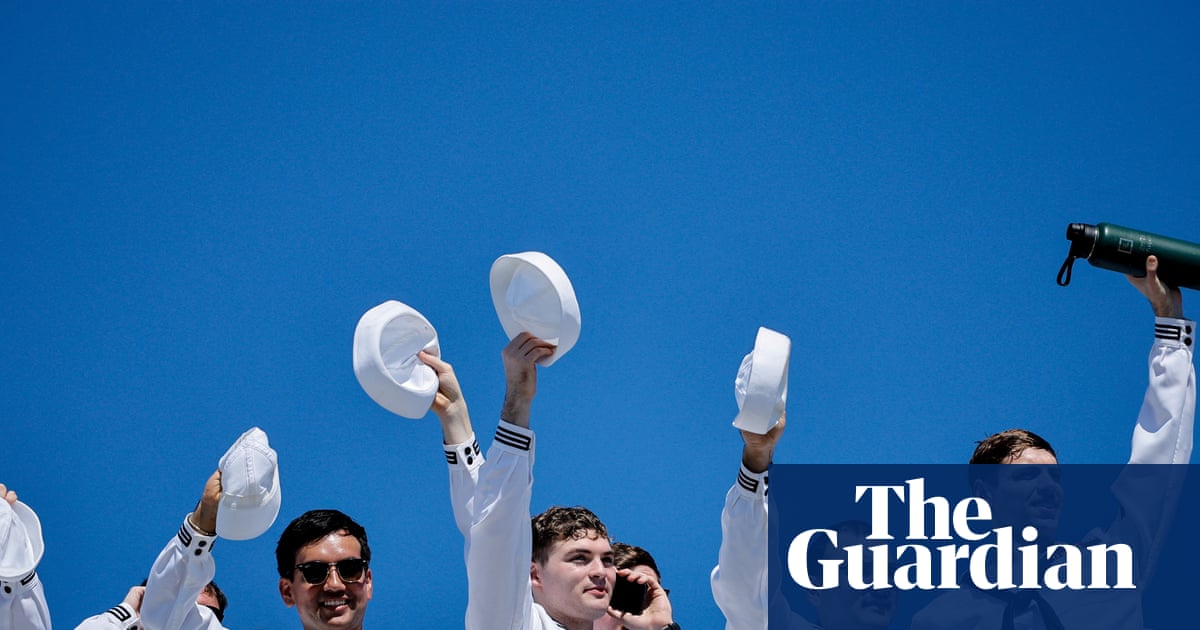

Thousands turn out to welcome weary USS Lincoln sailors after fraught stretch at sea
Military families admit âÂÂmixed emotionsâ as aircraft carrier finally returns to San Diego after grueling deployment that took severe toll
By 4am on Thursday, the sky still pitch black, 19-year-old Pvt Grayden Monroe and his mom had arrived to the naval base in San Diego, California, the very first military family members huddled on a set of metal bleachers overlooking the dark water. They were waiting for MonroeâÂÂs 21-year-old sister to step off the USS Abraham Lincoln, the embattled aircraft carrier that has been at sea for the better part of a year.
Monroe, a soldier stationed at Fort Campbell, was wearing his army uniform for the occasion. âÂÂI hope sheâÂÂs proud of me,â he said of his sister, âÂÂand I hope she knows damn well that IâÂÂm just as proud of her.âÂÂ
As the sun rose over Naval Air Station North Island, thousands of people flooded on to the base for the USS LincolnâÂÂs long-awaited return. The atmosphere was a de facto festival, with a live band, performers on stilts, therapy dogs, handmade signs, giant cutouts of sailorsâ smiling faces. People cried, laughed, screamed with joy.
When the Lincoln appeared in the middle distance around noon, rounding the corner past downtown, cheers erupted from around the bay. Sailors flanked the edges of the ship in uniform, waving to the crowd and making phone calls to loved ones. Below American-flag bunting, rust stains were visible on the sides of the carrier. The massive, city-like ship had finally reached land.

Military families and friends have longed for this day for months.
The Lincoln first left San Diego last November, with an expected return date sometime in the spring. But as the US and Israel launched a war with Iran, the aircraft carrier was diverted to the Middle East, extending the deployment for the roughly 5,000 sailors and marines onboard for a then unknown amount of time. The LincolnâÂÂs deployment ended up spanning 321 days, including 264 consecutive days at sea without a port call, a record in modern naval history, the Defense Department said.
For months, sailors have reported hazardous living conditions onboard the Lincoln: shortages of food and basic supplies, a spate of suicide attempts and a general sense of deteriorating mental health and declining morale. The reports immediately set off a political firestorm, with Democratic lawmakers calling for an investigation, even as Donald Trump and the US defense secretary, Pete Hegseth, sought to downplay the situation. The US navy confirmed last month that eight service members from the Lincoln and its accompanying strike group had attempted suicide since the start of the deployment.
After the LincolnâÂÂs return home was officially announced in August, it took the carrier almost two long months to get back to San Diego, making a brief port call in Thailand and then tracing a route east across the Pacific Ocean.
But on the naval base on Thursday, the scene wasnâÂÂt completely euphoric.
An infant in a stroller was positioned with a sign that read âÂÂI have waited 234 days to hug my daddy!â The babyâÂÂs mom, Brenda Rivas, said she was five months pregnant when her husband deployed. He missed the birth, and the first time he was able to see his daughter over a video call was six months later.

âÂÂItâÂÂs mixed emotions,â Rivas said. âÂÂIâÂÂm more sad than excited because he did miss so much.âÂÂ
And an emotional reunion on the pier wasnâÂÂt in the cards for everyone, especially for the many military families that are spread across the country.
Dawn, a mother who requested that only her first name be used because she feared retaliation from military officials, anxiously watched a live feed of the shipâÂÂs arrival from a small town in Texas, her eyes âÂÂglued to the TVâ for hours. Her son is a service member on the Lincoln.
âÂÂI couldnâÂÂt sleep. Tossed and turned,â she texted early on Thursday morning. âÂÂIâÂÂm feeling so happy for my granddaughter to see her daddy!âÂÂ
Imagining that the scene in San Diego would be too chaotic, Dawn is instead flying to California next week to reunite with her son and his five-year-old daughter. SheâÂÂs planning to help him âÂÂget everything back in orderâÂÂ: make sure his house is clean, whip up some home-cooked meals.
Over the past 11 months, one thing has been keeping her son sane and tethered to a reality off the ship, she said.
âÂÂHe said that all he could think about was his daughter,â she said. âÂÂThatâÂÂs what got him through all this.âÂÂ
Months of dwindling rations, worsening mental health
As the sailors floated around the globe for the better part of the past year, their relatives sat at home and waited, wondering what could be happening thousands of miles away on the ship.
DawnâÂÂs son sent her updates via WhatsApp whenever he got service. This past spring, he told her, the conditions were dire.
âÂÂLike 3rd world â¦â he wrote in a message. âÂÂWe couldnâÂÂt get soap or toothpaste.âÂÂ
He sent her pictures of mold dripping down the walls, of dwindling daily rations: sectioned cafeteria trays with only a few of the compartments full. Two hard-boiled eggs and watery soap. A scoop of grits and a few limp noodles.

The extended deployment, long working hours and supply shortages seemed to be taking their toll across the ship, especially on the younger sailors, Dawn said. Nearly half of all active-duty military members are 25 years old or younger. She could imagine her son, whoâÂÂs now in his 30s, being like a father figure to some who were really struggling. The reports of some sailors attempting to jump overboard were true, her son told her.
âÂÂMy sonâÂÂs a tough kid, so he could take it,â she said during a phone interview last week. âÂÂBut for those 19-year-old kids that go on a first deployment, itâÂÂs scary for them.âÂÂ
One of the worst parts for Dawn was the unsolicited commentary, on Facebook and Instagram and in real life, saying that even if the shipâÂÂs conditions were rough, the sailors probably just couldnâÂÂt hack it.
âÂÂThatâÂÂs exactly what people were saying about the people in the military: that theyâÂÂre babies, and that back in 1969, or whenever they were [serving], it wasnâÂÂt like that,â she said. âÂÂI couldnâÂÂt even read the comments. IâÂÂm still upset about it.âÂÂ
Those sentiments even came from Trump, who told reporters this summer that the LincolnâÂÂs deployment was âÂÂnot nearly long enoughâÂÂ.
That type of remark changed everything about how Dawn viewed the president.
âÂÂI like President Trump. I voted for him. But I donâÂÂt really think he understands,â she said.
âÂÂLet his son be out there, just for a couple days, and see how it goes. If he really would tolerate that, if his son could really take it â IâÂÂm sure he couldnâÂÂt.âÂÂ
Temporary rest, shifting political views
Now that the Lincoln has returned home after an unexpectedly grueling and high-profile deployment, sailors are left to determine whatâÂÂs next.
Some of those next steps are immediate. Monroe, the 19-year-old, said his family was excited to take his sister out to dinner tonight â but then sheâÂÂs back on duty tomorrow.
After the trials of the past year, a more serious takeaway for Monroe is his sense of what could happen during a deployment, and just how tough that isolation could be.
âÂÂWhen shit hits the fan, everything just kind of sucks. Especially when theyâÂÂre out there on their own. ItâÂÂs really just you and the guy next to you,â he said. âÂÂSo getting stuck there and being able to push through something like that â I donâÂÂt think I could have done it, honestly.âÂÂ
His sister, he added, was âÂÂprobably one of my biggest role modelsâÂÂ.

For Rivas, the wife whose husband missed their daughterâÂÂs birth, sheâÂÂll have to switch from being a single parent for a year to parenting as a team again.
âÂÂItâÂÂs gonna be different, teaching him how to take care of her,â she said. âÂÂBut sheâÂÂs good with people, so IâÂÂm sure sheâÂÂll adjust.âÂÂ
For Dawn, as a Texan and someone who says she still wouldnâÂÂt vote for a Democrat, she walked away from the USS Lincoln experience with a very different outlook on Trump. The majority of those in her small town and in her family are lifelong Republicans, but the controversy surrounding the Lincoln has cut jaggedly across traditional party lines.
âÂÂItâÂÂs really hard for me because I just wanted [my son] to be OK. And I just, I donâÂÂt know â¦â she said, her voice trailing off over the phone. âÂÂIâÂÂm just not real happy with President Trump right now. At all.âÂÂ
As for what her son thinks about the fraught deployment, she said, itâÂÂs probably too soon to tell how this experience will shape his life and career. But it has put some things into perspective.
âÂÂHe just wants to live for his kid,â she said. âÂÂHe wants to see his daughter grow up.âÂÂ