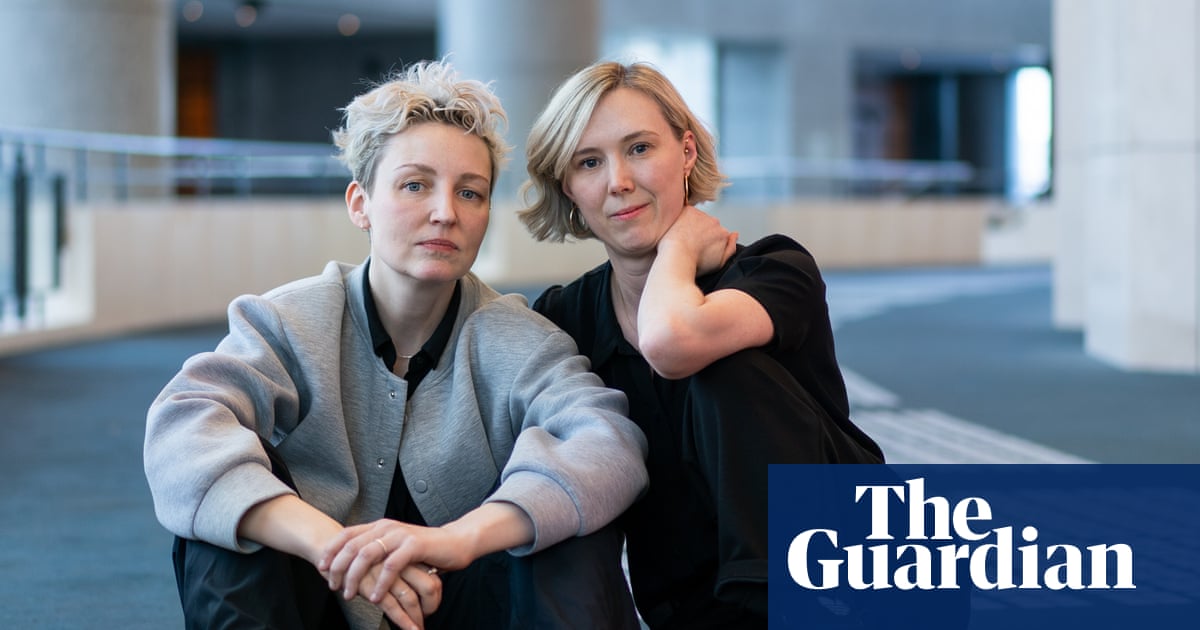

âÂÂThis gap opens up of doubt and scepticism about everythingâÂÂ: Jess and Morgs confront the politics of deepfakes
In the choreographersâ new work, virtuosic movement and some green-screen magic unfurl the theatricality of high-stakes television interviews
It appears the interviewer has got him on the ropes. âÂÂFor the record, I did not take part in a pagan ceremony with minor members of the royal family in which we daubed ourselves in paint,â states the beleaguered politician, caught outside Buckingham Palace with his flies undone and forced to defend himself. This is a fabrication, of course â IâÂÂm watching the scene play out in an east London dance studio â but it doesnâÂÂt feel miles away from something that could be true. And how do we know whatâÂÂs the truth anyway? ThatâÂÂs the question in Deepfake, the latest piece from award-winning dance duo Jessica Wright and Morgann Runacre-Temple, AKA Jess and Morgs.
The pair tell modern stories with ambitious tech â film and live camera work â and often techy themes, too. âÂÂWeâÂÂve always been drawn to where thereâÂÂs a crossover between the theme and the form,â says Runacre-Temple. âÂÂWhat gets us excited is seeing the contemporary world reflected back.â The pair scored a massive hit with their 2022 piece Coppélia, made for Scottish Ballet, which turned a twee 19th-century ballet about a dancing doll into a cautionary tale of AI automatons and unrestrained tech bro egos. Definitely not one-hit wonders, earlier this year they made their debut at the highly esteemed Paris Opera Ballet.

Deepfake is set in a green-screen studio, where the interview is taking place between a cool-headed journalist and a politician. With writer Jeff James, Jess and Morgs looked at a wealth of TV interviews, from Jeremy PaxmanâÂÂs 1997 grilling of Michael Howard, where he asked the same question 12 times, to the former prince AndrewâÂÂs disastrous turn on Newsnight. They also took inspiration from the current ultra-media-trained politicos who âÂÂcontinually and bombastically evade any questions at allâÂÂ, says Wright.
They liked the way the television interview is already a theatrical setup, says Wright. âÂÂI think thereâÂÂs something fun about putting that on stage and asking the audience to engage with the theatricality as well.â ItâÂÂs gladiatorial drama in smart tailoring. âÂÂItâÂÂs really high stakes; itâÂÂs win or lose for both of them,â adds Wright.
In the show, the interview will be filmed live by four cameras â then, as well as seeing whatâÂÂs happening in reality, the audience will watch another version on screen with background footage edited in. WeâÂÂll be privy to the fabrication of the image and a number of possible realities. There are also seven dancers in green-screen suits who manipulate the environment but will disappear in the edit.

As Runacre-Temple says, green screen can actually look quite lo-fi â âÂÂItâÂÂs got that slightly absurd, playful, silent movie quality about itâ â and itâÂÂs ancient tech compared with the kind of AI deepfakes that are emerging today. âÂÂThey look so hyper real,â says Runacre-Temple. âÂÂThe danger of deepfakes is not only that people believe things that arenâÂÂt true to be real, but that they start to disbelieve things that are true, and this gap opens up of doubt and scepticism about everything.â Or, as in their story, someone who has been caught out doing something they shouldnâÂÂt can insist itâÂÂs a fake image. âÂÂItâÂÂs really about the strange shifting relationship with the landscape of truth.âÂÂ
I go to visit rehearsals on a day when thereâÂÂs no tech in sight, bar a couple of laptops. âÂÂItâÂÂs good to go analogue to actually finish the choreography,â says Wright, wryly, counting the diminishing days to the premiere. All we have is an enormous studio and two incredible dancers: Rebecca Bassett-Graham, best known for dancing with Wayne McGregorâÂÂs company, who is playing the journalist; and as the politician, Kennedy Junior Muntanga, who has worked with Akram Khan.

The text plays in voiceover while the two dancers embody and expand on its meaning. Their quick-fire movements visualise all the dynamics of a charged conversation: charm, challenge, cooperation, accusation, entrapment, etc. The feel is freewheeling, but each movement is tightly mapped to the syllable, every flex of muscle is considered. In certain scenes with the green screen, dancers will have to hit exact marks and even eyelines on exact words âÂÂor the whole illusion collapsesâÂÂ, says Wright. TheyâÂÂre creating their own high-stakes environment for the performers, where âÂÂthe dancersâ virtuosity is a metaphor for these very virtuosic performances in interviewsâÂÂ.
Will this battle have a winner? Can we believe what we see? Jess and Morgs arenâÂÂt giving any spoilers. âÂÂHopefully it will be surprising and mischievous,â says Runacre-Temple.