
The US urgently needs more bilingual healthcare workers. This clinic might have the solution
In New Mexico, where a shortage is acute, Casa de Salud trains college and high-school health apprentices who understand the communities they serve
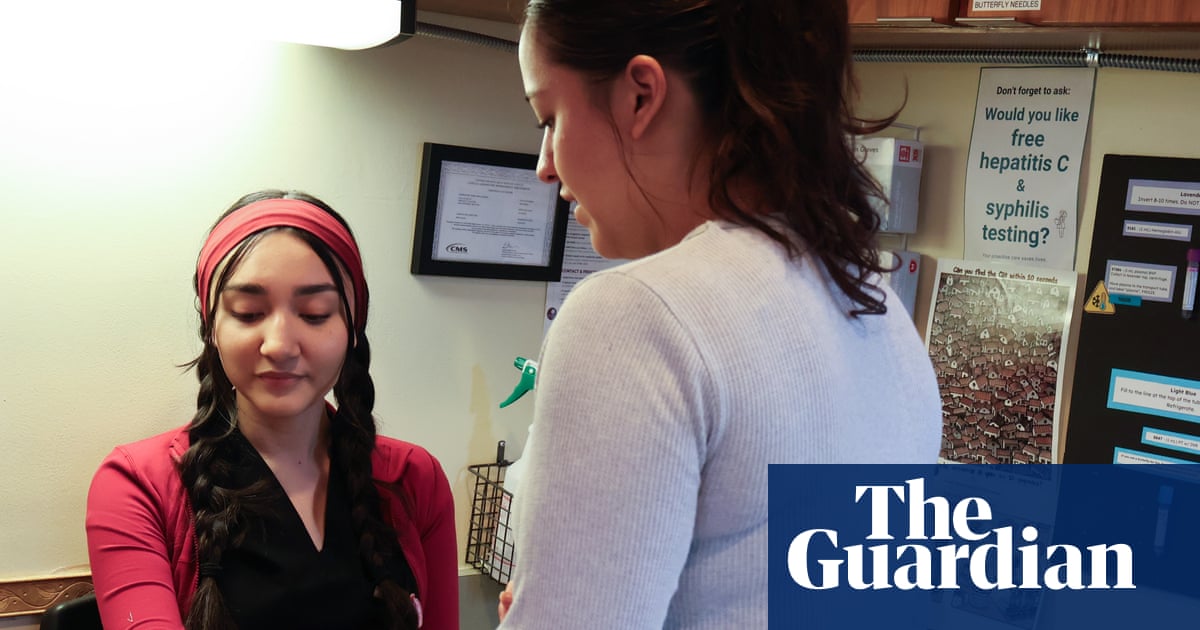
âÂÂIâÂÂll be getting a little bit closer to you to put the cuff on,â Gisselle Martinez said, demonstrating how to take a manual blood pressure in a trauma-informed manner. âÂÂIt might be a little tight. Let me know if you feel any discomfort and I can take it off.âÂÂ
SheâÂÂs not a doctor or a nurse â at least, not yet â but a 21-year-old college student. Between classes, Martinez works as a bilingual health apprentice at Casa de Salud, a primary care clinic in Albuquerque, New Mexico. On top of taking vitals, Martinez is certified in harm reduction â she can run a needle exchange and give out fentanyl test strips. And she understands how a patientâÂÂs trauma and past neglect can show up in an exam room.
âÂÂMy entire life I had to pretty much translate for my parents whenever they would go to the doctor,â said Martinez, whose parents speak Spanish. That responsibility sometimes felt overwhelming, like when she didnâÂÂt know how to translate certain medical terms, or when she herself had to go under anesthesia and explain the risks to her parents.
Now through CasaâÂÂs de SaludâÂÂs apprentice program, she is working toward becoming the certified nurse anesthetist she wishes she and her parents had access to.
âÂÂAs a bilingual first-generation student, I aspire to help my community,â she said.
While states across the country face a healthcare workforce shortage, the need is particularly high in rural areas and within Spanish-speaking communities; in New Mexico, 32 of its 33 counties face a shortage. Although they make up 20% of the population, Latinos account for only about 6% of the US physician workforce.

To provide that care, not just for the community, but from the community, Casa de SaludâÂÂs year-long apprentice program has trained more than 300 bilingual high school and college students since its founding in 2005. The aim is not only to help students from marginalized backgrounds get into medical programs, but to keep them in the community. At least a third of the students Casa de Salud has tracked have gone into the healthcare field, with more than half of those attending medical school.
âÂÂYouâÂÂre more likely to work in a community if you grew up in the community,â said health apprentice program developer Colette Village Center, who is from the Standing Rock Sioux Nation. âÂÂWe want to see more representation of lower-wealth individuals, under-represented individuals in healthcare, because that saves lives.âÂÂ
Offering âÂÂbilingual, biculturalâ care
Casa de Salud opened in 2004 when a local physician approached a group of promotoras â trusted liaisons between the community and healthcare workers â in AlbuquerqueâÂÂs predominantly Hispanic and Latino South Valley neighborhood.
âÂÂThere were a few of us women who called themselves the promotoras tradicionales, who would do limpias,â said Lorraine Cordova, one of Casa de SaludâÂÂs founders, describing a spiritual cleansing common in the Mexican folk healing tradition of curanderismo that often uses herbs, prayer and intention-setting to process emotional stressors.
The group met every few weeks at a gym in the South Valley, where they offered limpias, massage, reiki, accu-detox and other treatments. Seeing the need for connecting culturally grounded caregivers to the healthcare system, Casa de Salud soon after launched its health apprentice program.
Alejandra Casarrubias was among the programâÂÂs first students. Today sheâÂÂs a registered nurse, a sexual assault nurse examiner and clinical manager at Casa de Salud.
âÂÂYou donâÂÂt only have to be bilingual, but bicultural,â she said, describing the importance of training healthcare providers who understand the communities they serve. According to the Association of American Medical Colleges, âÂÂpatients from minoritized races tend to fare better with doctors of the same raceâÂÂ, across metrics like infant mortality and compliance with healthcare plans.
Casa de Salud provides care to a patient base that is predominantly Spanish-speaking and 80% uninsured. Because of the health apprenticeshipâÂÂs bilingual requirement, Village Center says 100% of the apprentices are themselves Latino, and many like Martinez are also first-generation college students. SheâÂÂs thoughtful about recruiting students not only from local colleges, but through the college assistance migrant program, and the nearby high school, where students have historically undergone the same training.
âÂÂI already knew about Casa de Salud because my family, back in the day, used to use it,â said Sebastian Hernandez, a 19-year-old health apprentice, whoâÂÂs currently studying biochemistry and film production and hopes to become an internal medicine physician.

Many of the clinicâÂÂs patients continue to use alternative medicines like those its founding promotoras offered. âÂÂA lot of the times when those people go to the doctor, they get disrespected for having those kinds of traditions,â said Village Center, who added that the clinic still tries to teach health apprentices about those practices.
When new apprentices arrive at Casa de Salud, they work their way through different stations at the clinic, starting at the front desk, then moving to taking vitals, and ending in the clinicâÂÂs lab, where they process tests and learn how to draw blood and run EKGs. While at Casa, apprentices also help with the clinicâÂÂs syringe exchange program and learn about its gender-affirming care program.
Alongside their formal training, apprentices also participate in workshops about healthcare history and receive mentorship from their peers and alums. Between patient rooms, the clinic also keeps a bookshelf well-stocked with study materials for university entrance exams and a cabinet full of free scrubs. There are also bulletin boards filled with scholarship opportunities, financial aid advice and information about the local universityâÂÂs pre-med society.
âÂÂAny type of grad school that I had seen, whether it be CRNA [certified registered nurse anesthetist], PA [physician assistant], MD, medical school, all of them are so competitive to get into, so itâÂÂs intimidating,â said Fabian Corral, an alum of the program whoâÂÂs currently enrolled in school to become a physician assistant. âÂÂBut when youâÂÂre surrounded by other people who also want to do that stuff, itâÂÂs encouraging.âÂÂ
Corral and two other students in his Casa apprenticeship class are now enrolled in the same physician assistant program at the University of New Mexico, where they meet for study groups together. TheyâÂÂre among 16 Casa alums whoâÂÂve gone to school to become physician assistants, advanced practice providers who are increasingly filling healthcare gaps in rural communities.
âÂÂI donâÂÂt know what my future holds, but if it has to do with serving the community, then I would feel like I made the right choice,â said Corral.