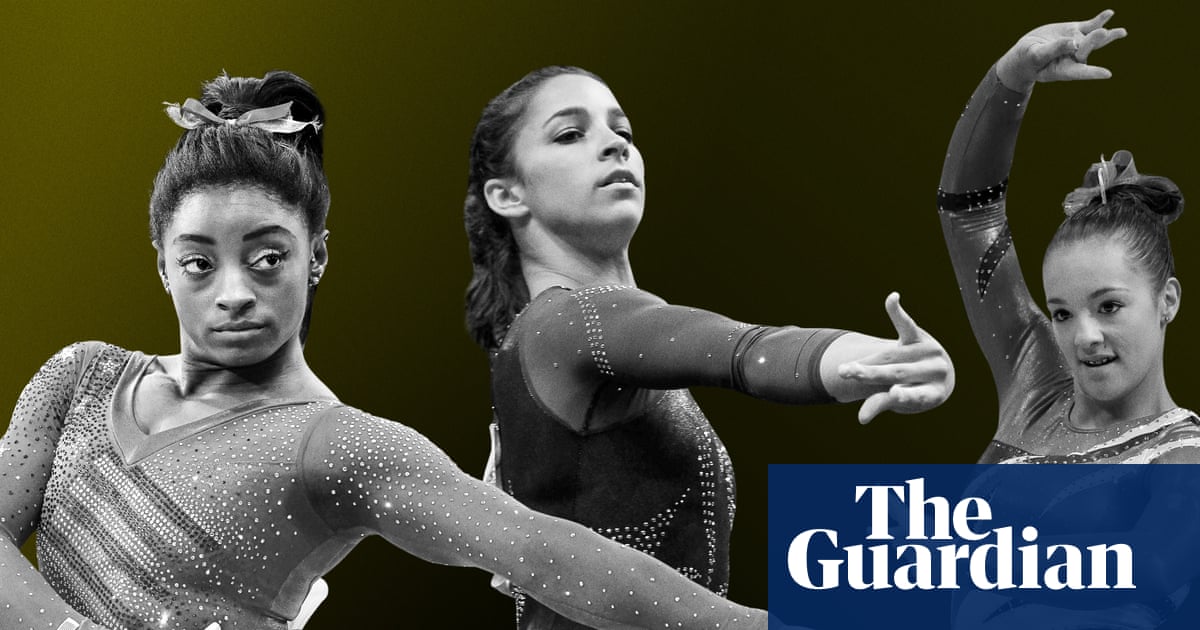

The sexual assault scandal rocked gymnastics â but has pace of change in the sport been too slow?
Former USA team doctor Larry NassarâÂÂs 2018 conviction sparked a global reckoning in gymnastics, yet gymnasts say they are still being let down
It has been 10 years since the Indianapolis Star published allegations of sexual abuse by Larry Nassar, the former team doctor for USA Gymnastics, setting off a chain of events that would lead to a reckoning for the sport. Hundreds of women came forward with their own allegations against Nassar, who also worked at Michigan State University, leading to his conviction and jailing.
The exposure of his crimes sparked a wider investigation into how gymnastics had allowed predators to abuse young athletes around the world. While Nassar was the worst recorded case, it emerged many other countries had questions to answer about the failure to protect victims from not only sexual but physical and emotional abuse. But a decade later, on a large houseboat moored in Rotterdam three tram stops away from the Ahoy Arena, where the World Gymnastics Championships are taking place this week, survivors and advocates raised fears about the slow pace of change.
The impact of the Nassar case was seismic, not least because of the decision of Judge Rosemarie Aquilina, on agreeing to NassarâÂÂs plea deal, to allow his victims to have their say in her courtroom. People tuned into AquilinaâÂÂs courtroom from all over the world to watch as 169 people took to the stand across seven days, delivering blistering, emotionally charged and brave testimonies of NassarâÂÂs abuse and the impact of that abuse. Aquilina sentenced him to up to 175 years in jail with other convictions, federal and state, making a total of 300 years to life.
âÂÂI know, dealing with so many victims, that when they speak publicly you see them shed their pain and get taller. You see them have a relief, an automatic release,â says Aquilina, perched on a seat in the helm of the boat. âÂÂThe most interesting thing was that at first I had a list of maybe a dozen names who wanted to speak, then it was 20, then it was 30, and then it got up to 80, 100, etc.

âÂÂWhat happened was that one girl empowered the next, who empowered the next. It was the beginning of their healing because they felt finally heard and believed, in a safe space, and they got to tell him to his face, eyeball to eyeball: âÂÂYou hurt me. I am not a number, I am a name, how dare you?âÂÂâÂÂ
âÂÂNassar constantly wanted control. He wanted to continue to control me, to control the girls, and to say: âÂÂLook what IâÂÂve done. I took the plea for youâÂÂ. That was constant ⦠Did he deserve my respect? No. Did he give me respect? No. Did he give any of the victims respect? No. He never owned it. That infuriated me. It should infuriate everyone.âÂÂ
Among the victims motivated to speak after hearing othersâ statements was the Olympic gold medallist Aly Raisman, who was excoriating in blaming USA Gymnastics for enabling Nassar. She was joined by fellow gold medallist Jordyn Wieber, Olympic bronze medallist Jamie Dantzscher and former US national champion Mattie Larson. The mother of the athlete who first complained about Nassar, Maggie Nichols, read out a powerful statement on her behalf. Simone Biles, the most famous gymnast of her generation, revealed she was a victim on social media and later testified publicly in front of the US Senate Judiciary Committee.
Two years after NassarâÂÂs sentencing, a documentary film named after Nichols, called Athlete A, was released, shining a spotlight on the traditional coaching system of compliance, fear and silence and how it allowed Nassar to operate. The documentary opened the global floodgates.
Kim Shore, who was a gymnast in Canada in the 1980s and âÂÂexperienced all forms of abuse, but also all forms of joyâÂÂ, was then on the board of directors of Gymnastics Canada, the national governing body, after stepping into governance when her own experiences and direct intervention had failed to prevent the cycle of mistreatment repeating with a family member.
âÂÂI absolutely love the sport. I love how it feels in my body. I love so many aspects of it. And yet I spent most of my time surviving it,â she says.

Shore, who is an independent safe sport advocate, says of the impact of the Nassar case: âÂÂI was floored, understanding: âÂÂOK, I wasnâÂÂt a bad kid, I wasnâÂÂt a bad gymnast, this is why I was treated that way, itâÂÂs endemic.âÂÂâÂÂ
Yet the reaction from the organisation was âÂÂabsolutely lackingâÂÂ, says Shore. âÂÂI remember I sat and watched those girls tell their story in the courtroom and I just bawled. I encouraged the board members that I was associated with to watch it as well.â She does not believe any of them did.
Eloise Jotischky, 23, who at the end of last year won the first civil case against British Gymnastics for the abuses she suffered in the sport, says the impact of the film was being able âÂÂto articulate what youâÂÂve been through and find the terms to understand and talk about your experienceâÂÂ.
âÂÂItâÂÂs very hard to explain it to people who are not within that culture, that sport,â she says. âÂÂThe only way I can really describe it is that itâÂÂs sort of like a cult in a lot of ways. ItâÂÂs a very closed system, youâÂÂre very isolated, in a lot of cases youâÂÂre pulled out of school, youâÂÂre removed from your friends, youâÂÂre travelling to competitions all the time and youâÂÂre deprived of a normal social life. IâÂÂd say itâÂÂs very similar to a coercively controlling relationship in a domestic setting, thereâÂÂs a lot of parallels there, but youâÂÂre a child, so thereâÂÂs the duty of care issue as well.âÂÂ
Jotischky stopped training at 14. âÂÂBy the end, it wasnâÂÂt joyous. I think I hated it. You just blame yourself and you think that youâÂÂre the problem, until Athlete A comes out. That was about sexual abuse, but the underlying themes of Athlete A are about the physical and emotional abuse, the non-contact physical abuse, which made it get to that point. ThatâÂÂs what all resonated.âÂÂ
At the same time, the life of former British gymnast and athlete Claire Heafford was in transition. She was splitting from her husband, leaving her dream job and taking up wrestling. âÂÂThose major changes were partly taking place because I hadnâÂÂt yet realised IâÂÂd been so badly abused and that I had some psychiatric issues,â she says.
âÂÂI got into professional wrestling when I saw it and felt very drawn to it. I didnâÂÂt really understand why, but itâÂÂs a performance art that is largely about the performance of masculinity and the violence is clear and obvious. I was really attracted to that being the inverse of my own experiences. I couldnâÂÂt understand that at the time. I was like: âÂÂIâÂÂve gone mad, IâÂÂm 36, IâÂÂm learning to be a Mexican wrestler. IâÂÂm splitting up with my husband. What the fuckâÂÂs gone wrong in my life?âÂÂ
âÂÂIt was only when Athlete A came out that the penny dropped.âÂÂ
The documentary made Heafford want to act; she decided to set up Gymnasts for Change, an alliance to bring about safer sport. As the head of Gymnasts for Change International, she brought together the advocates and survivors in Rotterdam.
âÂÂAthlete A was seismic. It came out just as Me Too had started,â she says. âÂÂOn the one hand, Athlete A showed how awful the sexual abuse was and on the other it demonstrated to everybody in the world that gymnastics was a coercively controlling environment built on control and power. It showed that was just what the sport was, that everybody in it had experienced it and that they almost believed that it was necessary.âÂÂ

The Nassar case triggered a series of reports and new measures in the US including the FBI acknowledging its handling of the case was âÂÂinexcusableâ and Congress establishing the US Center for SafeSport. That organisation has since faced heavy criticism. USAG went through four presidents in less than two years, said it would adopt 70 of the recommendations in an independent report into preventing sexual abuse and set up an Athlete Bill of Rights. USAG now says athlete safety has been its âÂÂtop priority since establishing a new board of directors and leadership team in 2018-2019âÂÂ. It emphasises that âÂÂa culture of safety is something that has to be worked on every day, at every levelâÂÂ, requiring all adult USAG members to be trained in safeguarding. Eight members of the board are former elite athletes and one seat is dedicated to that of a survivor.
The case also inspired athletes around the world to speak up about their own experiences of abuse, including in Australia, Brazil and Britain. In Britain, an independent review led by Anne Whyte QC found that physical and emotional abuse were systemic, leading British Gymnastics to launch a 40-point plan aimed at changing the sport. That included a zero tolerance approach to abuse and a gymnast-coach led environment where âÂÂboth feel empowered to create safe, positive and fair experiences at every levelâÂÂ.
Such an environment is something Aimee Boorman, who is Simone Bilesâ former coach, has spent her career advocating for. Boorman channelled her anger at her own experience of negative coaching as a child gymnast into her coaching philosophy. âÂÂI knew that I never wanted to make another child feel the way that I felt as a child. So, that was the basis of everything,â she says. âÂÂSo many times I was told that I wouldnâÂÂt be successful because I was too nice. I was like: âÂÂWell, then I guess IâÂÂm not going to be successful by your metrics, your standard, your qualifier for successâÂÂ. For me, success is having happy, healthy athletes who want to put their children in gymnastics because they have such a good experience.

âÂÂThen, I went from being too nice to just being lucky that I had Simone, sheâÂÂs successful and IâÂÂm successful because I was lucky that I had her. No, the reality is that Simone never would have gotten to where Simone is without the training she had from me and the other coaches that she had growing up. So, IâÂÂve just had to hold on to my core beliefs.âÂÂ
Across Europe, too, gymnasts have spoken out to force change. Former Dutch gymnast Petra Witjes and GermanyâÂÂs Adina Hausch document falling out of love with the sport because of their experiences.
âÂÂAt the elite club in the city I moved to it wasnâÂÂt fun anymore,â says Witjes, whose book, Silenced for Gold, is a memoir about the systemic abuses within sport and her battle to expose it. âÂÂMy dad taught me to let my voice be heard but in the gym it was the opposite.âÂÂ

Witjes was terrified of speaking to her parents, she was taught not to trust them. âÂÂI didnâÂÂt feel safe at first, because my coach always said that parents donâÂÂt understand elite gymnastics,â she says. âÂÂThey push your parents away from you. We were in total isolation.âÂÂ
Hausch says an injury that forced her from the sport was a relief. âÂÂI was on beam and I slipped with one leg and fell with the other on to the beam and then crashed down,â she says. âÂÂThe leg was pushed sideways so much that it broke. From the age of 13 I donâÂÂt think there was a week without training through pain. When I left after the injury, the worst injury IâÂÂve ever had, I was really happy that I didnâÂÂt have to go to the gym anymore.âÂÂ
In Rotterdam, survivors vary in age from their 50s to their teens; it is hard not to view the issues as systemic and global. And ongoing. Charlotte Jacobs, who is only 18, quit the sport after suffering emotional abuse when training in the UK.
âÂÂIt got to a point where I was like: âÂÂI canâÂÂt do it anymoreâÂÂ,â she says. âÂÂMy experience was strange because it wasnâÂÂt physical, it wasnâÂÂt sexual, but it was emotional. You were ridiculed all the time, constantly. You werenâÂÂt allowed to cry, you werenâÂÂt allowed to talk, you werenâÂÂt allowed to sit down, if you were caught leaning on anything youâÂÂd have to run, you needed permission to go to the toilet, you needed permission to drink, and itâÂÂs that sort of really controlling, consistent and dismissive behaviour so that no one really felt safe that was prevalent.âÂÂ
Shore, who is a member of G4C Canada, argues that if a big list of cultural reforms comes from the top, that is then normalised within the national federations and then the clubs âÂÂall the way down to grassroots, then I think we would see faster reform and less resistanceâÂÂ.
âÂÂThe more I learn that the stories are consistent internationally the more it says something about the need for World Gymnastics to take a leadership role,â she says âÂÂThe treatment across the world is pervasive and coaches are moving from space to space, country to country, more frequently now or theyâÂÂre not even staying in this sport, theyâÂÂre moving into other sports, especially if theyâÂÂve come into trouble.âÂÂ
World Gymnastics has moved to address the cross-border issue within the sport at least, publishing a new safeguarding policy last week which notes that the Gymnastics Ethics Foundation, which it launched in 2019 and has handled nearly 500 reports, has the power to extend sanctions imposed by member federations providing they are compatible with the rules of the governing body and general principles of law.
Shore believes the pace of governing bodies fully engaging with the change needed has been slow, however, âÂÂbecause to admit that there is harm going on in the sport puts organisations into a liability risk. Also, they have been able to deflect responsibility for so long. They donâÂÂt know how to solve it and they are getting pressure from all sides. By putting their head in the sand for literally 50 years weâÂÂve now got to a crisis.âÂÂ
A statement from World Gymnastics said: âÂÂCreating a safe environment for current and future generations of gymnasts is a responsibility that World Gymnastics takes extremely seriously and shares with all stakeholders across the sport. The priority for World Gymnastics is not only to strengthen safeguarding rules and policies, but to ensure that they lead to meaningful changes in everyday practice.âÂÂ
Heafford alleges that British Gymnastics isnâÂÂt entering into meaningful engagement and collaboration with Gymnasts for Change and other survivors in the sport and says that she finds that âÂÂextremely frustratingâÂÂ. She is also hugely critical of the processes gymnasts have to go through in raising a complaint against a coach or gym and what resolution looks like, saying: âÂÂIn six years, we havenâÂÂt had one outcome that we can stand by and say that was a good outcome.âÂÂ

British Gymnastics, however, insists it has engaged with the organisation regularly which has âÂÂhelped shape its approachâÂÂ, including a meeting with G4CI and others in Rotterdam as well as introducting a new complaints and disciplinary process âÂÂto improve transparency and fairnessâ .
Minky Worden, of Human Rights Watch, fears the situation could worsen. âÂÂSport is getting younger. ThereâÂÂs a youth Olympics about to launch in Senegal. ThereâÂÂs going to be thousands of athletes, every one of them 18 or younger. TheyâÂÂre all children and theyâÂÂre at a very elite level,â she says. âÂÂThese children are being monetised and they are not protected because we know the systems are not in place to protect them.âÂÂ
Hausch wants to see âÂÂmeasurable boundaries, for example increasing the competition age to 18,â she says. âÂÂI would root for Germany not to join youth international competitions. Having a 13-year-old do youth European championships is the same as doing it as an adult, itâÂÂs the same amount of work you have to put in, the same amount of pressure, itâÂÂs not a softer version, itâÂÂs the full version, and it doesnâÂÂt make sense.âÂÂ
All agree there needs to be more done to help athletes advocate for themselves and others. Jacobs says: âÂÂThere needs to be a sort of package of what to look out for. I think there needs to be more training for coaches in terms of mental wellbeing, disability, neurodiversity, all that, alongside what are and are not best practices.
âÂÂWe need more regulation,â she adds of the British landscape. âÂÂLook at the new guidance thatâÂÂs come out about keeping children safe in education. ThatâÂÂs all been updated. WhereâÂÂs the guidance for anything sports-wise, extracurriculars, whether itâÂÂs swimming, gymnastics, dancing, anything like that?âÂÂ
British Gymnastics says that it âÂÂrecognises there is always more to doâ but that prevention is âÂÂat the heart of our work. We have overhauled learning and development ⦠and set clearer policies and guidance to drive meaningful change.â It says a coach developer network, regional teams and safeguarding and welfare officers in every club support communities.
Jotischky, who is now studying law off the back of her experience, says there are changes needed there too. âÂÂThe legislative gap that exists is astonishing. You have the 2015 Serious Crime Act section 76, which talks about coercive control, but itâÂÂs limited to domestic and familial relationships. Then you have the 2021 Domestic Abuse Act which lists personally connected individuals as only being family members. In a coach-to-athlete relationship where you spend 30 hours a week in the gym with your coach, and some gymnasts even go and live with their coach because theyâÂÂve formed such a close relationship, of course coercive control and emotional abuse can happen but itâÂÂs not recognised within the law. So, we have very little legislative ground to deal with the most serious cases in particular.âÂÂ
Listening to this group of women in Rotterdam, what becomes clearer is that while federations, to differing degrees, make changes in the name of athlete safety, survivors are still being failed. Meanwhile, these survivors and knowledgeable advocates remain isolated from the very structures that should be embracing them and channelling their knowledge and understanding of their experiences into the changes necessary to ensure the future health of the sport.
Information and support for anyone affected by rape or sexual abuse issues is available from the following organisations. In the UK, Rape Crisis offers support on 0808 500 2222 in England and Wales, 0808 801 0302 in Scotland, or 0800 0246 991 in Northern Ireland. In the US, Rainn offers support on 800-656-4673. In Australia, support is available at 1800Respect (1800 737 732). Other international helplines can be found at ibiblio.org/rcip/internl.html