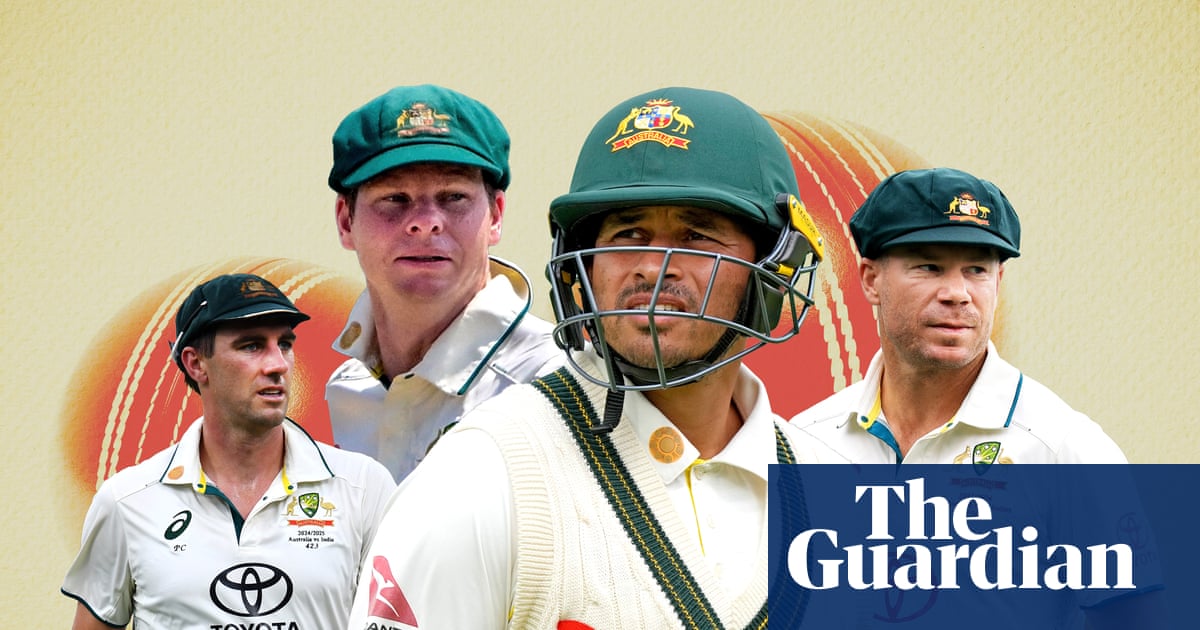

The saga that never goes away: wounds of Australian cricket reopened as ball tampering resurfaces
With the issues raised in Cape Town still to be resolved, Usman KhawajaâÂÂs book threatens to damage reputations and divide cricketâÂÂs tight community
Australian cricket thought it had left its great shame behind, burying it in the days after Cameron Bancroft was shown on the big screen in Cape Town putting sandpaper down his pants.
Cricket Australia acted swiftly at the time, suspending the young batter, his captain Steve Smith and vice-captain David Warner. Too swiftly, according to Usman Khawaja, whose book released on Tuesday criticised the investigation while Warner called it âÂÂrushed and botchedâÂÂ.
KhawajaâÂÂs pursuit of justice for his childhood friend Warner has not just reopened old wounds. It threatens to destroy the reputations of Australian cricketâÂÂs most revered, while dividing the tight community into separate camps and igniting issues still to be resolved almost 10 years after the humiliation of Cape Town.
âÂÂWhat we saw was unbelievableâÂÂ
Everyone knew ball-tampering was widespread, an arms race that was pushing the boundaries of what not what was acceptable within the rules, but what could be enforced by umpires and officials with little desire to expose the practice.
South AfricaâÂÂs Faf du Plessis had already been punished twice before the 2018 series, including two years before in Hobart when Australian cameras caught the batter applying saliva to the ball with a mint in his mouth. Whether the use of sandpaper â which both dried and roughed up the ball â was any worse than using other substances, like the zipper for which Du Plessis was fined for using in 2014, was beside the point.
In his book, Khawaja claimed that knowledge about the use of sandpaper in the Australian dressing room extended beyond the three penalised, and even included a coach who approached Bancroft and Khawaja in Cape Town. Then-head coach Darren Lehmann told ABC last weekend he was not aware of the conversation happening.

KhawajaâÂÂs book is not specific about which other players knew of the plot, but detailed a moment in the previous Test when, after one player experimented with sandpaper on a ball in the dressing room, âÂÂwhat we saw was unbelievableâ and âÂÂeveryone had a look at the ball and was laughing their heads offâÂÂ.
Khawaja also offered a quote from an unnamed bowler later in that match after a wicket: âÂÂGuys, itâÂÂs going heaps now. Just donâÂÂt do anything else to it, because itâÂÂs silly how much itâÂÂs going.âÂÂ
âÂÂWe did it as a team, so we cop it as a teamâÂÂ
Cricket is a team sport, with rites and traditions within dressing rooms that band one side against others. Success cannot be achieved without individual brilliance, however, creating a tension that can divide teammate from teammate, coach from player and batter from bowler.
Khawaja was not clear about which players knew of the sandpaper, but his account suggests at least some knowledge from others in the team. Warner said KhawajaâÂÂs account is âÂÂ100% accurateâÂÂ, and Bancroft told the Guardian in 2021 âÂÂwhat I did benefits bowlers and the awareness around that, probably, is self-explanatoryâÂÂ.
Khawaja recounted a conversation after the Cape Town Test with then-team manager Gavin Dovey, who is now the Cricket NT chief executive with a bright future in administration. He told him: âÂÂWe need to cop this as a team. We did it as a team, so we cop it as a team.â The book claims Dovey, who was contacted for comment, said Khawaja was âÂÂrightâ but that âÂÂtwo guys in the team disagreedâÂÂ.
âÂÂThis was the most disappointing part for me,â Khawaja wrote. âÂÂI knew who those two guys were, and it was ludicrous that, out of everyone, it was them. It showed me their true colours, though. When the going got tough, all they cared about was themselves.âÂÂ
Players urged to come forward
Cricket Australia acted swiftly in the days following, with investigators speaking with some players and handing out suspensions. Smith and Warner were banned for a year, while Bancroft received nine months.

Khawaja was scathing about it in his book, alleging he was not interviewed because he wanted to âÂÂfight for the three guys whoâÂÂd taken the blameâ but investigators âÂÂwanted to hear what they wanted to hearâÂÂ.
CA chief executive Todd Greenberg, speaking on Tuesday, said players were âÂÂurged to come forwardâ at the time, âÂÂand they had the opportunity to do so over these past eight years, and that remains the caseâÂÂ.
Harsh sanctions meted out
The International Cricket Council carried out its own process and sanctioned Smith, fining and banning him for one match, and Bancroft, who received a fine. Cricket Australia, following the investigation, found the three players had brought the game into disrepute and issued the more severe sanctions, described by Khawaja as âÂÂso disproportionate to the crimeâÂÂ.
In 1994, Mike Atherton held onto the England captaincy and avoided suspension after he was caught using dirt in his pocket while manipulating the ball during a Test against South Africa at LordâÂÂs. In 2010, PakistanâÂÂs Shahid Afridi was banned for two T20s for biting the ball. Du Plessis avoided suspension for his two ball-tampering charges.

In that context, Cricket AustraliaâÂÂs penalties were extraordinary. But if they were designed to stamp out the practice, there is an argument they were successful. âÂÂYou donâÂÂt see much reverse swing anymore, do you?,â Lehmann said at the weekend. âÂÂIn fact, you donâÂÂt see it. So I think the gameâÂÂs in a better place, but that doesnâÂÂt hide the fact that we did something wrong and we paid the price for it.âÂÂ
Lehmann has denied knowledge of the use of sandpaper and was not sanctioned by Cricket Australia, but resigned as coach at the end of the series.
The bowlersâ 2021 statement
KhawajaâÂÂs claims provide more context for the statement issued by the bowlers in Cape Town following BancroftâÂÂs 2021 interview with the Guardian, which will be compared with Cumminsâ contribution when he speaks.
Their full statement was:
We pride ourselves on our honesty. So itâÂÂs been disappointing to see that our integrity has been questioned by some journalists and past players in recent days in regard to the Cape Town Test of 2018.
We have already answered questions many times on this issue, but we feel compelled to put the key facts on the record again:
We did not know a foreign substance was taken onto the field to alter the condition of the ball until we saw the images on the big screen at Newlands.
And to those who, despite the absence of evidence, insist that âÂÂwe must have knownâ about the use of a foreign substance simply because we are bowlers, we say this: the umpires during that Test match, Nigel Llong and Richard Illingworth, both very respected and experienced umpires, inspected the ball after the images surfaced on the TV coverage and did not change it because there was no sign of damage.
None of this excuses what happened on the field that day at Newlands. It was wrong and it should never have happened.
WeâÂÂve all learned valuable lessons and weâÂÂd like to think the public can see a change for the better in terms of the way we play, the way we behave and respect the game. Our commitment to improving as people and players will continue.
We respectfully request an end to the rumour-mongering and innuendo. It has gone on too long and it is time to move on.âÂÂ
What happens next?
Despite the bowlersâ stated wish in 2021 to move on, this saga may be one that never goes away. Although Cricket Australia will not reopen the investigation, Greenberg believes there will always be differing accounts of those dark days in Cape Town.

Cummins, as the Australian red-ball captain, and his fellow bowlers will not be able to avoid making public statements on the matter this summer as they take on New Zealand in a four-Test series. Nor will Smith, who remains one of AustraliaâÂÂs best batters, and Mitch Marsh, who was in the Cape Town side and is now AustraliaâÂÂs ODI captain. Marsh is expected to speak to media on Thursday in Perth ahead of the white-ball series against England.
Recent days have also sharpened criticism of Khawaja, including from those within the cricket community. The batter has always been outspoken, but his book has rankled many. He has already sought to counter criticism that he is trying to make money from the controversy.
Bancroft was met by reporters at Melbourne airport on Monday and kept his cards close to his chest. âÂÂIn regards to UzzyâÂÂs book and I guess the media thatâÂÂs kind of come about there over the last few days, I donâÂÂt have any further comments to add,â he said, before adding: âÂÂAt this stage.âÂÂ