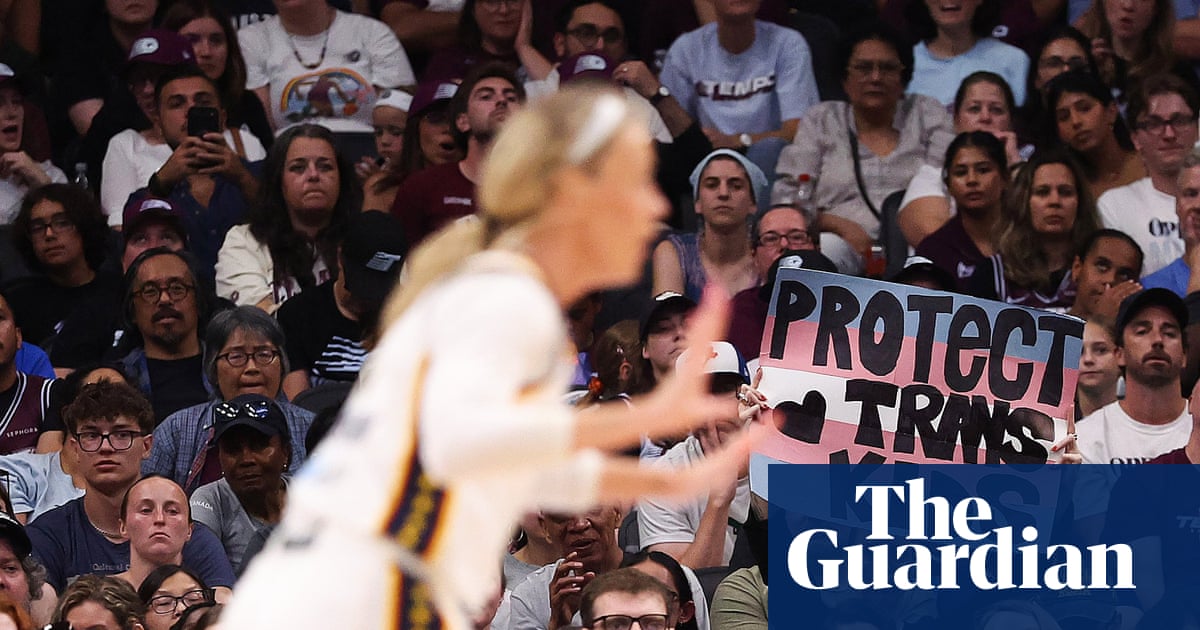

The right is pushing its anti-trans fury on the WNBA. Players and fans are loudly pushing back
At WilkaâÂÂs Sports Bar in lower Manhattan, a crowd of mostly LGBTQ+ fans was fired up during a WNBA playoff game between the New York Liberty and the Atlanta Dream. When the LibertyâÂÂs Jonquel Jones blocked the DreamâÂÂs star forward Angel Reese at the basket, then chest-bumped her â leading teammates to separate them â the bar erupted in cheers. One fan quietly joked: âÂÂNow kiss!âÂÂ
âÂÂI love strong women, and I love supporting strong women,â said August, a trans organizer and Liberty fan who asked to go by their first name for privacy reasons.
The scene at WilkaâÂÂs, where a sign reading âÂÂtrans people belong in sportsâ hangs prominently behind the bar, exemplifies much of the WNBA fanbase, which, like the league itself, is heavily queer. But many wouldnâÂÂt know that from reading recent headlines about the league. Since the summer, the WNBA has become the target of rightwing activists pushing their agenda to ban trans women and girls from sports. The league has no explicit rule barring or permitting trans women and there are no trans women in the WNBA.
In response, many of the leagueâÂÂs players and fans have made clear they donâÂÂt align with anti-trans rhetoric. Several players, like the Chicago SkyâÂÂs Natasha Cloud and the Golden State Valkyriesâ Gabby Williams, have voiced their support for the trans community; Williams said in May that she would âÂÂwelcomeâ a trans teammate anytime.
Fans, too, have loudly pushed back â holding rallies, bringing signs into the games and even defending their sports bars, meant as a safe space for women and LGBTQ+ fans, from aggression. As the WNBA finals between the Dream and the Golden State Valkyries tip off Saturday, the pro-trans, pro-Black, pro-queer fanbase wants to remind others of the original ethos of womenâÂÂs sports: inclusion and community.
âÂÂItâÂÂs not about protecting womenâÂÂs sports,â Allie, another Liberty fan at WilkaâÂÂs who asked to go by their first name, said about the anti-trans backlash facing the WNBA. âÂÂAnd I feel better knowing the fact that the majority of the fanbase is standing up, saying: âÂÂNo, this isnâÂÂt right.âÂÂâÂÂ
Why the anti-trans backlash took off
The anti-trans fury surrounding the WNBA took off in July, when Sophie Cunningham, a backup guard for the Indiana Fever, said in an interview with ESPN that she wanted to âÂÂprotect young girls in a locker room, or young girls in sport who shouldnâÂÂt have to go against biological menâ â an anti-trans dog-whistle used to misgender trans women. Soon after, two former NBA players declared their intention to enter the WNBA draft. (The league said they were ineligible and condemned the behavior.) It resulted in a media frenzy, with Fox News airing more than 200 segments about the league in July, the majority of which were about CunninghamâÂÂs comments.
The sportswear company XX-XY, which lobbies womenâÂÂs sports leagues and state legislatures to exclude players based on their assigned biological sex at birth, also rode the Cunningham media wave. Its shirts bearing the brandâÂÂs name â referencing biological sex chromosomes â have become recognizable by players and fans as an anti-trans statement at games and events. In August, the companyâÂÂs founder was photographed courtside in XX-XY merch with Cunningham and the conservative anti-trans commentator Riley Gaines. XX-XY supporters and influencers have also gathered outside Fever games with signs calling to âÂÂprotect girls sportsâÂÂ. XX-XY did not respond to the GuardianâÂÂs request for comment.
âÂÂWe know that this is really about trying to rile up a base of folks who already show some sort of anti-gender ideology,â meaning those who oppose the rights of women and LGBTQ+ people, said Anna Castro, deputy communications director at the Transgender Law Center.
WhatâÂÂs happening in the WNBA is representative of a broader rightwing push to roll back rights, healthcare and protections for trans people across the US. In June, the conservative-majority supreme court upheld the constitutionality of states banning trans girlsâ participation in school sports. This November, several state ballot initiatives claim to be about âÂÂprotecting girlsâ from âÂÂbiological malesâ in sports but effectively bar trans students from playing. A ballot measure in Washington, for example, would require all girls to âÂÂverifyâ their identity by a doctor.
And yet these policies donâÂÂt align with public opinion. A June poll from the National WomenâÂÂs Law Center found that voters do not support the supreme court setting official policy for trans athletesâ participation in sports, nor are they in favor of reversing state protections for trans student athletes.
Resistance has played out at basketball arenas. When the Fever played the Seattle Storm in late July, Storm co-owner Celeste Keaton confronted two XX-XY-sponsored courtside attendees and, according to one, told them âÂÂJesus loves everyoneâ and âÂÂstop pulling this shitâÂÂ. The WNBA then fined and suspended Keaton.

When a group in XX-XY shirts arrived at the womenâÂÂs sports bar Sports Bra in Portland, Oregon, in September, management asked them to leave based on its policy of removing anyone wearing messaging targeting the community. âÂÂAt The Sports Bra, our mission is simple: support, promote, and empower ALL girls and women in sports,â the barâÂÂs owners posted on Instagram. âÂÂTo be clear: trans girls are girls, and trans women are women.âÂÂ
When a different group of rightwing anti-trans protesters arrived at the Sports Bra two weeks later, a group of neighborhood residents showed up in defense of the bar and its patrons; the rightwing protesters eventually sprayed the counter-protesters with bear spray.
The anti-trans harassment creates an environment where some fans said they are scared to go to games alone, but feel safer knowing other queer and trans fans are organizing to take a stand.
Similarly, WNBA players are struggling to feel protected against increased racism and harassment from viewers. Last season, men started a trend of throwing dildos on the court during games, instigated by cryptocurrency investors; this season, it continued, with crypto influencers citing the conversation around trans women and the WNBA as their motivation. Black players like the FeverâÂÂs Kelsey Mitchell report facing constant racist invective on social media. Players and viewers have criticized the league for not doing more to combat the environment. The WNBA did not return the GuardianâÂÂs request for comment.
Racist and anti-trans harassment are often intertwined, Castro said: âÂÂThe trans youth and cis youth that get targeted with sports bans are trans girls of color, and particularly Black girls. I think that itâÂÂs incredible that there have been fans that have said so vehemently: âÂÂThis is not what weâÂÂre about.âÂÂâÂÂ
How fans are pushing back
In August, Turning Point USA planned a pro-Cunningham rally outside the Fever game against the Liberty at Barclays Center in Brooklyn. So a group of organizers planned a rally of their own to show support for womenâÂÂs sports and trans rights. Before the game, they distributed signs and T-shirts made by the Transgender Law Center that said:âÂÂTrans people belong hereâÂÂ. They also danced and held a party.
In the Bay Area over the last three months, parents of trans kids have organized poster distributions outside Valkyries games, handing out signs thanking Williams and coach Natalie Nakase for their outspoken support for trans people. TheyâÂÂve also used the signs to surround anti-trans protesters who show up.
According to Arne Johnson of Rainbow Families Action, the groupâÂÂs efforts to support trans youth in sports started with trans high school track star AB Hernandez, who was subjected to an intense harassment campaign â and is a hero to his own trans daughter. Holding rallies at games has been much more joyful than testifying at state hearings against anti-trans advocates who speak cruelly to their childrenâÂÂs faces, he said. He didnâÂÂt need to organize fans to take a stand.

âÂÂThey have a visceral understanding of what this is about,â he said. âÂÂThat really crystallized what this WNBA fandom means: they were out there to protect each other.âÂÂ
He was especially touched by how the fans saw trans youth as part of their community. The group has since set up Minnesota Lynx fans with signs and merch; for the LynxâÂÂs game against the Fever in August, head coach Cheryl Reeve wore a âÂÂTrans Kids Belongâ shirt.
On Saturday, organizers from California and Washington will host a rally outside the finals game between the Valkyries and the Dream in San Francisco and at womenâÂÂs sports bars in both states. TheyâÂÂre using the opportunity to call attention to a ballot measure in Washington barring transgender girls from K-12 girlsâ sports teams.
High schooler Jules, a trans athlete, said that during rallies outside the Valkyries game, passersby would ask her for signs and shirts, or even to take a picture with her, wearing her cape of a trans flag. It reminds her of what she loves most about sports: community.
âÂÂIf we got completely destroyed in a game, I would not care,â said Jules. âÂÂBut if someone was being mean or being unsportsmanlike or something like that, it breaks the community of it.âÂÂ