
The life, death and improbable rebirth of LAâÂÂs most beloved diner
For decades, it served pancakes, hash browns and steaks to hungry Angelenos. Then came closure, and a city mourned â but now the Original Pantry is back
Sometimes, an old-school American diner is just a diner. And sometimes, like the Original Pantry in downtown Los Angeles, it feels like the heart and soul of a city, a bellwether of good times and bad.
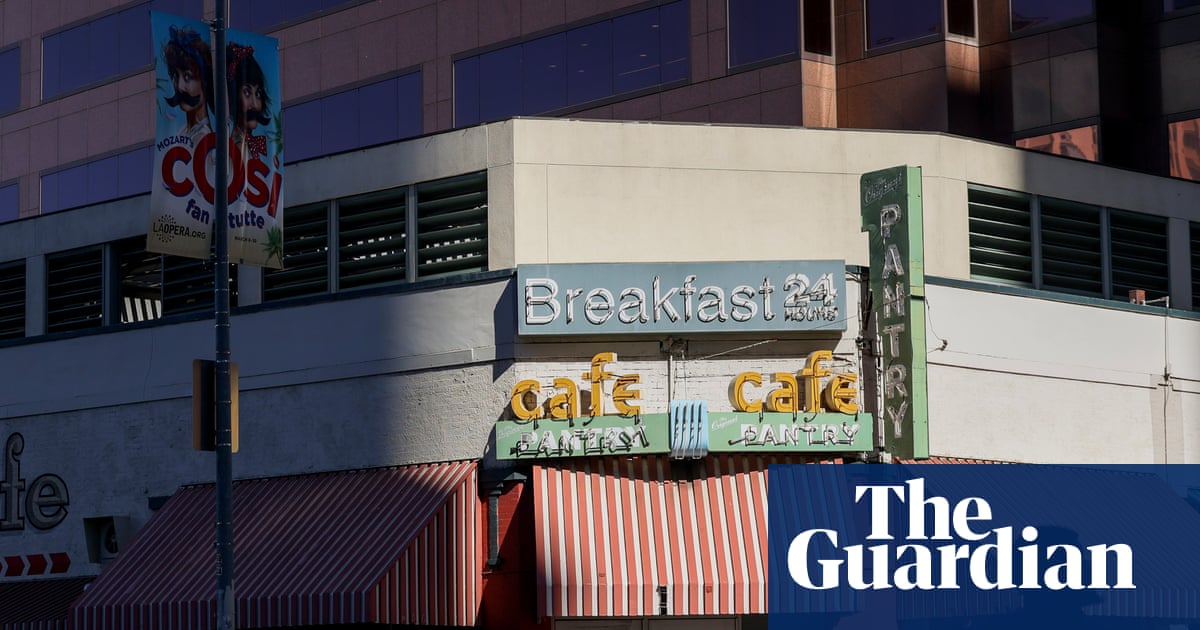
For decades it was famous for never closing. Located in a low-slung shotgun building on a busy corner, it fed politicians, movie stars, students, criminals and street bums around the clock, seven days a week. The doors had no locks, because the place had no need for them. The portions were huge, the prices dirt cheap, and many of the servers, in bow ties and white shirts, looked like extras from a Harold Lloyd two-reeler.
The diner survived speculative booms, depressions, an emergency relocation due to freeway construction, periods when downtown seemed to roll up its sidewalks at the end of the business day, and epidemics of homelessness, drug abuse and crime.
Long after the Pantry started to feel like a time capsule from another era â its Depression-era menu of pancakes, omelettes and steaks making no attempt to keep up with the evolving tastes of a global culinary capital â it clung on thanks to the determination of its businessman owner, Richard Riordan, who bought it during the Reagan era and went on to serve two terms as LAâÂÂs mayor.
Riordan wasnâÂÂt daunted when a 37-storey financial services tower sprang up on the next-door lot, or when a large corporate event space, LA Live, ate up much of the vacant land to the south and east. When the county health department forced the PantryâÂÂs first closure in 1997 after finding dozens of minor food safety infractions, Riordan rushed over from city hall and worked the phones himself until his beloved restaurant, now dwarfed by skyscrapers, was back open.

Still, the restaurant could not stave off decline forever. When Riordan died in 2023, the business was in a post-Covid funk it couldnâÂÂt shake, the staff was in an uproar over unpaid back wages and â the ultimate indignity â the kitchen had started making its once-fabled pancakes from a packaged mix.
It wasnâÂÂt long before RiordanâÂÂs heirs put padlocks on the door and had the police escort out the last of the workers, many of whom had worked there for decades. The local papers wrote obituaries, and Los Angeles plunged into mourning for another historical landmark run over by the relentless march of history.
And yet, this week, the Pantry has made the most improbable of comebacks.

It is no longer open around the clock. The hash browns no longer look like bricks that could feed a family for a week. But it is open once more, under new ownership and with a new mission as a nonprofit devoted to helping LAâÂÂs large homeless population. A dozen of its former workers have put their uniforms back on, giving the place much of its old flavor even as it seeks to define itself as something new.
âÂÂWhat I see,â LAâÂÂs mayor-elect, Nithya Raman, said at a raucous, packed opening ceremony on a rain-swept Thursday morning, âÂÂis a room full of people who never gave up hope.â Since the Pantry has no liquor license, everyone raised coffee mugs instead.
To the many fans who either attended with an invitation or stood in line in the pouring rain for a chance to be among the first ordinary diners to place their orders, the PantryâÂÂs reopening carries symbolic weight for the city as a whole. Restaurant union leader Kurt Peterson called it âÂÂone of the great Los Angeles love storiesâ â the romantic notion that in one spot, at least, all distinctions between the cityâÂÂs haves and have-nots melt away like butter in a pan.

The turnaround at the Pantry comes after a painful couple of years in which two foothill neighborhoods were wrecked by wildfires, the cost of living has soared, thousands remain homeless, immigration raids have torn apart families and communities, and retail businesses â including restaurants â have shuttered faster than new ones have been able to take their place.
âÂÂHopefully, this is a sign that the doom loop is finally reversing,â said the PantryâÂÂs new owner, Ukrainian American businessman Leo Pustilnikov.
Such optimism might have been less warranted if Pustilnikov had wanted to run the Pantry as a conventional business. Instead, he decided the only money-making part of the venture would be a digital billboard on the roof. For the restaurant itself, he turned to a local homelessness services provider called Hope the Mission and offered a roughly 50% break on the rent if in exchange they would bring the Pantry back and commit to ploughing any profits into helping homeless people get back on their feet.

It was not a difficult sell. âÂÂPancakes with a purpose,â was how Hope The MissionâÂÂs founder, Ken Craft, saw the concept, and he set about raising more than $1m to replace the PantryâÂÂs ageing kitchen equipment, update the tables and chairs so they would no longer be sticky with chewing gum and bacon grease, replace the black-and-white checkered floor, and rethink the menu for a city more cosmopolitan and eclectic than it was on opening day in 1924.
The Pantry still looks like its old self, with pictures of Marilyn Monroe and Humphrey Bogart on the wall, an old taxi phone, and a cashierâÂÂs cage taking up pride of place near the front door, even though the restaurant mostly uses hand-held credit card machines. The new operators have also left an area in front of the cage, an archeological showcase of sorts, where customers over the decades wore through 12 layers of flooring.
The eggs and hash browns no longer land like bowling balls in the dinersâ stomachs but come gently crisped on the edges. In a nod to LAâÂÂs multiculturalism, there are poblano chilis in the Denver omelette and Korean pickles in the coleslaw. For the first time, the Pantry now has an in-house baker producing a vanilla-bean cheesecake and a chocolate crunch cake that taste refreshingly light.
Unlike many American cities, which have slowly lost their fabled delis and diners, LA has a track record of putting up a fight whenever its culinary history is on the line. A similarly storied establishment, ColeâÂÂs, which once played host to HollywoodâÂÂs most notorious gangster, Mickey Cohen, and claims to be the home of an LA special, the French dip sandwich, had its own reopening after a threatened closure earlier in the week.

LangerâÂÂs Deli, the only fully unionized restaurant in town aside from the Pantry, has been making noises about giving up because of drug and crime problems around its MacArthur Park home, but its customers have so far successfully pleaded to keep the doors open.
For Raman, who is eager to turn the page on Karen BassâÂÂs unpopular single term as mayor and prove, once she takes office next month, that she can enact tangible change, the Pantry is a feelgood story too good not to latch on to. During her election campaign she visited twice and promised, if elected, to issue an executive order declaring that the Pantry serves âÂÂthe best damned pancakesâ in town.
Hope the MissionâÂÂs staff tried to hold her to that on Thursday â she smiled and shrugged when it came up â but her presence alone was a gift to a restaurant seeking to put itself back on the map. Along with Raman, the festivities attracted the city council member for downtown, a county supervisor and a former mayor.
âÂÂOur city is crying out for a comeback story,â said Rowan Vansleve, CraftâÂÂs deputy at Hope The Mission. And he made a vow of his own: that the Pantry, if successful, would go back to opening around the clock.
âÂÂIf people can come back in the wee hours and have a slice,â he said, pointing to the chocolate cake, âÂÂLA will be back.âÂÂ