
The Democratsâ Gaza reckoning
Failing to give Palestinians a voice at the 2024 convention came back to bite the party in this yearâÂÂs elections, writes Akbar Shahid Ahmed
The last time she gathered with fellow Democrats for a pre-election national convention, Georgia state representative Ruwa Romman got an unspoken message from the party establishment: on their biggest stage, she said, âÂÂThereâÂÂs room for an anti-choice Republican but not for PalestiniansâÂÂ. Democratic officials gave speaking slots to an architect of GeorgiaâÂÂs strict abortion ban and other conservatives critical of Donald Trump, but they denied a speech from Romman or other Palestinian Americans.
In Democratic primaries this year, voters rejected many of the party establishmentâÂÂs choices, including a 15-term congresswoman in Colorado and the chair of the Congressional Hispanic Caucus. The unlikely winners in all those races emphasized empathy and accountability for Palestinian losses in Gaza; Abdul El-Sayed, who won MichiganâÂÂs Senate primary, made opposition to the ardently pro-Israel group Aipac central to his candidacy. With 60% of potential Democratic voters in a May poll sympathizing more with Palestinians than Israelis and 48% saying the party has been too supportive of Israel, the base is eager for Democratic leaders to rethink unfettered US-Israel solidarity.
When Democrats previously held power, they chose to fuel Israeli violence and collective punishment against Palestinians for 16 months, while never censuring Israel for thousands of apparent violations of international law and American standards for countries receiving military aid, in Gaza, Lebanon, Syria and the occupied West Bank. Israel denies wrongdoing. Now thereâÂÂs a fierce competition over the shape of the partyâÂÂs evolution on Israel-Palestine among 2026 candidates and likely 2028 contenders. Harris, for one, has spoken with some critics of the Biden-Harris administrationâÂÂs Gaza policy as she has weighed another run. (HarrisâÂÂs team declined to comment for this story and ignored my interview requests for nearly two years.)
Such an effort by Harris will have to account for her role in BidenâÂÂs bear-hug of Israeli prime minister Benjamin Netanyah and the convention rollout. Party insiders I spoke with are skeptical of her ability to repair the damage. While some sympathetic to her say she was overpowered by Democratic party veterans and Biden aides, they note many of those figures still wield institutional power. Meanwhile, BidenâÂÂs team is largely dodging responsibility for GazaâÂÂs ongoing nightmare, blaming the ailing former president, Trump, Netanyahu or Hamas, and denying they could have done much differently.
Even as public sentiment shifts, Romman, the first Muslim woman elected to GeorgiaâÂÂs house of representatives, worries that party leaders could repeat old patterns. âÂÂSince the beginning of the genocide, there has been a hesitation to talk to Palestinians directly,â Romman said. âÂÂItâÂÂs been great to see some outreach to progressive leaders whoâÂÂve stood with us on this issue, but until there is actual dialogue with Palestinians, these efforts will continue to ring hollow.â The previous convention battle, she recently told me, âÂÂrepresented a disregard to the real devastation our tax dollars were causingâ and âÂÂlaunched a nationwide rebuke as weâÂÂve seen this past election cycleâÂÂ.
In covering the Biden White House and 2024 election, and in reporting out my new book, Crossing the Red Line, through nearly 175 interviews, I encountered insular decision-making, dismissal of critics, and, above all, deference to US-Israel ties. Those patterns helped both the administration and the Harris campaign fail at their stated goals, exacting a tremendous cost in Gaza and, eventually, in the US. Democrats now have a chance to adapt to a new playbook on Israel-Palestine.

When Harris became the partyâÂÂs presidential candidate in 2024, she had a similar opportunity. Netanyahu was scheduled to visit Washington just three days after Harris replaced Biden. It was by then clear that Netanyahu was consistently defying the administrationâÂÂs calls to limit casualties among Palestinians and seek peace, and that there was already a widening gap between the administrationâÂÂs embrace of Israel and views among Democrats, only 23 percent of whom by that point approved of the Israeli military campaign. On July 22, the day Netanyahu embarked for the US, the Israeli military intensified its grip on Gaza, once again shrinking its so-called safe zone for Palestinians, this time by more than 15%.
Harris had had little experience shaping Gaza policy, with one US official telling me her role in decision-making amounted to âÂÂno involvement whatsoeverâÂÂ. Still, some suspected she would differentiate herself from Biden. A Black and south Asian woman 22 years younger than the president, Harris spoke more extensively about Palestinian suffering, and her advisors, known to be skeptical of military-driven efforts to reshape the Middle East and of Netanyahu, would likely be empowered if she won. One US official told me those around Harris saw information about Gaza âÂÂimpacting herâÂÂ, noting that she had listened to the recording of five-year-old Hind RajabâÂÂs excruciating death. Additionally, Harris emphasized her career as a prosecutor â and legal probes kept demonstrating Israeli misconduct. Harris could be more sincere than Biden in applying international law to AmericaâÂÂs Israel policy and signaling US government lawyers should let the facts, not politics, guide investigations of whether Tel Aviv broke international and American law, people close to her and some observers believed. As NetanyahuâÂÂs visit neared, there were mounting signs she had political room to challenge him: Seven major unions â core Democratic supporters â called for ending military aid to Israel, and nearly half the Democrats in Congress said they would skip his speech.
The Israeli leaderâÂÂs visit was the first chance since October 7 for most in Washington to directly confront the person they were enabling: the unapologetic subject of corruption trials at home and international charges of genocide, crimes against humanity, and enforced starvation, a figure who regularly made a mockery of US government pleas.
Speaking in Congress to significant applause, Netanyahu got a show of his stature in America, helping stiffen his resistance to calls for moderation. Chris Van Hollen, a Maryland senator, told me that the Biden administration enabled a key line in NetanyahuâÂÂs address: in smearing anti-war Americans as âÂÂuseful idiotsâ manipulated by Iran, the Israeli leader cited a statement from Avril Haines, the director of national intelligence, on July 9 that said IranâÂÂs government was driving activism over Gaza. Van Hollen received a classified briefing from intelligence officials afterward that provided âÂÂextremely limited examplesâ of Iranian involvement, contrary to NetanyahuâÂÂs depiction.
Concerns among American officials about the administrationâÂÂs handling of intelligence had grown throughout the war: a senior administration official told me that as analysis and briefings were developed, before they flowed up the chain to Haines, they were often shaped by Brett McGurk and Amos Hochstein, two Biden aides known for trusting Israeli narratives about Gaza. (McGurk and Hochstein did not provide comment.) Some intelligence staff felt pressure to frame material to support the administrationâÂÂs preference of staying close to Israel, two former US officials told me. One described pervasive âÂÂself-censorshipâ among intelligence officials from junior analysts to those who were involved in assembling the presidentâÂÂs daily brief. In addition, the office of the director of national intelligence (ODNI) indicated to other government bodies that any inquiries about Israeli compliance with international law would have to come from the cabinet level, a senior intelligence official and a senior state department official both told me â thereby adopting a higher standard for colleaguesâ access to intelligence assessments than the ODNI had for other situations and partner countries.

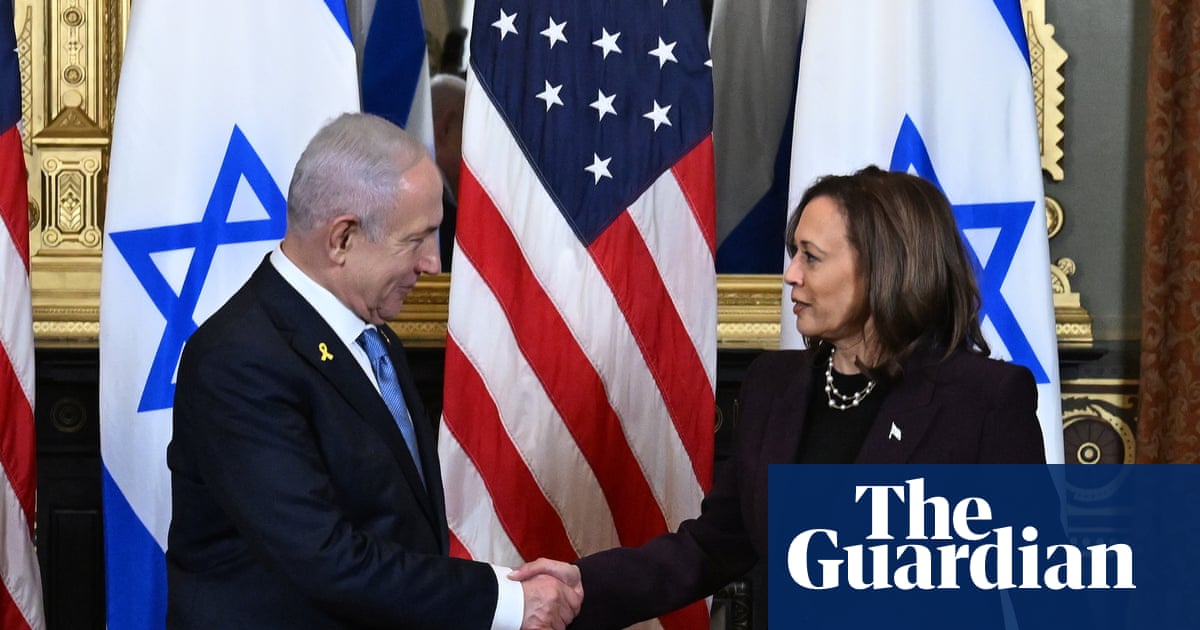
The day after his congressional address, Netanyahu met with both the president and Harris, who said afterward, âÂÂWe cannot allow ourselves to become numb to the suffering. And I will not be silent.â Israeli officials quickly leaked that even the hint of a rebuke upset Netanyahu â and tried to undercut Harris by deploying a line Washington and Tel Aviv used against even mild questioning of the US-Israeli approach, saying âÂÂdaylightâ between the countries aided Hamas and Iran. The next day, Netanyahu and his wife, Sara, flashed huge smiles as they posed with Trump at his Mar-a- Lago resort in Florida.
Anti-war activists hoped for a shift on Gaza. The vice president discussed the war with the mayor of the Arab-majority city of Dearborn, Michigan, and her aides invited Abbas Alawieh and Layla Elabed, leaders in the Uncommitted movement of protest voters in the primary season, to greet Harris ahead of a rally in Detroit on 8 August. In brief, separate conversations, each asked Harris for a meeting about halting weapons for Israel. Both told me she agreed, expressing genuine sympathy, per Elabed, and making Uncommitted feel it âÂÂsecured something after months of being totally ignored by Joe BidenâÂÂ, Alawieh said.
After the group announced HarrisâÂÂs âÂÂopennessâ to a meeting about an arms embargo, the campaign panicked. âÂÂYou donâÂÂt put words in the vice-presidentâÂÂs mouth,â a Harris aide later told me, describing the campaign team as âÂÂsuper fucking pissedâ and feeling they had âÂÂno choice but to slap them downâÂÂ. Philip Gordon, HarrisâÂÂs national security advisor, announced she did not support an embargo, emphasizing her support for IsraelâÂÂs defense. (Gordon later suggested that Biden had defied US law to sustain weapons shipments to Israel.)
The mood around the young campaign was hardly conducive to introspection among Democrats. âÂÂBefore Biden dropped out, we were so done with him. We didnâÂÂt care if we were going against him or not,â a Democratic congressional aide told me, but once Harris took over, the thinking shifted to âÂÂletâÂÂs win this and then weâÂÂll figure it outâÂÂ..â Israel-Palestine â an issue that was seen as hurting BidenâÂÂs image and was easy to write off as intractable â especially aggravated party loyalists, even when raised by those who agreed that Trump should not regain the White House. Lawmakers who had been calling for limiting American support to Netanyahu grew quieter.
The campaign itself remained, in the words of one Harris staffer, âÂÂ98% Biden-landâÂÂ, dominated by figures like chair Jen OâÂÂMalley Dillon. Campaign leaders resisted recommendations for Harris to deviate from Biden, on Gaza among other matters, citing the short span of her campaign and past vice-presidentsâ White House bids, the staffer recalled to me, saying influential Democratic consultants also argued that Harris, as a woman of color, might not be seen as strong.
Party conventions go beyond the nominee, expanding into a universe of lobbyists, activists, donors, journalists, and even celebrities â and given HarrisâÂÂs shock ascension and the sense Democrats were revitalized, this one became an especially hot ticket, with new attractions like a John Legend concert added to the mix. American complicity in violence abroad was not a big focus. By the time I arrived in Chicago, party leaders had tightly limited discussions of Gaza. Democrats had drafted their 2024 platform in July, before Biden quit, and though a possible arms embargo on Israel was the chief sticking point, the platform committee did not consider the question. On 19 August, the party adopted a platform echoing BidenâÂÂs talk of a ceasefire and a two-state solution without specifying how the United States could make Israel serious about those goals.
While operatives and campaign officials had decided the partyâÂÂs response to the antiwar groundswell would be fully symbolic, they struggled to offer even symbolism that suggested true respect â worsening the intraparty wound over Gaza by the conventionâÂÂs end. The plan began with the first-ever official Democratic national convention event on Palestinian rights. Elabed of Uncommitted was on the panel; her group had for weeks been asking Democratic officials to allow Gaza-focused remarks from the convention stage and had narrowed its request to two speeches, one from Tanya Haj-Hassan, a volunteer doctor, and one from a Palestinian American.
Party officials had a different, more upbeat focus, and a sense of finality. After the panel, two approached the Uncommitted representatives to praise the panel. Elabed responded that they were still waiting for an update about a speaker or a policy speech on Gaza. There was no such news, but the group was invited to head to the United Center, the site of the evening events, in convention-provided SUVs; there, remembered UncommittedâÂÂs Waleed Shahid, âÂÂthey handed us credentials as if they were $1m checksâÂÂ.
On Monday night, the first major reference to Gaza from the convention stage came from Alexandria Ocasio-Cortez, but the New York congresswomanâÂÂs speech credited Harris with âÂÂworking tirelessly to achieve a ceasefireâ without acknowledging the administrationâÂÂs continued shipments of US weapons to Israel, sparking backlash. Uncommitted had been winning over convention attendees, who called themselves âÂÂceasefire delegatesâ and sported keffiyehs, buttons, and T-shirts, subtly raising Gaza throughout the confab.

âÂÂHope is making a comeback!â Michelle Obama proclaimed from the stage on Tuesday, and onlookers to my left and right were visibly overcome, chanting, âÂÂYes!â after key lines of her speech. Snuck into a VIP area by a friend, I got a taste of how the establishment was feeling: Terry McAuliffe, the former Virginia governor and a prolific party fundraiser, was smiling wide, and we clinked glasses. Then I mentioned my reporting for this book, and he looked at me quizzically and asked whether, given October 7 and NetanyahuâÂÂs personality, Biden could really have done better. A speech was not guaranteed to shake top Democrats out of their convenient position â bashing the Israeli leader while absolving the United States, his enabler â but without any high-profile call for a change on Gaza, the party was unlikely to shift on its own.
The following day brought confirmation the party elite preferred comfortable, willful blindness. On that sunny Wednesday morning, I attended UncommittedâÂÂs daily press conference, at a park in view of the convention center but well outside its security barrier. Jeremiah Ellison, a Minneapolis council member and son of influential Minnesota attorney general Keith Ellison, emphasized that the anti-war organizers supported a speech by relatives of a Hamas hostage and saw remarks from a Palestinian American as providing âÂÂequal footingâÂÂ. The group had already narrowed its demand to just one speech.
That evening, I watched with members of J Street â the liberal Zionist group that had helped Democrats question Aipac and become a fixture in the party establishment â as the convention stage featured Jon Polin and Rachel Goldberg, whose Israeli American son Hersh was captured as he celebrated hi s23rd birthday. Support for his family helped them breathe, Polin said, âÂÂin a world without airâÂÂ. The remarks from the two were gutting. They also signaled that the crowd could handle discussion of the tragedy in Israel-Palestine. Hadar Susskind, another Zionist Democrat, who ran the group Americans for Peace Now, told me he encouraged that speech â and that he had sought a Palestinian American address too, because the convention denying a platform to someone from the anguished community on the other side of the war would be âÂÂimmensely stupid politics but also just wrongâÂÂ.
Yet that was the choice conveyed to UncommittedâÂÂs leaders on Wednesday night. Surrounded by allies â a tableau of Democrats rejected by their own tribe â Uncommitted leaders began a sit-in outside the convention center, saying Harris knew of their request and might relent. Throughout the night, multiple lawmakers endorsed the protest, while party operatives visited repeatedly, ensuring the demonstration was not dispersed and offering more meetings, yet still no speaking slot.
Uncommitted members heard a variety of explanations for what happened: that their push might overshadow HarrisâÂÂs big moment and that all the Palestinian Americans they mentioned had accused Israel of genocide, which could upset Jewish Democrats. Party figures repeatedly suggested that proposed speakers such as Romman did not pass vetting, a narrative that Romman told me especially stung because the convention had that night featured a speech from an anti-abortion Republican from her state â one of several conservative Trump critics given speaking slots. Later, UncommittedâÂÂs Shahid and Abbas Alawieh told me they heard plausible, revealing explanations from two more senior Democrats. On issues as delicate as Israel, decisions were made at a different level â among âÂÂthe people who paid for that stageâÂÂ, namely donors, one said. Another cited HarrisâÂÂs sensitivity toward Biden, particularly as he struggled to handle Netanyahu, and pointed to the network of uncompromisingly pro-Israel Democrats who could exacerbate âÂÂdisunity in the ranksâÂÂ, like Pennsylvania senator John Fetterman.
WhatâÂÂs certain is the group at the heart of the Democratic national convention comprised an opaque team of insiders, facing a challenging campaign but also fundamentally guarded; it was a parallel of the circle running Gaza policy at the Biden White House, and the similarities extended to defensiveness and ultimately sending a message that some lives mattered less.
Defenders of the decision against the speech argued last-minute uncertainty was not an option. The Palestinian American speaker might not fully reflect the DNCâÂÂs position or, if the speaker did, be âÂÂattacked as an Uncle TomâÂÂ, the campaign staffer later told me, saying Uncommitted could have claimed success by citing the panel on Palestinian rights but âÂÂchose to make a Palestinian American speaker the centerpiece ⦠they turned it into a loss.â Jeremy Ben-Ami, the president of J Street, called the choice âÂÂa missed opportunityâ but suggested the speech should have been planned weeks in advance â the route Uncommitted attempted. Fundamentally, most arguments revolved around what Shahid called the defining factor in the decision: âÂÂfear of a Palestinian voiceâÂÂ. Again, the disconnect between Democratsâ foreign policy and their claimed values seemed increasingly untenable.
Throughout the conventionâÂÂs final day, pressure for a Palestinian American speaker grew. On Thursday evening, I gathered with other reporters as the sun set and Uncommitted held its last press conference. Though they had not met their goal, Alawieh said he was âÂÂso proudâÂÂ, and the failure was not that of the anti-war movement but of the party: âÂÂI feel bad for them because they are out of step.â Shoulder to shoulder, the Uncommitted delegates eventually walked in to take their place among the party faithful.
Squashed between two cheering Democratic governors, I watched as Harris gave a nomination acceptance speech offering nothing new on Israel-Palestine but a promise to ensure the United States had âÂÂthe strongest, most lethal fighting force in the worldâÂÂ. Beth Miller, the political director of Jewish Voice for Peace Action, later called the moment the final proof the party was uninterested in anti-war votes: âÂÂI canâÂÂt imagine a message less appealing to people who are trying to push toward a human rightsâÂÂfocused foreign policy,â she told me. Tellingly, the campaign felt it covered all necessary bases: âÂÂIt got almost the entire Democratic party â except for Arab Americans,â the aide told me of the address months later. The end of the convention left Uncommitted members fearful and humiliated. After HarrisâÂÂs speech, thrilled Democrats filed out laughing and cheering; several told me they were fired up to help her win.
The morning after HarrisâÂÂs speech, I learned secretary of state Antony Blinken had appointed Mira Resnick â one of the administrationâÂÂs most steadfast supporters of US weapons for Israel â as the state departmentâÂÂs new top official for Israeli-Palestinian affairs. Breaking the news 14 hours after covering the decision about the Palestinian American speaker, I spotted a convergence between Washington and Chicago: as Gaza bled, Democratsâ rigidity about their policy remained strong enough to keep defining both the Biden administration and the Harris campaign.
Ahead of and during the convention, party officials resistant to concessions to Uncommitted suggested its demands were never clear, and that the outreach they made to antiwar groups should be sufficient. The spin could not obscure daily footage of US-backed- killing in Gaza or the evidence that after choosing a new candidate through tough introspection, Democrats were rejecting a similar process regarding the US-Israel relationship, even as they knew it was skewed and harmful morally, strategically, and politically. Privately, administration officials had long tried to distance themselves from Gaza decision-making by saying it was a matter of BidenâÂÂs old-fashioned thinking and instincts. The presidentâÂÂs grip had slipped, however, and those around him were still choosing a policy failing Palestinians. In the months ahead, leading up to the election, that choice would only encourage Netanyahu down a maximalist path and further strengthen TrumpâÂÂs election chances.