
The Colorado River is shrinking. What happens next?
Lake Mead is at its lowest level since it was filled nearly 90 years ago, Lake Powell also at a historic low
It was 42C (108F) degrees as we motored across NevadaâÂÂs Lake Mead in our rented pontoon boat. Colby Pellegrino with the Southern Nevada Water Authority wanted to show us something we shouldnâÂÂt have been able to see. She pointed toward a rock island where a large metal pipe was sticking out of the water.
âÂÂThat is the first intake that was built to bring municipal water into the valley in 1970,â Pellegrino said.
It is part of the system that takes water from Lake Mead and brings it to Las Vegas. It was designed to sit deep underwater.
âÂÂIt is no longer part of how we get water to Las Vegas because the lake has dropped too much for this piece of infrastructure to be operable,â Pellegrino told us.
Las VegasâÂÂs bet on drier future
Lake Mead is part of the Colorado River system and the largest reservoir in the United States. It is now at its lowest level since it was filled nearly 90 years ago. At less than 27% of its capacity, the cliffs surrounding the lake are marked by the dramatic decline. The white line of mineral deposits, or so-called âÂÂbathtub ringâ left behind from when the lake was last full in 2000, now soars 175ft above the current water level.
âÂÂIf itâÂÂs not a crisis, itâÂÂs crisis-adjacent,â Pellegrino said of conditions on the Colorado River.
Las Vegas gets more than 90% of its water supply from Lake Mead. The city has become a model for water conservation, treating and recycling nearly every drop that goes down a drain.
It also placed a big bet on its future. As lake levels began falling in the early 2000s, the Southern Nevada Water Authority spent $1.3bn building a new intake nearly 200ft deeper in the reservoir along with a new low lake level pumping station. At the time, some thought it was overly expensive insurance for a day that would never come. That day is now here. The âÂÂthird intakeâ is allowing southern Nevada to keep tapping the reservoir as water levels fall.
âÂÂI think it says that somebody had the climate projections right,â said Pellegrino.
A river under pressure
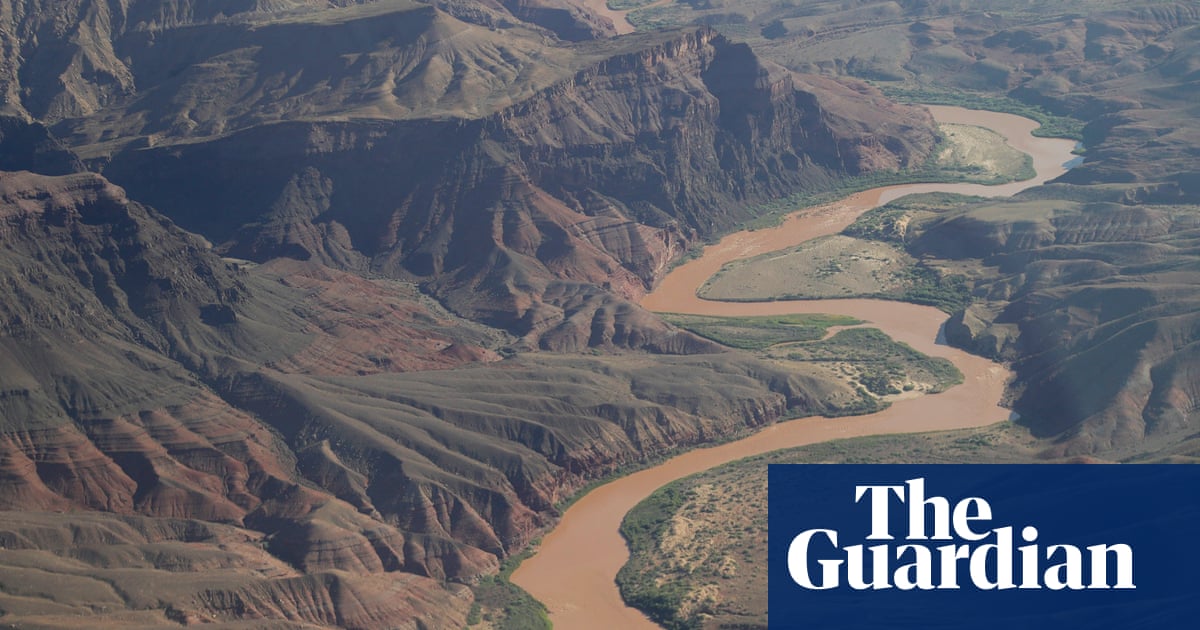
The Colorado River begins in small streams in the Rocky Mountains fed mainly by melting snowpack. It supplies water to more than 40 million people in seven states and irrigates more than 5m acres of farmland. Hydroelectric dams on the river including Hoover Dam on Lake Mead and Glen Canyon Dam on Lake Powell generate electricity for communities across the south-west.
âÂÂThatâÂÂs what makes this so scary,â said Kyle Roerink, a senior adviser with the Great Basin Water Network.
He says for decades the west has been using more water than the river can reliably provide. During a 26-year megadrought that began in 2000, the Colorado River has lost 20% of its flow.
The two giant reservoirs that make the system work, Lake Mead and Lake Powell, are now at historic lows. Their combined storage has fallen to its lowest level since before Lake Powell began filling in the 1960s. The reservoirs are supposed to provide a cushion during the dry years, but the dry years keep coming.
âÂÂThink of them as a bank account,â said Roerink. âÂÂWhen you see the bathtub ring and exposed shorelines you need to think, are we going bankrupt?âÂÂ
The winter of 2025 to 2026 produced record low snowpack in the Rockies, leaving less water in the mountains to feed the river during the summer. Climate Central reports that since 2000, extreme heat has become a major driver of the drought. Hotter conditions dry out soils and plants, meaning that when rain and snow do arrive, more of that water is absorbed by the landscape or evaporates before it can reach streams and rivers. The result is a river that carries less water than it did at the beginning of the century.
Phoenix water recycling
The Colorado River provides Phoenix with about 40% of its water supply. In some parts of the metropolitan area, home to more than 5 million people, itâÂÂs nearly 100%. It is delivered through the Central Arizona Project, a 330-mile canal system that carries water across the desert to Phoenix and other communities in Arizona.
âÂÂThis is the water that has enabled us to be able to settle the western United States and be able to settle here in central and southern Arizona,â said Max Wilson, the water resources management adviser for the City of Phoenix.
This summer the federal government imposed significant cuts to the supply of Colorado River water for California, Nevada and Arizona. Wilson says that means about 50% less water will flow through the Central Arizona Project canal next year.
Phoenix is spending billions of dollars to make sure it can keep its taps from running dry in a future where it may not get any water at all from the Colorado. At a construction site on the cityâÂÂs northern edge, workers are building an advanced water purification facility that will take water already used in homes and businesses and clean it to drinking water standards. The process uses reverse osmosis and ultraviolet light. When the plant opens next year, it is expected to produce nearly 7 million gallons of recycled water per day. Phoenix plans to build three of these facilities as part of a broader effort to reduce its dependence on the Colorado River.
âÂÂItâÂÂs one piece of the pie as weâÂÂre trying to figure out how to live with less Colorado River water. But itâÂÂs an important piece of the pie because itâÂÂs so reliable,â said Wilson.
Possible supreme court fight
The seven states that rely on the Colorado River have spent years trying to negotiate how they would use less water. Those talks failed and the federal government has now finalized a plan requiring the three lower basin states of Arizona, Nevada, and California to make major reductions beginning in 2027. Together, they will reduce their use by about 1.25m acre-feet a year, with the possibility of substantially deeper reductions later.
Arizona, which has the most junior water rights on the river, is expected to absorb the largest share.
The upper basin states, Colorado, Utah, Wyoming and New Mexico, do not face mandatory cuts under the initial plan, which has further inflamed tensions among the river users.
Nevada is suing the federal government, Arizona is threatening to do so, and California has argued that the long-term solution must involve all seven states. The dispute could eventually reach the supreme court. While the lawyers argue over who has to give up water, cities in the south-west are already spending billions to live with less of it.
âÂÂWe are going to be able to weather the storm but itâÂÂs going to be very expensive,â said Roerink.
-
Climate Central is an independent group of scientists and communicators who research and report the facts about our changing climate and how it affects peopleâÂÂs lives