
âÂÂSynthetic twinâÂÂ: Why Socceroo Cristian Volpato is the latest footballer to license his AI clone
Athletesâ scramble to control â and monetise â their digital identities at the cutting edge of AI rights deals
-
Get our new political email, free app or daily news podcast
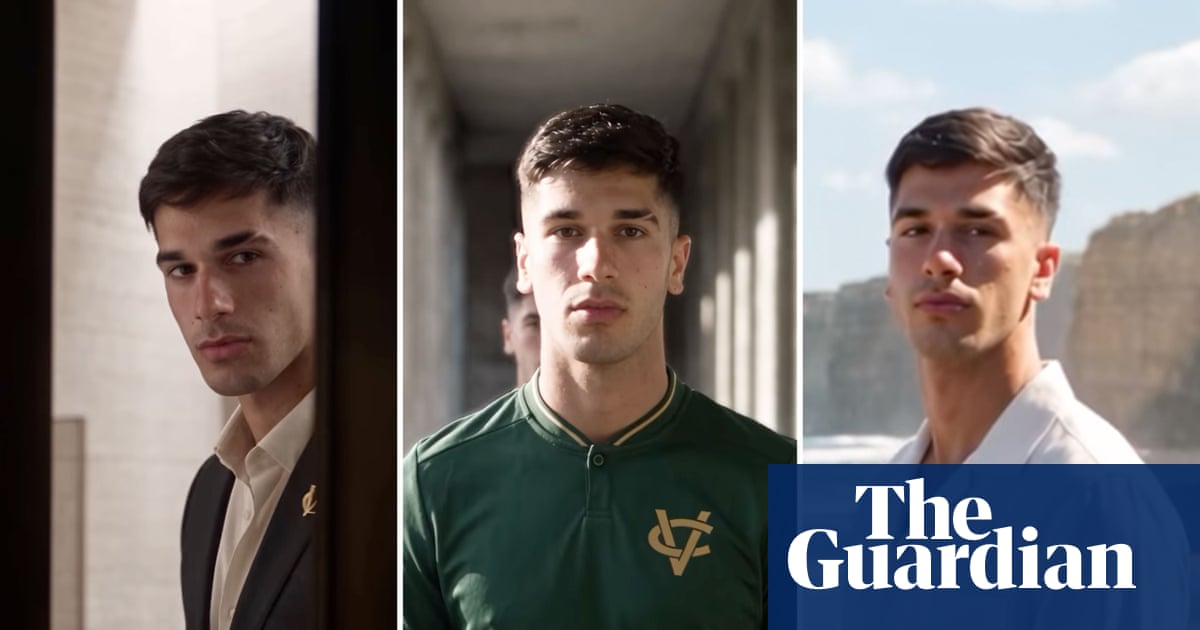
The Socceroos star stares at the camera as he strides through an enormous atrium, the sound of his football boots on polished concrete echoing around him. Suddenly, he spawns four digital clones that peel off out of view to re-emerge in different settings around the world.
This scene from a social media video is fake and generated by artificial intelligence. But it has been authorised by the very real 22-year-old footballer, Cristian Volpato, the latest professional athlete to licence and monetise his AI likeness.
Draped in a white linen suit with his feet on the sand, VolpatoâÂÂs âÂÂsynthetic twinâ turns towards a photographer as the limestone stacks of the Twelve Apostles tower behind him. Another dominates a large digital billboard wearing a football jersey. One smiles into a mirror while adjusting a sharp grey suit.
This video was produced by a new company that acts as an AI licensing agent for professional athletes. Experts believe it is one small part of a nascent online industry that could transform the future of image rights and sports content.
As bookmakers, broadcasters and brands increasingly use athletesâ images in AI generated content without their permission, some players are fighting back.
Digital twins
In mid-September, Volpato, who plays for Italian Serie A club, Sassuolo, struck a deal with the California-based company Callandor to license his AI image.
As part of the deal, Callandor was given exclusive rights to VolpatoâÂÂs digital likeness, voice, biometric profiles and performance data. The company will monetise his AI image by landing brand deals, taking a cut, and help restrict content that does not have his approval.
From Los Angeles, CallandorâÂÂs co-founder, Michael Fisk, tells Guardian Australia heâÂÂs in the business of making âÂÂsynthetic twinsâÂÂ.
âÂÂCristian is constantly training,â Fisk says. âÂÂHeâÂÂs constantly out there playing. If he has any free time whatsoever, heâÂÂll probably want to spend it with family and friends, so he loses on a lot of opportunities on brand placements.
âÂÂA synthetic twin could be used 24-7, year-round by brands. Assuming itâÂÂs approved, right?âÂÂ
Fisk, a former executive at Sony Pictures and MGM, talks of creating AI-generated book voiceovers with foreign language editions. His team is also plotting apps that offer fans a personal relationship with a synthetic twin.
âÂÂUltimately, the holy grail of an athlete is to have that one-on-one interaction with fans,â Fisk says.
He raises the prospect of creating an app that monitors how people play football. A digital clone of Volpato would give real-time instructions.
âÂÂHeâÂÂs realising IâÂÂm not handling the ball well [so] his synthetic twin can tell me, âÂÂHey, you should be doing this and this and thisâÂÂ,â says Fisk.
âÂÂVolpato would never be able to do that one-on-one with [them].âÂÂ
VolpatoâÂÂs deal with Callandor is at the cutting edge of AI rights deals, but he isnâÂÂt the first to embrace the technology. In June, Brazilian superstar Neymar licensed his AI likeness to a Chinese-owned entertainment platform that created short videos published during the FIFA World Cup.
These projects are being launched as governments across the world consider basic regulation of AI. At the moment, player contracts with major Australian sporting leagues make no mention of AI.
But technology isnâÂÂt waiting for regulation to catch up and Fisk says his synthetic twin clients are blurring the lines between real and fake.
âÂÂItâÂÂs becoming almost impossible to detect, that look and feel, the difference, particularly when you see it on a mobile device,â he says.
âÂÂWeâÂÂre watching a raceâÂÂ
William Saunders leads a small Sydney based start-up, Hyperknown, thatâÂÂs trying to cut similar deals. He says athletes are beginning to realise that if they donâÂÂt monetise their AI image, others will.
Earlier this month, the AFL told its gambling partner Sportsbet to stop using AI images of players without their consent. This was prompted by a complaint from the playersâ union, which is considering whether stricter rules should be negotiated.
âÂÂSportsbet shows us what happens when companies and technology get ahead of consent,â Saunders says.
âÂÂVolpato represents the counter-move: people establishing their rights before others start making decisions about their identities.
âÂÂWeâÂÂre watching a race between what technology can do and what people have actually authorised.âÂÂ
Many in the Australian sports industry, including content creators, bookmakers, broadcasters and athletes themselves, have started embracing the technology.
Earlier this month, Australian cricketer Travis Head personally appeared in an ad for the broadcaster Kayo. He joked that his AI clone had already finished filming the ad, before throwing to vision of him riding a flying kookaburra.
Brand deals and endorsements have become major money makers for athletes, with some securing multimillion dollar contracts. It remains unclear whether brands will be willing to pay as much for an AI clone, as opposed to the real deal.
But Saunders, whose company has only just launched, says the opportunities are enormous. He talks of AI clones selling products in foreign languages in nations athletes have never visited.
âÂÂThe next trust signal wonâÂÂt just say âÂÂmade with AIâÂÂ,â he says, referencing a tag often used by social media companies. âÂÂIt will say âÂÂmade with this personâÂÂs permissionâÂÂ.
âÂÂAI can make content abundant. It canâÂÂt manufacture someoneâÂÂs permission. ThatâÂÂs becoming a new commercial requirement.âÂÂ
âÂÂA tangle of different interestsâÂÂ
Jonathan Harlen, an expert in intellectual property law at Southern Cross University, says the rise of AI brokers is âÂÂthe obvious next stepâ in a âÂÂsupercharged global marketâÂÂ.
From a legal perspective, he says this new industry presents âÂÂa tangle of different interests and rightsâ that need to be carefully negotiated.
âÂÂWhile copyright already subsists in voice recordings, artistic works and cinematographic images, it is only recognised where there has been human authorship, as well as a degree of independent or creative human effort involved in the making of the work,â Harlen says.
âÂÂIt doesnâÂÂt apply to AI reproductions.âÂÂ
Celebrities and athletes do have some protection against AI-generated content using their image and voice without consent. But these âÂÂpassing offâ laws only apply when public figures can prove they have suffered an economic loss.
This has not slowed an explosion of deepfakes generated by increasingly sophisticated off-the-shelf software.
In the UK last month, a campaign was launched by some the worldâÂÂs top footballers, including Cole Palmer and Lucy Bronze, which highlighted their concerns about deepfakes and the inability for regulation to slow their explosion. This campaign was backed by the global player union, Fifpro.
Not all unauthorised deepfakes will be unwanted, however. Fisk says a heavy-handed crackdown on âÂÂfan artâ using AI tools might be counterproductive.
âÂÂYou donâÂÂt want fans to use your image and put you in [content] using brands that you donâÂÂt use, or saying something that you would never say,â he says.
âÂÂObviously, anything with religion and drugs, or whatever it might be, you have to be very, very careful. So it does complicate things a bit, but the opportunities are phenomenal.âÂÂ
But in this emerging realm, the consequences may be hard to predict.