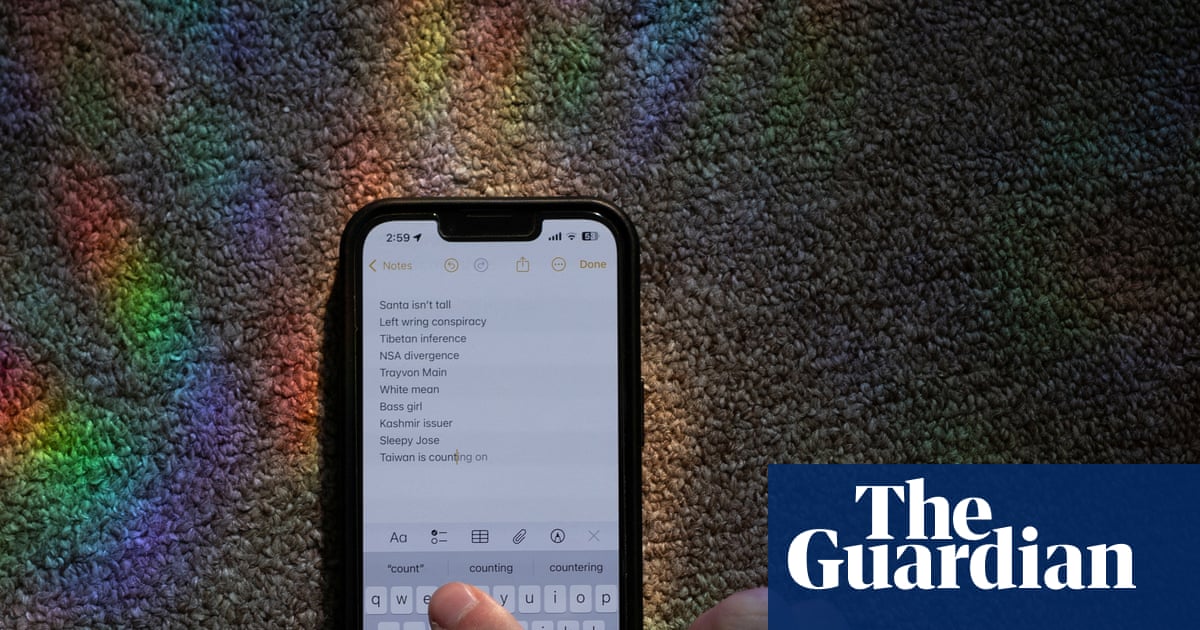

Struggling to spell âÂÂmale chauvinist pigâÂÂ? AppleâÂÂs grey list means your iPhone wonâÂÂt help you
There are more than 100,000 words and phrases that the tech giant has restricted its predictive text from completing, research shows
âÂÂAustralia is a very bad place to question your sexuality on MDMA with NSA spiesâ might be a text you would wish to send to your friends, if you have had an extraordinarily complicated night out in Sydney.
But your iPhone wonâÂÂt help you spell any of it if you try to swipe-type it â that is, by gliding a finger across a keyboard as opposed to pecking out a word.
New research shows that Apple has a âÂÂgrey listâ of more than 100,000 words and phrases that it has restricted from being completed by its predictive text.
So if a user wishes to type phrases such as âÂÂDictator TrumpâÂÂ, âÂÂNSA spiesâ or, surprisingly, âÂÂAustralia is a very bad placeâÂÂ, âÂÂquestion your sexualityâ or âÂÂon MDMAâÂÂ, they will have to spell them out.
AppleâÂÂs predictive text will not suggest these words. And, if a user attempts to swipe-type them, they will often stumble, changing âÂÂUnited Irelandâ to âÂÂUnited IcelandâÂÂ, for example, or âÂÂTibetan independenceâ to âÂÂTibetan independencesâÂÂ.
The âÂÂgrey listâ was discovered by the independent researcher Derik Kauffman, whose other projects include using AI to find errors in scientific papers. After noticing that he had problems typing certain phrases â but not others â on his iPhone, Kauffman was able to unearth a table containing the list, encoded in AppleâÂÂs operating system.
The list he found includes some unsurprising words and phrases. AppleâÂÂs iPhone will not autocomplete references to drugs, sexual acts and, perhaps in the spirit of corporate protection, âÂÂiMessage isnâÂÂt workingâÂÂ.
But it also includes possibly politically charged phrases, which Kauffman described to Reuters as a âÂÂlight-touch form of censorshipâÂÂ. Among these are âÂÂTrayvon MartinâÂÂ, the name of the Black teenager shot in Florida in 2012, âÂÂKashmir disputeâÂÂ, âÂÂMuslim extremistâ and âÂÂmale chauvinist pigâÂÂ.
In Hebrew, Apple will not autocomplete the phrase âÂÂthe occupied territoriesâÂÂ. In Arabic, it will not autocomplete the phrase âÂÂthe Hamas movementâÂÂ.
The list is one more glimpse into the dark bowels of how autocorrect â the chirpy keyboard partner that helps you look more educated to your loved ones â actually works.
The technology has taken many forms. In its earliest version, Unix, an operating system, would look up each word a user typed against a table of words, to determine if this word was spelled correctly.
This evolved into n-grams, a tool which allows an operating system to statistically predict what words might come next, based on the words before it. These form the basis of AppleâÂÂs familiar autocorrect, which was known to change expletives into prudish alternatives: âÂÂforkâ and âÂÂduckingâÂÂ, among other gaffes.
Last year, Apple launched a new autocorrect â a âÂÂtransformer-basedâ system that was more akin to an LLM. Reddit sleuths saw this as a possible reason behind a spate of avant-garde spelling suggestions their iPhones made last year.
This hard-coded list illuminates one longstanding mystery behind the worldâÂÂs spelling coach. Others remain, such as a brief glitch in which users of the dictation feature saw the name âÂÂTrumpâ flash across their screen when they spoke the word âÂÂracistâ into their iPhones â which Apple quickly remedied.
Apple said that it designed its keyboard to avoid offering inappropriate or offensive predictive suggestions. It said iPhone users could always type out specific words or phrases, and override predictive text suggestions to achieve their desired meaning.