
South Korea threatens legal action if fuel shipments to Russia found to have broken law
Responding to a Guardian report that revealed thousands of tonnes of fuel was transported to Russia, Seoul said it was investigating the cases
South Korea will take legal action if it finds that shipments of fuel from its ports to Russia broke domestic law, the government has said, responding to a Guardian report on the trade.
The government, in a statement issued by the foreign and trade ministries and the customs service, said that it is âÂÂchecking additional information concerning the loading cases reported by the Guardianâ and âÂÂif the verification establishes that our laws and regulations have been violated, it plans to act in accordance with the lawâÂÂ.
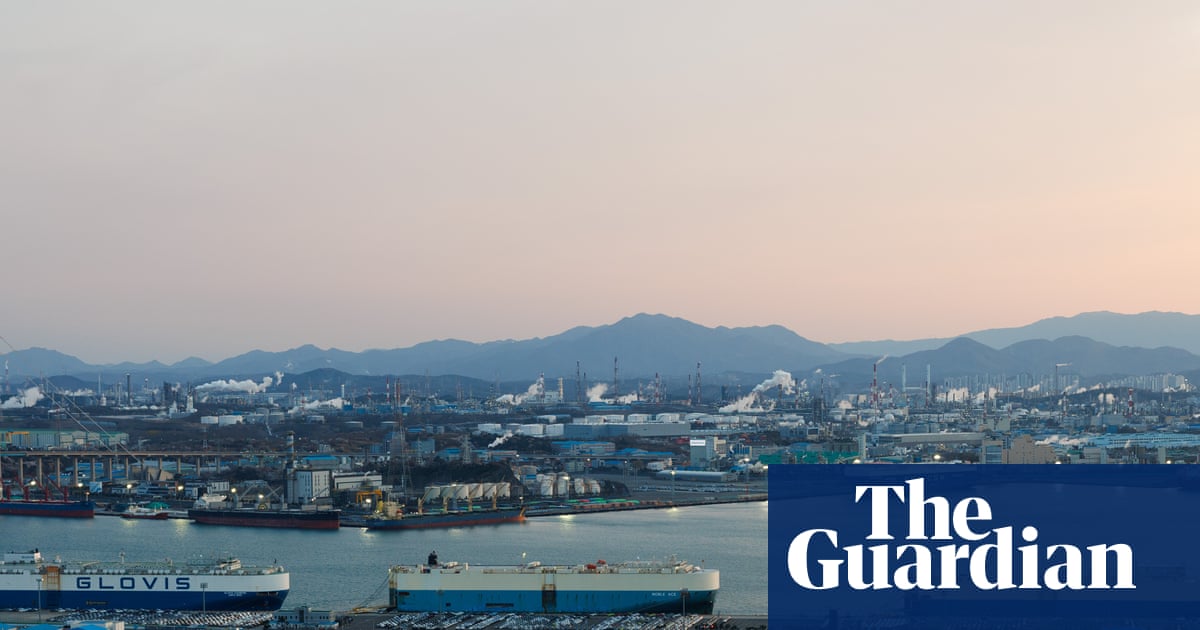
Guardian analysis of port records and ship-tracking data found that in July and August over 176,000 tonnes of fuel, mostly diesel, was loaded at several South Korean ports on to seven tankers that made 14 voyages to RussiaâÂÂs far east.
Three of the tankers were under UK and EU sanctions. One of them took on about 26,000 tonnes through a ship-to-ship transfer at an anchorage off the southern port of Yeosu.
Isaac Levi, an analyst at the Centre for Research on Energy and Clean Air (CREA), a Finnish thinktank, said the trade âÂÂundermines the sanctions regime and South KoreaâÂÂs support for Ukraine.âÂÂ
RussiaâÂÂs capacity to refine oil has been severely disrupted by Ukrainian drone strikes. Its refinery throughput fell in June to its lowest level in more than 20 years, and diesel output is down nearly 30% on last year, according to the International Energy Agency.
ThursdayâÂÂs statement from Seoul said the refined petroleum products involved were not covered by South KoreaâÂÂs export controls on Russia, which apply mainly to industrial machinery, electronics and vehicles.
âÂÂAs reported by the Guardian, the loading of refined petroleum products at our ports does not constitute a violation of our domestic lawâÂÂ, it said.
The government said whether fuel of South Korean origin, such as diesel, had been exported âÂÂhas not been confirmedâÂÂ, adding that no diesel, aviation fuel or motor petrol had been âÂÂexportedâ from South Korea to Russia through customs clearance.
It is unclear who owned or sold the fuel, which South Korean port records do not show publicly.
The government also cautioned that the âÂÂmere fact that a vessel did not proceed directly to the final destination country stated on its declaration and instead moved to another country makes it difficult to conclude that there is a suspicion of false declaration of destinationâÂÂ.
It said it would examine the tankersâ actual routes, any divergence from their declared destinations and the reasons for them, before judging whether the law had been broken.
The three sanctioned tankers told South Korean authorities they were bound for Japan or Singapore before sailing to Vladivostok.
The Russian-flagged Aram Khachaturian, which is not under western sanctions, loaded at Ulsan three times in July and August and on each occasion gave a destination other than Russia before sailing there.
An adviser to Ukrainian President Volodymyr Zelenskyy said this week that the shipments stood in âÂÂsharp contrastâ to South KoreaâÂÂs sanctions policies.
On Wednesday South KoreaâÂÂs presidential office said those remarks were âÂÂcontrary to fact and inappropriateâÂÂ, and asked Ukraine to refrain from public comment that could damage South KoreaâÂÂs international credibility.
UkraineâÂÂs foreign ministry reportedly said on Wednesday that it had raised the fuel shipments with Seoul through closed diplomatic channels and asked for an explanation.
Its spokesperson, Heorhii Tykhyi, said Kyiv also had âÂÂour own data on such activityâÂÂ.