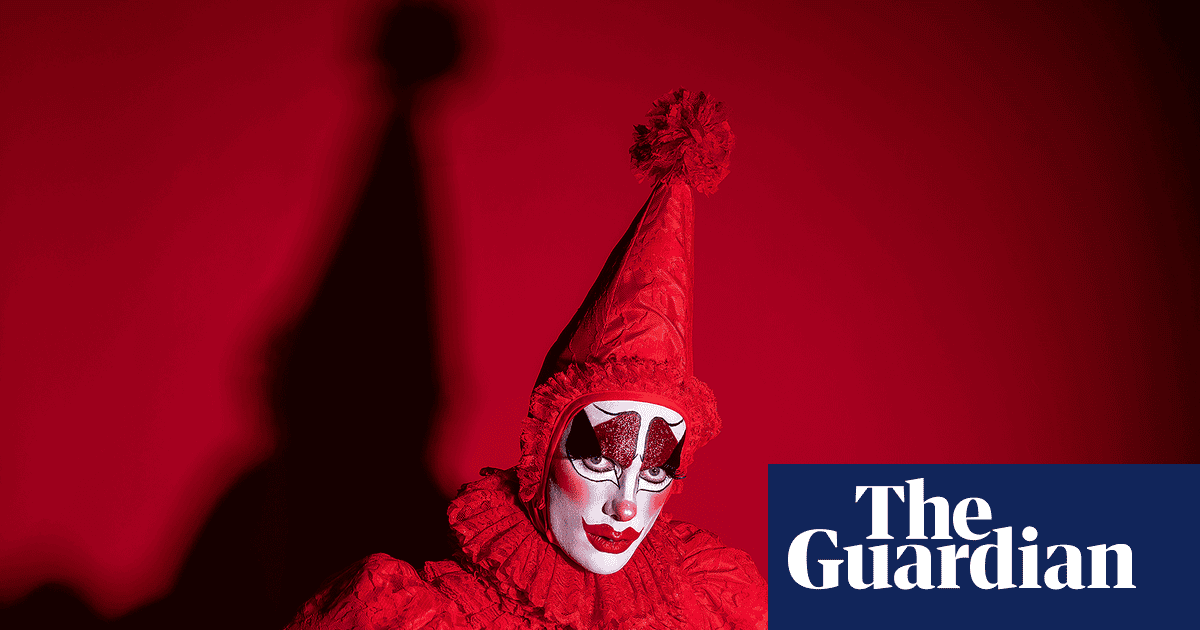

Send in the clowns: the new guard of activists combating the right
A growing cohort of performers âÂÂclownâ as a means to innovate traditional protest and create social change
On a humid morning on 15 July, Tillie the Clown, a Brooklyn-based drag performer whose real name is Taylor Horne, was waiting to be let inside a New York City council meeting. Horne had started getting into character at 5am, for a makeup and clown-costuming process that would take two hours. It would be another 10 hours before Horne was allowed to address the city council about the passing of RomanchâÂÂs Law, which would phase out and ultimately ban New YorkâÂÂs horse carriage industry.
From the moment Horne walked into the meeting room, carriage horse proponents ridiculed them, pointing and laughing. Dressed in a black top hat and gloves with their face painted white and red, Horne began their three-minute speech: âÂÂWe pride ourselves on being a world-class destination ⦠yet we are clinging to the exploitation of horse-drawn carriages. A giant prey animal is not built to thrive in New YorkâÂÂs overstimulating concrete environment.â Horne later learned that those carriage horse supporters went on social media to poke fun at their display. âÂÂThey fell right into my trap,â Horne said. âÂÂThey decided to critique the messenger and not the message.âÂÂ

Horne is part of a growing cohort of performers who âÂÂclownâÂÂ, as itâÂÂs called, as a means to innovate traditional protest and to create social change. TheyâÂÂve created community and expanded how audiences imagine resistance: informational slideshows, workshops on how to clown and fight fascism and viral puppetry videos on historical propaganda about capitalism. âÂÂClowns are the only ones in the court that have the privilege to speak truth to power, to speak to the king without consequence,â Horne said about clowning as a political tool. âÂÂSo I embody that as an activist, as a character.âÂÂ
Horne has been an activist for much of their adult life and started dressing in clown drag to speak out about issues they care about in 2021. On their Instagram platform, which has more than 35,000 followers, they also make content addressing other issues such as the white supremacy and xenophobia within US Immigrations and Customs Enforcement (ICE) operations, the fascism within beauty trends and queerness as rebellion â all while dressed fully in clown drag.
HorneâÂÂs character, Tillie, was created during the Covid-19 lockdown when they were figuring out their next professional move after years spent in the fashion and advertising industries. They did their makeup in the mirror one day and took self-portraits as a tool to experiment and play with gender. It wasnâÂÂt long before Tillie evolved as an escapist route to an online personality. After three years of being a digital content creator, Tillie became a full-time job as HorneâÂÂs social media following grew.
When one of their videos about the carriage horse business made the rounds on Instagram this year, two animal rights organizations, Peta and NYClass, privately messaged Horne to mention the opportunity to speak at the city council. Clowning to first understand their gender identity, then developing it into full-on activism felt natural. Embodying Tillie, Horne said, âÂÂis so profoundly disruptive because my experience as this character and as a human being completely defies the binary and the patriarchy. YouâÂÂre going to laugh at me? IâÂÂm in on the joke.âÂÂ

Horne is working within a long tradition of clowns subverting authoritarian power. Throughout medieval and Renaissance-era Europe, court jesters would get away with mocking the status quo and social elite under the guise of humor and by making audiences laugh. In Asia, jesters were highly valued in the Chinese and Japanese courts, as high-ranking members would often heed their advice before making decisions (for example, You Zhan warning Qin Er Shi not to lacquer the Great Wall and exhaust the working class; Sorori using food and humor to teach Toyotomi Hideyoshi how to spot manipulation). In the late 19th-century US, the clown Dan Rice performed everything from Shakespearean parodies to critiques of politicians like Abraham Lincoln in his comedy acts.
Modern-day clown activism can be quite contentious in some instances, and clashes between disparate groups have occurred in the US over the past few years. When white supremacists gathered in downtown Knoxville, Tennessee, in 2007, for instance, clowns showed up to the event to counterprotest, wearing red noses, stilts and unicycles. They yelled their counter-slogan âÂÂwhite flourâ (a riff on âÂÂwhite powerâÂÂ) and threw bags of flour onto one another as a means of distraction.
In 2012, clowns in Charlotte, North Carolina, repeated the Knoxville tactic by showing up to a white supremacist rally and yelling the counter-slogan âÂÂwife powerâÂÂ. When neo-Nazis arrived in Whitefish, Montana, to harass the townâÂÂs Jewish community in 2017, clowns showed up to protest and shared matzo ball soup with passersby. Other clown groups that combine clowning with civil disobedience, such as the Boredom Patrol and the Clandestine Insurgent Rebel Clown Army (Circa), protested patrols along the US/Mexico border and rallied for climate change respectively.
Clowning is also a way for some people to heal their own intergenerational wounds. Kendra Ferguson found her way to clown activism after a career as a mental health worker. âÂÂIâÂÂm Japanese American. My family was interned in camps in world war II,â Ferguson said. âÂÂI found psychology as a way to access my feelings and connect with myself.â Ferguson believed that her once-interned grandmother behaved as non-threateningly as possible, a survival mechanism that Ferguson adopted as a regular, mild-mannered person. But after burning out from working in a group home in 2023, Ferguson attended clown school, where she hoped to lean more into her goofy side. Since then, she has been working as a clown full time, performing at birthday parties, festivals and the occasional corporate gig.

FergusonâÂÂs first time doing clown activist work was unplanned. In August 2025, she was part of an anti-ICE gathering where agents were pepper spraying protestors. Ferguson and a friend thought quickly about what to do with their exhausted group and they began to act silly. âÂÂWe didnâÂÂt have any costumes. We didnâÂÂt have any props,â she said. âÂÂWe just started playing to help alleviate tension and bring humanity back into the situation.â After that, on a weekly basis starting in the fall of 2025, Ferguson and a fellow clown friend would appear in front of immigration court in San Francisco in full makeup and costume.
With their juggling clubs, balloon animals and stilts, they alternated between playing and handing out leaflets about the ICE abductions and mutual aid organizations to passersby. Once that months-long demonstration ended in January, Ferguson started to work school patrol, where she tossed her juggling balls and played with students in the morning as a way to keep watch over potential ICE raids. âÂÂClowning is a space container where we are constantly facing extreme rage, grief or failure through the lens of delight,â Ferguson said. âÂÂHumans can process all of it by watching the clown and we feel cathartic because of that.âÂÂ
For these performers, clowning adds a different kind of defense strategy to strengthen their communities against bigotry and exclusion. In a world that wants to further divide people through harmful legislation or state-sanctioned violence, clowning is a way for them to regain control and hopefully inspire others to resist with heartfelt â or even hilarious â sincerity. As Tillie the Clown says: âÂÂPeople are firing back on all cylinders, being like: âÂÂI donâÂÂt want to be smaller. I donâÂÂt want to fall in line.â The pendulum is just swinging.âÂÂ