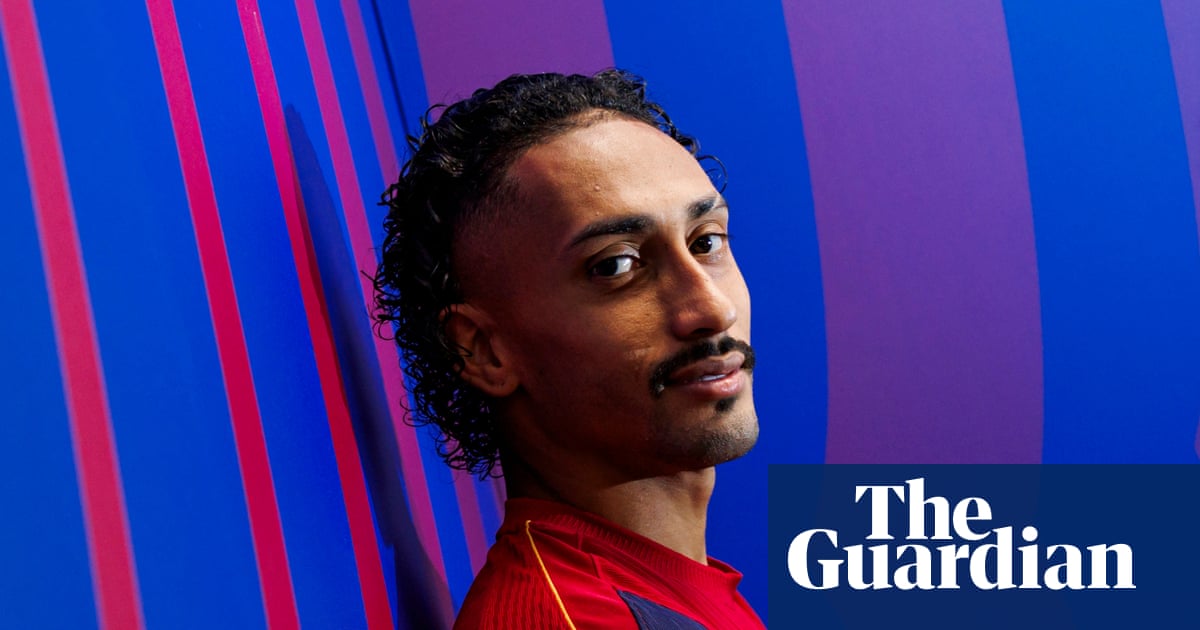
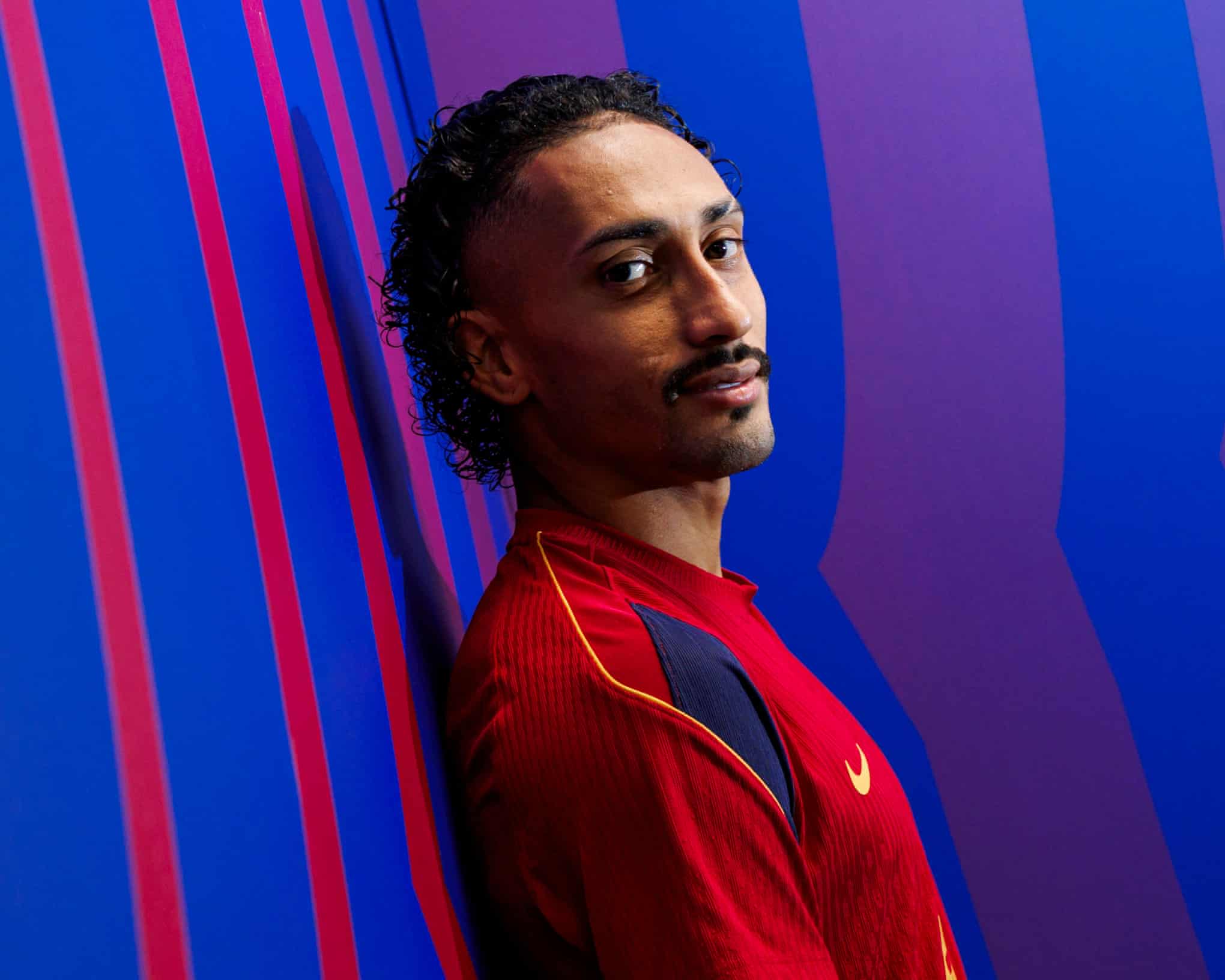
Raphinha: âÂÂIn my head I was leaving Barça, but a few small words can change youâÂÂ
Two years ago the Brazilian thought his time at Barcelona was ending but, two La Liga titles later, he is now captain and the most potent No 9 in Europe
For once, Raphael Dias Belloli puts the brakes on. The man who seems to be in perpetual motion, a footballer forever on fast forward, pauses, goes quiet for a moment and then, softly, utters something that says so much: âÂÂI think maybe people saw in me something I didnâÂÂt realise was there.â He did not know he was a leader, but he likes it. He did not know he was a captain, but according to his manager he is the âÂÂperfect captainâÂÂ. And he did not know he was a No 9 either, but right now he is the best No 9 there is. In Barcelona or anywhere.
There was a time when Raphinha did not know whether he would be in Barcelona, when, feeling unwanted, he had accepted it was over, but this week he extended his contract to 2030. He will be 33 then: he would like to retire here and they would like him to retire here, too, a legend built on empathy and affection. âÂÂThis is the best decision the club has made,â said Hansi Flick, the head coach Raphinha says changed his life. Sometimes you cannot get what you want so you have to settle for the best.
The first word Raphinha uses when training has finished and the tape starts rolling at Sant Joan DespÃÂ, when he is addressed as the worldâÂÂs top No 9, is âÂÂfalseâÂÂ. It comes with a smile; turns out there is nothing false about this 9. Seven games into the league season, the man filling in at centre-forward has scored 12 goals, plus two in the Champions League. The scorers leading the way in EuropeâÂÂs other top leagues are five behind. No one in BarcelonaâÂÂs history has started a season like this. And, no, Raphinha says, he has never played there before: âÂÂEven as a kid I wasnâÂÂt a 9.âÂÂ
As if it is even about the goals. There may be no one as enjoyable to watch as Raphinha; no one as admirable or important either. The touch at speed is astonishing and there is a wild intensity about everything he does, only it is not wild, he says; it is worked upon, the entire system depending on him. The press defines BarcelonaâÂÂs identity and it is, Raphinha says, âÂÂmechanisedâÂÂ. No, he is not going to reveal how but it begins with him. âÂÂAs captain, he goes and everyone follows,â Flick says. âÂÂWe always start with the No 9 and he has that incredible hunger and intensity, the mentality and attitude we need.âÂÂ
Yet this is not what Raphinha or anyone expected. This summer Robert Lewandowski, Ferran Torres and Marcus Rashford departed, having contributed 38 league goals between them last season. They were supposed to be replaced by Julián ÃÂlvarez but Atlético Madrid refused to sell, leaving Barcelona with no striker. âÂÂThere was a moment of need,â Raphinha says. âÂÂThere was no No 9 for the [friendly] against Basel, so I played there.âÂÂ
It was not supposed to be permanent, although Flick suspected it might be and was warming to the idea: Barcelona had not given up on ÃÂlvarez yet and the coach considered other solutions, including Anthony Gordon. This was better. Raphinha did not score but Barça got five.
âÂÂIn pre-season we did a few tests: the manager liked what he saw and after Basel he told me a bit about his idea,â Raphinha says. âÂÂThe adaptation came over the last two years, getting used to coming inside, closer to goal. But we tested [me as] an actual No 9 and it went well. ThereâÂÂs the occasional detail that has to be explained, but IâÂÂm OK. Before Elche [on the opening day], he asked if I was comfortable there or wanted to go back to my position. I said it was fine, see how it goes, we can always change back.âÂÂ
Raphinha scored two against Elche, one against Athletic, two against Rayo and another at Valencia. Against Racing there was a hat-trick and another against Sevilla: right foot, left foot, header. Raphinha showed his old qualities and new, less expected ones: the movement, timing and clinical finishing of a classic No 9, efficiency to go with the intensity. Only one La Liga player has a better shot conversion rate. Against Feyenoord came two more.

Nor is it just about him. The point of Raphinha is that it is not even about him. Only once this season has he not scored, and against Levante he created the first two, then handed over the penalty for Lamine Yamal to add the third. Barcelona have scored five, two, five, five, five, four, seven and three, respectively in winning their first eight games.
Flick had done it again. âÂÂI always have and always will say that he changed my mentality, changed me as a person,â Raphinha says.
By 2024, Raphinha was convinced he had no future at Barcelona. His numbers were good: 10 goals and 12 assists in his first season, 10 goals and 13 assists in his second. But Lamine Yamal was emerging and, more importantly, Raphinha did not feel backed, completing 90 minutes seven times in 60 games under Xavi Hernández. It had not escaped his attention that Barcelona thought about selling him; it had not escaped anyoneâÂÂs attention that they wanted to buy Nico Williams, publicly keen to reunite the pair that tore up the Euros.
Barcelona failed twice, and were all the better for it. A Photoshopped image of Williams in his No 11 shirt on social media hurt, Raphinha admitted. But Flick had arrived and if there is something even more powerful than the desire to prove people wrong, it is the desire to prove people right.

âÂÂIn my head, I knew I was leaving,â Raphinha says. âÂÂThat was [mentally] done, thatâÂÂs the truth. I was in Brazil and Flick called. He said come talk to him before taking a final decision. I met him and he said he trusted in me, that I was going to be important, that the team[âÂÂs play] would be good for me. In a moment like that, a few small words can change you. I felt a lot of faith in me. He gave me the confidence to play my football. I got an idea into my head: give everything, your life, regardless of the personal moment youâÂÂre in.âÂÂ
Love won out, even if Raphinha is swift to add: âÂÂIf you get results people are going to love you; if not, theyâÂÂre not.â Feeling supported and valued changed everything. His success is a human story, his qualities human ones. He led Barcelona to the league. Flying in from the left, Raphinha scored 34 goals and provided 26 assists in 57 games. Another title followed in 2025-26 and although injuries reduced his contribution, there were 21 goals and eight assists in 33, FlickâÂÂs faith gratefully repaid.
His teammatesâ faith, too. The dressing room had voted Raphinha as a club captain, third in line. He had not expected it and was genuinely touched. There was something in that moment, in the realisation of how they felt about him, how much they believed in him, that was transformative. Now Flick has named him his first choice.

That moment brings pause, thought. âÂÂWhen I saw people had voted for me, it was like a switch had been flipped, a shift in mindset,â he says. âÂÂPeople could see something in me I didnâÂÂt realise was there, and thatâÂÂs changed me. Before being captain, I didnâÂÂt know how much I would like it. Having that responsibility has also changed my mentality, helped me. I never thought IâÂÂd like being Barcelona captain so much. You feel you matter. ItâÂÂs an honour. ItâÂÂs not just wearing the armband.âÂÂ
He is a natural, as pure a captain as there has been since Carles Puyol â even if he did need to be told. It is there in the relentless example he sets: Raphinha has sprinted the second-furthest distance in La Liga and Gradient Sports has measured only three players with more final-third pressures per 30 minutes out of possession. Raphinha says: âÂÂI talk less than most captains but I know people are watching. They think: âÂÂIf this guyâÂÂs running like an animal, I have to follow.âÂÂ. If you talk too much and then donâÂÂt do what you have to, people arenâÂÂt going to listen.âÂÂ
Yet what teammates saw in him went deeper, to his very being. Leadership is there in the empathy, kindness and understanding too, in Raphinha returning the support that was good for him, an approach at once collective and individual. He says he can see when Lamine Yamal is drifting from games and how to reconnect him, every celebration shared with the teenager. A clip went round recently in which he quietly tells Gordon not to be afraid. And no clip was more powerful, more eloquent, than the moment when Flick sat on the bench, alone, lost in his thoughts and Raphinha consoled him, drawing him out of his dark place, roles reversed.

âÂÂThe coach-player relationship is the most important in football,â Raphinha says. âÂÂFrom the moment [Flick] arrived, we could talk to him about anything â and anything is anything. That time, I saw him, head down. At first, I didnâÂÂt really understand why. I asked what was wrong. He said he felt the team wasnâÂÂt playing well. From what I remember, I told him it was OK, weâÂÂd won and we would play well again. I prefer a thousand times to win playing badly than lose playing well. Win games, confidence and the football comes.
âÂÂWhat kind of leader [I am] depends on the moment. If I have to be slightly tougher, I can. But I prefer nicer moments, jokes. The last two years have been spectacular so I havenâÂÂt had to be the pesado [pain in the arse] often. I know that annoys people but someone has to do it sometimes.âÂÂ
With a squad like this, especially? Four of BarcelonaâÂÂs first team were born in 2007. âÂÂBuah!â Raphinha says, laughing. âÂÂThat hurts: it shows IâÂÂm closer to the end than starting out at 18, 19, like them. But IâÂÂm in spectacular physical shape so [retirement] is some way off. ItâÂÂs very easy with them. There are young players but theyâÂÂre very responsible about their career, their lives. Once in a while, you have to [be paternal] because theyâÂÂre kids. But they understand. If they get told off, they know itâÂÂs for their own good. IâÂÂll tell them.âÂÂ

Is there something of the father figure in him with Lamine Yamal in particular? âÂÂNo, no,â Raphinha jumps in. âÂÂBig brother, thatâÂÂs better.â And Lamine Yamal is the star who should win the Ballon dâÂÂOr, he says: for his âÂÂindividual numbers, collective titles, and the magic on the pitch, charisma. ThereâÂÂs no doubt. For me, he has to take the prize, no matter what. Even if I wasnâÂÂt LamineâÂÂs teammate, for what he does, the numbers, the titles â and I think titles are important â heâÂÂs the candidate. One of one. Of three trophies, he won two with Barcelona. He won the World Cup with Spain.âÂÂ
Only the Champions League escaped them; for two years Barcelona have come close, and it is their obsession now. âÂÂThe semi-final against Inter [in 2025] hurt the most,â Raphinha says. âÂÂAgainst Atlético [in the quarter-final in 2026] we could have gone through, we could talk about things that could have gone differently, decisions. But against Inter, we had one foot in the final and to lose that way was hard. WeâÂÂre a young team â thatâÂÂs not an excuse â and sometimes you lack the maturity to manage key moments. This season weâÂÂre more mature, better prepared. If we carry on like this, with this mentality, we can compete for it all. We have everything.âÂÂ
Starting from the front with the captain, the leader and the No 9.