
Peta claimed victory when fashion stopped using fur - so why are they back hijacking catwalks?
The animal welfare group has revived their runway-storming tactics from the naughts, now targeting the use of wool
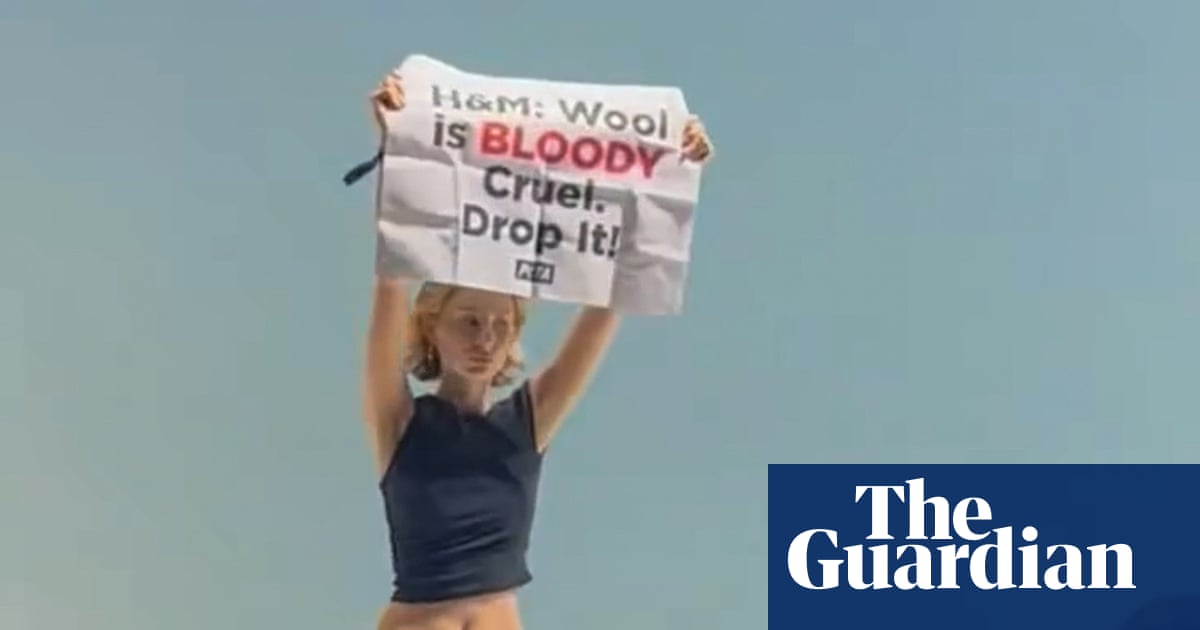
Her walk was poised, her outfit â crop top, tailored trousers, high heels â so on point that when Josie Knowles strutted down a London Fashion Week catwalk last month she could have passed for a model. That is, had it not been for the sign the Peta protester held saying âÂÂH&M: Wool is Bloody Cruel.âÂÂ
Still, as one social media commentator put it when praising her strut: âÂÂyou cant tell me Peta didnâÂÂt know what they were doing when they hired this divaâÂÂ.
The diva in question, Josie Knowles, 26, actually hired herself as part of her role leading fashion campaigns at Peta UK. Though she would not reveal how she got into last monthâÂÂs H&M show (rumours of industry plants and sympathizers abound), she would confirm that dressing to âÂÂlook the partâ was part of her prep. For the record, Knowlesâ clothes were all vegan and secondhand; the trousers were Spacegirlz, a now defunct early 2000s label; her high-heeled boots were from the Peta prop cupboard.
Knowles admits that she did practise her walk a bit (âÂÂI canâÂÂt say that I didnâÂÂt walk up and down my bedroom a few timesâÂÂ) but the main thing she practised was getting her sign out and unfolding it, because âÂÂobviously, for me, the most important part was getting my message seen, even if it would just be for a secondâÂÂ, she says.
She was also aware that looking good would boost the chances of her protest going viral. âÂÂUnfortunately, we live in a shallow world, and I think people are often more willing to listen to people that they find attractive,â she says.
And go viral it did: one post alone had 40m views. Many of the comments were complimentary, with some even demanding fashion credits (âÂÂa lot of people were like, âÂÂwhere are the pants from?âÂÂâ she says).
The model Adwoa Aboah even complimented her walk. Even though itâÂÂs a shame, says Knowles, that âÂÂsheâÂÂs not talking about the message, the fact that there is someone in the fashion world who isnâÂÂt angry or annoyed at what weâÂÂre doing, is, I suppose, encouraging.âÂÂ

One of the reasons Knowlesâ catwalk moment engaged so many was because it felt unlikely that someone clearly steeped in fashionâÂÂs visual codes would also be prepared to protest against the industry so fiercely.
Knowles has never worked in fashion. She studied philosophy at university, went vegan after falling into an internet rabbit hole, appalled by what she saw about the treatment of animals. She interned at Peta for six months before she was hired there. But she has always been into personal style. âÂÂSocial media gave me access to countless creators who inspired me. It also introduced me to thrifting, which I love because it lets me be creative with what I wear while giving clothes a second life. I love expressing myself through fashion, but never at an animalâÂÂs expense,â she says.
Runway protests have been a staple of Peta campaigning for decades, with memorable moments including a naked runway invasion at Oscar de la RentaâÂÂs 1991 show in New York, and an astonishing visual tableaux created at a VictoriaâÂÂs Secret show in 2002, when Gisele Bündchen posed in her smalls while four Peta protesters behind her each held an all-caps signs saying âÂÂGisele: Fur ScumâÂÂ.

The tactic waned at the tail end of PetaâÂÂs IâÂÂd Rather Go Naked Than Wear Fur campaign in the late 2010s, largely because the fashion industry had accepted PetaâÂÂs position and removed fur from new lines. Now though, it has burst back on to the catwalk.
Since 2023, activists have rushed the catwalks of top fashion shows including Burberry, Gucci, Hermès, Victoria Beckham and Fendi. Many of them have been young men and women who could pass for models themselves. Peta activists often blend in so well that prior to some recent catwalk ambushes, they have mingled with show-goers and even sat front row before leaping to action.
Modelesque Peta activists also do other visual stunts outside shows and boutiques, such as posing in reptilian body paint to protest against the use of crocodile skins.
Presumably this is all strategic casting. Though when I asked Peta activists why many fashion protesters looked runway ready, they all cited confidence and the vegan diet.
Knowlesâ catwalk moment was one of two Peta viral moments of fashion month so far. The first was more ugly: at New York fashion week, Steven Kolb, who has since resigned from his role as head of the Council of Fashion Designers of America (CFDA), wrestled a protester to the ground with his hand clamped over her mouth at a runway show for H&M Group-owned brand Cos.

The Cos debacle took place at the first officially fur-free New York fashion week â an initiative announced by Kolb himself.
But Peta still protested because the organization is shifting emphasis. ItâÂÂs now calling for the eradication of nearly all animal-derived fabrics including, perhaps most divisively, wool.
H&M became a target for PetaâÂÂs anti-wool efforts last year, when Peta captured footage of extreme cruelty to sheep at a wool operator that supplies H&M through a broker. That farm was Nativa- and Responsible Wool Standard-certified, accreditations designed to reassure customers that the fibre has been sourced ethically and traceably; Peta has described such certifications as âÂÂhumanewashingâÂÂ. Though many in the wool and fashion industry claim such cases are bad apples, Peta claims to have evidence of extreme cruelty from 150 wool operations globally and argue that such mistreatment is systemic.
PetaâÂÂs assertions are challenging to many of us, at odds with the cosy associations we have with wool farming â associations PetaâÂÂs activists say are based on misinformation.
For a fashion world patting itself on the back for dropping fur, calls to ban wool have been met with âÂÂa breath of exasperation from some fashion insiders, and confusion from othersâ according to a Vogue Business piece which ran in response to the protests.
Peta is not the only organization to express concern about sheep welfare. Studies had found sheep to exhibit an acute stress response during shearing. The Australia branch of RSPCA, the worldâÂÂs largest animal welfare charity, has also spoken out about shearing injuries.
One big concern, says Melanie Lary, research and campaigns manager at global animal welfare organization Four Paws, is that 80% of the merino wool used for clothing globally comes from Australia, the only country in the world where mulesing â the practice of cutting skin from a lambâÂÂs hindquarters to prevent the condition flystrike â is still legal. âÂÂThat practice is very cruel, and it is widespread within the system.âÂÂ
How widespread cruelty is, more broadly, is debated: the Guardian spoke to several experts in animal welfare, some of whom said that they see far fewer injuries in UK farms than in Australia and China. Many expressed particular concern about the prioritization of speed over care when producing wool at a low cost.
Many farmers, fashion brands and wool producers, meanwhile, maintain that they adhere to ethical standards. They flag social and environmental concerns inherent in abandoning wool production, and argue that â because sheep have been bred for generations to grow very thick fleeces â not shearing them would also be cruel. A spokesperson for Textile Exchange, the organization responsible for the Responsible Wool Standard certification, said that said it believed that responsibly produced animal-derived materials, âÂÂcan play an important role in a more resilient textile and apparel industryâÂÂ.
Clearly, though, the ethical certifications designed to reassure consumers are imperfect: H&M said that they âÂÂrely on some of the strictest certifications in the industry when sourcing animal fibers for our productsâÂÂ. But after PetaâÂÂs recent investigation, âÂÂlicenses for one wool farm have been suspendedâÂÂ. Nativa said that the events shown in the footage were unacceptable and added: âÂÂWe take this breach of our protocol as an opportunity to further tighten the control measures on all of our certified farms.âÂÂ
Some have also accused Peta of pushing synthetic fibres just when the environmental nightmare of polyester use needs to be abated, though Peta say thatâÂÂs a false dichotomy. The Peta activists I spoke to were advocates for vegan plant-based alternatives such as bamboo, cotton, hemp and tencel. Peta US spokesperson Ashley Byrne points out that her favourite boots are made from cactus leather. Such fabrics arenâÂÂt always widely available, which Byrne says ties in to âÂÂanother part of the message: we have these other incredible, innovative materials at our fingertipsâÂÂ. Big fashion houses, she says, have a responsibility to invest in them.
Peta would assert that, even under the best of circumstances, the process is cruel, because any animals raised for commercial purposes are killed before the end of their natural life (usually about seven years old, while sheep could leave to 10-15 years old, says Dwyer). For Peta, any system in which animals are considered to be products for human use, before their own needs as living creatures is considered, is unacceptable.

Byrne, a Peta US campaigner of 19 years, who recently stood outside a Coach show âÂÂwearing a backless evening gown, appearing to get my skin ripped off and screamingâÂÂ, in protest against leather â is convinced that itâÂÂs âÂÂonly a matter of timeâ before wool goes the same way as fur.
âÂÂIf people saw the footage that Peta was obtaining of whatâÂÂs happening behind the scenes in industries like the wool industry, they would reject it,â she says. Being at the beginning of the road of what Peta hopes will be a change in public opinion, however, and feeling that âÂÂweâÂÂre starting from scratchâÂÂ, explains the recent influx of catwalk invasions. âÂÂIt does kind of bring you back to to those earlier tactics of really having to drag an issue into the headlines in a different way,â she says.
Gen Z activists will be a big part of this. Having grown up with unfettered access to information online, Byrne says theyâÂÂre âÂÂless surprised than other generations when they learn that wool and leather are a product of cruelty.âÂÂ
For younger activists, says Byrne, catwalk invasions almost feel like part of the Y2K revival. Many of them have âÂÂa fascination with archival fashionâÂÂ. Looking back at fashion imagery from the naughts, they see Peta and think: âÂÂWeâÂÂre going to take these early tactics that worked and apply them now.âÂÂ

Harry Morris, who works in youth outreach for Peta, also rushed the H&M catwalk in London, and invaded the runway at a Paul Smith show in Milan this summer, protesting about the use of mohair. He passed for a model with Knowlesâ help. He is, he says âÂÂthe least fashionable person in the worldâ but âÂÂshe dresses me and tells me what looks goodâÂÂ.
Morris says the issue of cognitive dissonance feels particularly pertinent to fashion; designers are sometimes keen to talk about the semiotic meaning of a garment, while avoiding going too deep into the reality of how materials are made.
Morris, like Knowles, says the stunts are âÂÂnervewrackingâ and always a âÂÂlast resortâ after attempts to negotiate with companies. Like the other activists I spoke to, Morris watched PetaâÂÂs footage from farms just before leaping on to the catwalk â âÂÂso you have that to spur you on,â he says. With that in mind, âÂÂitâÂÂs very easy to say, âÂÂoh, what about the models that youâÂÂre disrupting, and the hard work thatâÂÂs been put into these showsâ â and that is something to think about â but itâÂÂs so insignificant in terms of the harm that comes to these animals. Animals are losing their lives over an item of clothing.âÂÂ
Even now, as security is tightening as awareness of PetaâÂÂs presence rises, Morris says Peta will keep on storming the catwalk. âÂÂThe thing is with Peta, if thereâÂÂs a will, thereâÂÂs a way. We will find a way to get in, and to stand up for animals.âÂÂ