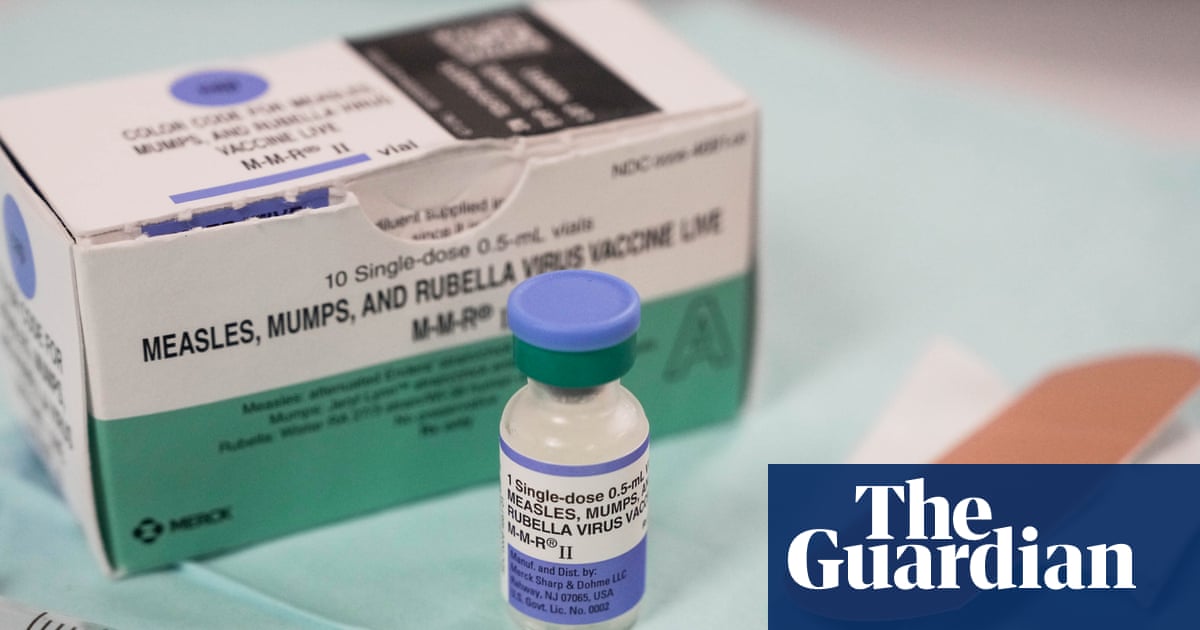

Pennsylvania health officials brace themselves as measles outbreak expected to spread
Most counties donâÂÂt have their own health agencies, and some specific population groups have low vaccination rates
Pennsylvania is bracing for a wave of measles cases, with some public health officials concerned that itâÂÂs âÂÂonly a matter of timeâ until the disease spreads beyond the outbreakâÂÂs epicenter.
Last week the state reported its fifth measles-associated death amid 943 confirmed cases across 39 counties. The outbreak comes amid concerns that public health in the US has been hit by increasing vaccine skepticism, especially due to the power and influence of controversial health secretary Robert F Kennedy Jr.
Contributing to the challenge is that Pennsylvania is one of the few US states where its counties mostly lack their own health department, with only seven of its 67 counties having their own.
Lancaster county, which doesnâÂÂt have its own health department, has seen the highest amount of cases, at 381, believed to be mostly among the Amish or similar religious groups who have historically low rates of measles, mumps and rubella (MMR) vaccine uptake. Health officials, doctors and other members of the community in the county are now attempting to establish its own health department to better tackle the outbreak.
Jeanne Franklin, the director of Chester countyâÂÂs health department, said that her county, which has the third highest number of cases, at 83, is preparing for an influx of cases from neighboring Lancaster.
âÂÂWe have a very long border with Lancaster county, and these types of disease donâÂÂt care about borders,â Franklin said. âÂÂItâÂÂs going to keep going and find a person who isnâÂÂt vaccinated. WeâÂÂre operating with the assumption that the disease may jump and spread to non-Plain [Amish] community members. Our goal is to prevent that, but we assume that it may happen.âÂÂ
She added that although many Amish people have not been vaccinated, itâÂÂs not because they are anti-vaxxers, but rather because âÂÂthey were either unaware of it or they donâÂÂt seek out healthcare as frequently as other residentsâÂÂ.
She added: âÂÂBut theyâÂÂre willing to have the conversation and make a decision on whatâÂÂs happening today. TheyâÂÂre not making decisions based on the myths out there, but because their neighbors are impacted.âÂÂ
Amid active surveillance of measles cases, contact tracing and setting up community vaccination centers, the county is also working to dispel misinformation some of its residents have regarding the safety of the vaccine.
âÂÂWe have people in key positions saying it isnâÂÂt an outbreak, it isnâÂÂt a problem. We have people who approach our nurses and say that they were told the vaccine will make them sterile, or that thereâÂÂs a microchip within it,â Franklin said.
But for Franklin, the fact that Chester county is one of the few counties to have its own health department is a clear advantage in the race to stop the spread of the disease.
âÂÂBy having our own health department [it] means that we already have the infrastructure in place, and we prepare for these things all year round,â Franklin said. âÂÂWith the number of counties [the state has] to provide support to, they canâÂÂt possibly know all the key partners in a geographical area.âÂÂ
She added: âÂÂThe state has a finite set of employees, while I can pull my employees away from their normal jobs and say we need help with this. We live here, we know it, and weâÂÂre working with the communities and the organizations who know us. I think every county needs a health department, but weâÂÂre just not set up that way in Pennsylvania while other states are.âÂÂ
Dr Richard Lorraine, the medical director of Montgomery countyâÂÂs office of public health, said that it is a âÂÂmatter of timeâ before the third most populous county in Pennsylvania will begin to see measles cases.
âÂÂWe recognize that essentially itâÂÂs all around us, and so a big focus for the county is immunization,â Lorraine said. âÂÂItâÂÂs the best preventative measure and where the county is focusing its efforts on.âÂÂ
Working closely with community organizers, Lorraine said the county was making sure that every resident was able to be vaccinated regardless of their insurance status.
âÂÂBecause we are a public health agency, our mandate is to provide for members of our population for the most part who are underinsured, and thereâÂÂs a very high percentage who arenâÂÂt insured,â Lorraine said. âÂÂAnd through our partnership with pharmacies weâÂÂre able to open these clinics for everyone. So whether you have insurance or if you donâÂÂt, we can work it out so that someone is able to administer a vaccine.âÂÂ
Lora Werner, the director of the Delaware county health department, said that her agency is facing several challenges in protecting residents from the virus.
Among them was the collapse of Crozer Health, Delaware countyâÂÂs largest healthcare system, due to bankruptcy last year.
âÂÂThey were a huge provider of pediatric care,â Werner said. âÂÂAnd although we do have a high vaccination rate across Delaware county, there are pockets where they arenâÂÂt as good.âÂÂ
For Werner, the newly established local health department has been a gamechanger for promoting public health initiatives in the county.
âÂÂWe are the newest health department on the block, and weâÂÂre so passionate about the fact that weâÂÂre now here and can serve our residents,â Werner said. âÂÂWeâÂÂre deeply integrated into the social networks.âÂÂ
She added: âÂÂCreating a new department was very challenging, and weâÂÂre a very odd state in this regard,â Werner said. âÂÂIf you want to have one you need to have a referendum to establish one. But itâÂÂs not required, so we have a mishmash of the counties that have taken that step and those that have not.âÂÂ
The Guardian has approached the Pennsylvania health department for comment.