
OpenAI used AI to help write email warning Australian government AI had hacked its websites
Exclusive: Revelation comes after companyâÂÂs executive told parliamentary inquiry he did not believe AI had been used to write message
-
Get our breaking news email, free app or daily news podcast
OpenAI used AI to help write the email to the Australian government advising that its AI agent had hacked into key departmental websites, Guardian Australia can reveal.
On Tuesday, one of the companyâÂÂs executives told a parliamentary inquiry that he didnâÂÂt believe that its own technology had been used to create the email, but said the company needed to confirm this.
Guardian Australia understands AI was used by OpenAIâÂÂs legal and security teams to generate parts of the wording of the email, including word selection and formatting of the message. But a source with knowledge of the incident said humans reviewed the final email, and humans were responsible for actually sending the communication to the Services Australia inbox.
OpenAI was contacted for comment.
An artificial intelligence agent developed by OpenAI accessed Services Australia data and three other systems in June. The company notified Australia on 10 September despite becoming aware of the incident in August.
The companyâÂÂs first notification to Australia came in a five-paragraph email to a Services Australia inbox, [email protected], which was only checked once per day.
OpenAI has come under fire for not raising the issue in a more formal or direct way, including during a face-to-face meeting between the companyâÂÂs CEO, Sam Altman, and AustraliaâÂÂs deputy prime minister, Richard Marles, on 1 September, nine days before the company emailed Services Australia but nearly a month after it first learned of the 18 June intrusion.
Jason Kwon, OpenAIâÂÂs chief strategy officer, admitted in a parliamentary hearing on Tuesday that the companyâÂÂs âÂÂresponse was not good enough, and we should have informed the impacted parties much soonerâÂÂ.
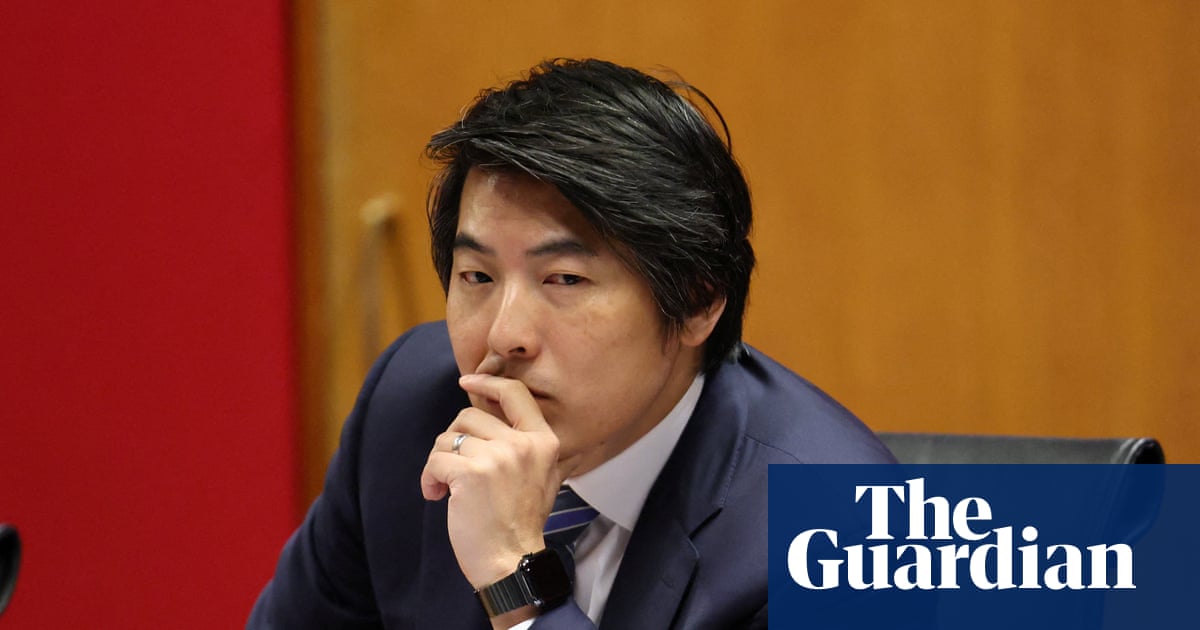
During the hearing, Liberal MP Aaron Violi â the shadow minister for technology â had asked Kwon specifically about the email and whether AI had been involved in its creation.
âÂÂI appreciate that, to get the data and have a review, youâÂÂve got to use AI agents, and obviously your business uses AI. When you notified Services Australia via email, did your staff use AI to construct that email?â Violi asked.
Kwon responded: âÂÂI donâÂÂt believe so, but weâÂÂre happy to go and confirm.âÂÂ
Kwon indicated during the hearing that OpenAI would provide specific responses to more technical queries in answers to questions on notice.OpenAI is expected to provide more information about the email once its own investigation has concluded.
The email, obtained by Guardian Australia in September, advised Services Australia: âÂÂWe are notifying you of a security vulnerability identified during our review of OpenAI model activity involving Services AustraliaâÂÂs Medicare Statistics service at medicarestatistics.humanservices.gov.au.
âÂÂAn OpenAI model identified a way to make the server carry out instructions sent through the public reporting interface, without a private account or password. It was able to access this to read portions of internal program files and settings, obtain a list of files, and create and read back a small test file on the server.âÂÂ
The email advised that OpenAIâÂÂs review âÂÂfound no evidence that the model accessed patient-level records, personal information or credentials; deleted data; or established ongoing accessâÂÂ, and sent information about the âÂÂaffected URLâ and âÂÂaffected reportâÂÂ.
âÂÂWe recommend that the team responsible for the service investigate the vulnerability and assess the changes needed to prevent it. We would be glad to brief your security team and provide supporting evidence as available.
âÂÂBest, OpenAI Security Team.âÂÂ
Andrew Charlton, the assistant minister for science and technology, spoke about the OpenAI incident in a speech in Sydney on Thursday, describing the companyâÂÂs agent as having âÂÂhacked into an Australian government systemâÂÂ.
âÂÂAs a starting point, no company should release a frontier AI model that is not safe,â he said.
âÂÂYet the fact that has occurred, and the fact that the labs did not detect or prevent it, prompts important questions about the role of new regulation in the National AI Standards.âÂÂ
Charlton said frontier AI âÂÂpushes the limitsâ of existing government conventions and protocols around assessing safety risks, and went beyond âÂÂconventionalâ approaches.
The assistant minister said âÂÂthe market will not fixâ issues with AI development, a contrast to the United Statesâ approach of letting companies operate with a degree of self-regulation. Charlton raised concerns that âÂÂfrontier labs are putting capability ahead of safetyâÂÂ, positing that Australia can have the most impact on the development of AI by hosting and influencing frontier labs.
âÂÂAI needs regulating because its harms are severe, hard to undo, borne by people who never chose them, and sometimes invisible until they arrive,â he said.
âÂÂThe market will not fix this alone, because the incentives reward speed and capability, and even the people at the top of the industry cannot slow down by themselves.âÂÂ
Do you know more? Email [email protected]